New Injectable Hydrogel for Osteoarthritis Treatment

scitechdaily osteoarthritis biomaterials hydrogel university-at-buffalo

요약

마인드맵 커버 이미지
AI 생성 커버 이미지

Researchers at the University at Buffalo developed an injectable hydrogel platform on August 19, 2026, to transform osteoarthritis treatment by forming a lubricating semi-solid depot inside joints at body temperature after a single minimally invasive injection. The author highlights how this biocompatible system overcomes traditional treatment barriers where small-molecule drugs and biologics disappear quickly from synovial fluid, allowing drug-loaded nanocarriers to remain in place and release medication gradually over several weeks. The essence of this innovation lies in its dual function as a sustained-release drug delivery system and a viscosupplement, featuring high drug-loading capacity for poorly water-soluble compounds and utilizing materials with prior regulatory acceptance. Practical applications include reducing the need for repeated invasive joint injections, limiting systemic side effects, and targeting underlying biological mechanisms like chronic inflammation and cellular senescence using disease-modifying therapies such as a SIRT6 activator.

핵심 포인트

01

🔹 Innovation Overview and Core Purpose

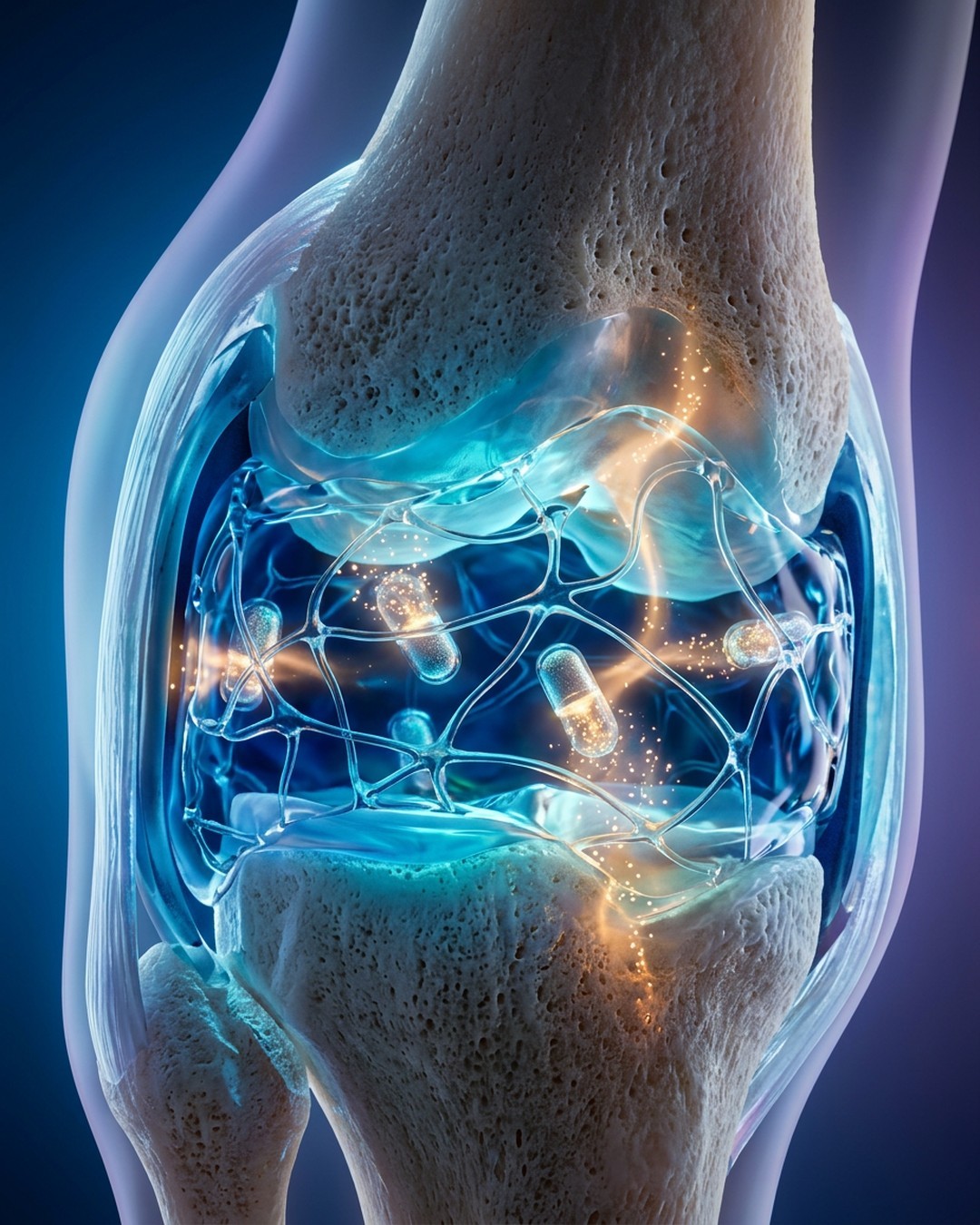
Researchers at the University at Buffalo developed an injectable hydrogel platform announced on August 19, 2026, designed to transform osteoarthritis treatment. The system forms a lubricating semi-solid depot inside the joint after a single minimally invasive injection, allowing drug-loaded nanocarriers to remain in place for several weeks and release medication gradually.

02

🔸 Solving Traditional Delivery Limitations

Traditional joint injections of analgesics, corticosteroids, and viscosupplements provide only temporary symptom relief without slowing disease progression. Small-molecule drugs and biologics disappear quickly from synovial fluid, while poorly water-soluble therapies are difficult to deliver effectively without exposing the rest of the body to systemic side effects.

03

⭐ Mechanism and Dual Functionality

The biocompatible system combines a polymer matrix with drug-loaded nanocarriers that rapidly change from liquid to semi-solid at body temperature. It provides dual functionality by acting as both a sustained-release drug delivery system through matrix diffusion and relaxation, and as a viscosupplement to improve joint lubrication simultaneously.

04

📊 Therapeutic Applications and Validation

The platform features high drug-loading capacity suitable for hydrophobic disease-modifying compounds and has been successfully validated using a SIRT6 activator. It targets core biological mechanisms of osteoarthritis, including chronic inflammation and cellular senescence, while maintaining controlled local drug exposure.

05

💡 Clinical Translation and Patient Impact

By extending the therapeutic window and retaining drugs inside the joint for extended periods, this platform potentially reduces the frequency of repeated invasive injections and limits systemic side effects. The use of materials with previous regulatory acceptance helps support future clinical translation for patients suffering from persistent pain and disability.

자신만의 마인드맵을 만들고 싶으신가요?

Neumap AI에 로그인하고 나만의 마인드맵 만들기를 시작하세요!

지금 시작하기