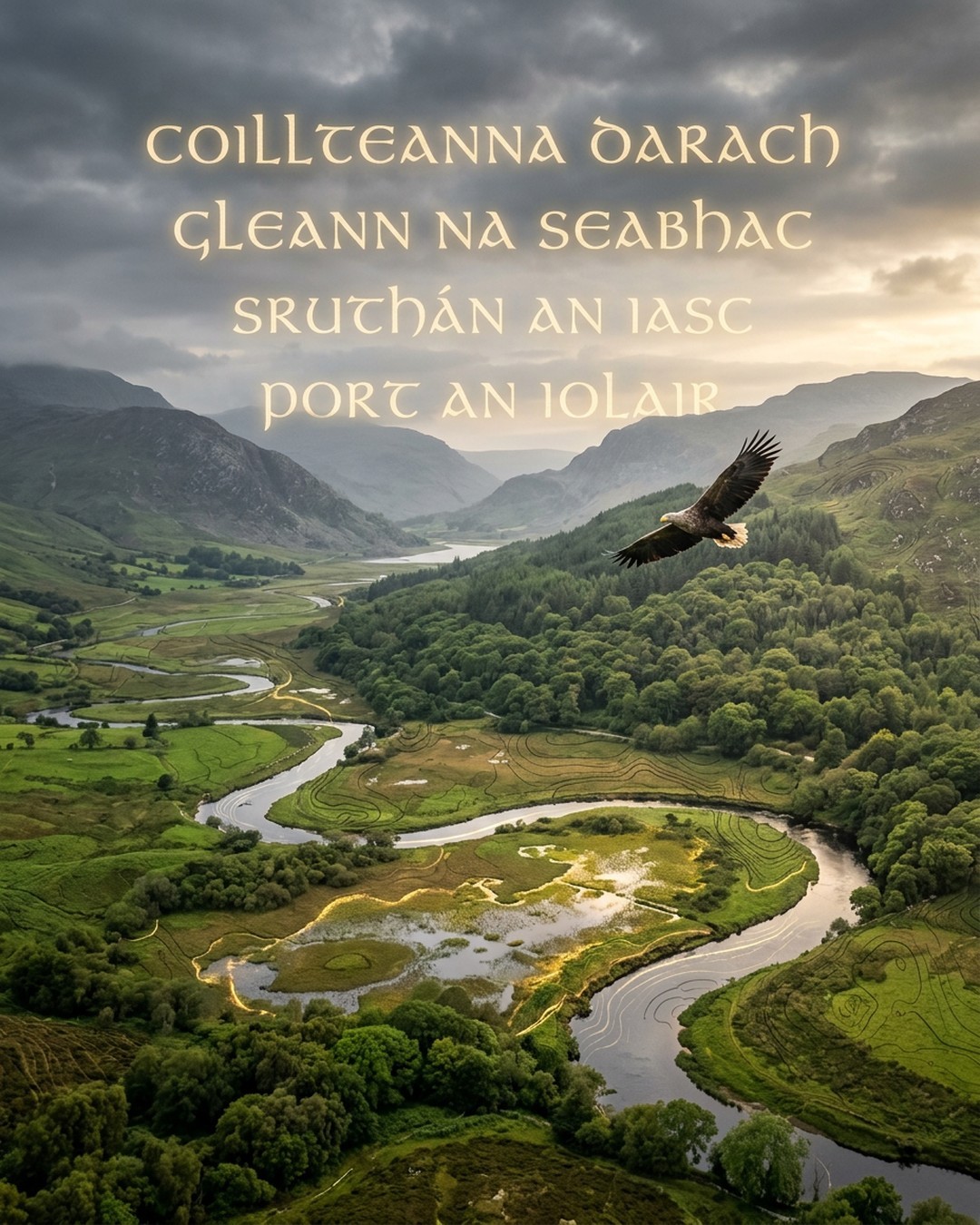
Irish place names are increasingly recognized by ecologists and nature-lovers as a form of traditional ecological knowledge that captures centuries of landscape history, flora, and fauna. Researchers are analyzing these linguistic markers to reconstruct Ireland's ecological past, identify hidden environmental features like forgotten flood plains, and inform modern conservation, rewilding, and climate adaptation strategies. Although place names can occasionally be metaphorical or symbolic rather than literal historical records, they reveal what landscapes have historically been capable of supporting.
The author highlights how historical extinction events—such as the disappearance of wolves, golden eagles, white-tailed eagles, wild boars, and cranes—are permanently embedded in ancient Irish place names like Sliabh an Iolair and Tuaim na Mac Tíre. By contrasting the original Irish meanings with anglicized versions that often lost their descriptive power, the narrative emphasizes the deep connection between the Irish language and environmental awareness. Furthermore, modern rewilding initiatives, such as the successful 2007 reintroduction of white-tailed eagles to County Kerry, demonstrate how these historical ecological memories are coming back to life in the wild.
Place names serve as a vital baseline for environmental restoration, helping scientists identify sites for tree-planting, wetland rewetting, and flood resilience planning. For instance, analyzing subsoils around names referencing lakes can guide climate adaptation projects to manage flood risks. Conservation experts stress that place names should be viewed as starting points rather than rigid instructions, offering valuable clues about ecosystem potential rather than exact historical blueprints for every single location.
Readers and conservationists can leverage these insights by exploring local etymologies to understand regional biodiversity and ecological potential. This knowledge supports community-led rewilding projects and climate resilience planning across Ireland and Britain, bridging cultural heritage with modern environmental science. By integrating linguistic heritage into ecological planning, stakeholders can better anticipate landscape capabilities and foster a deeper coexistence between human communities and restored natural habitats.