55-Million-Year-Old Antarctic Penguin Fossils

ScitechDaily Paleontology Antarctica ClimateChange PenguinFossils Eocene Geology

요약

마인드맵 커버 이미지
AI 생성 커버 이미지

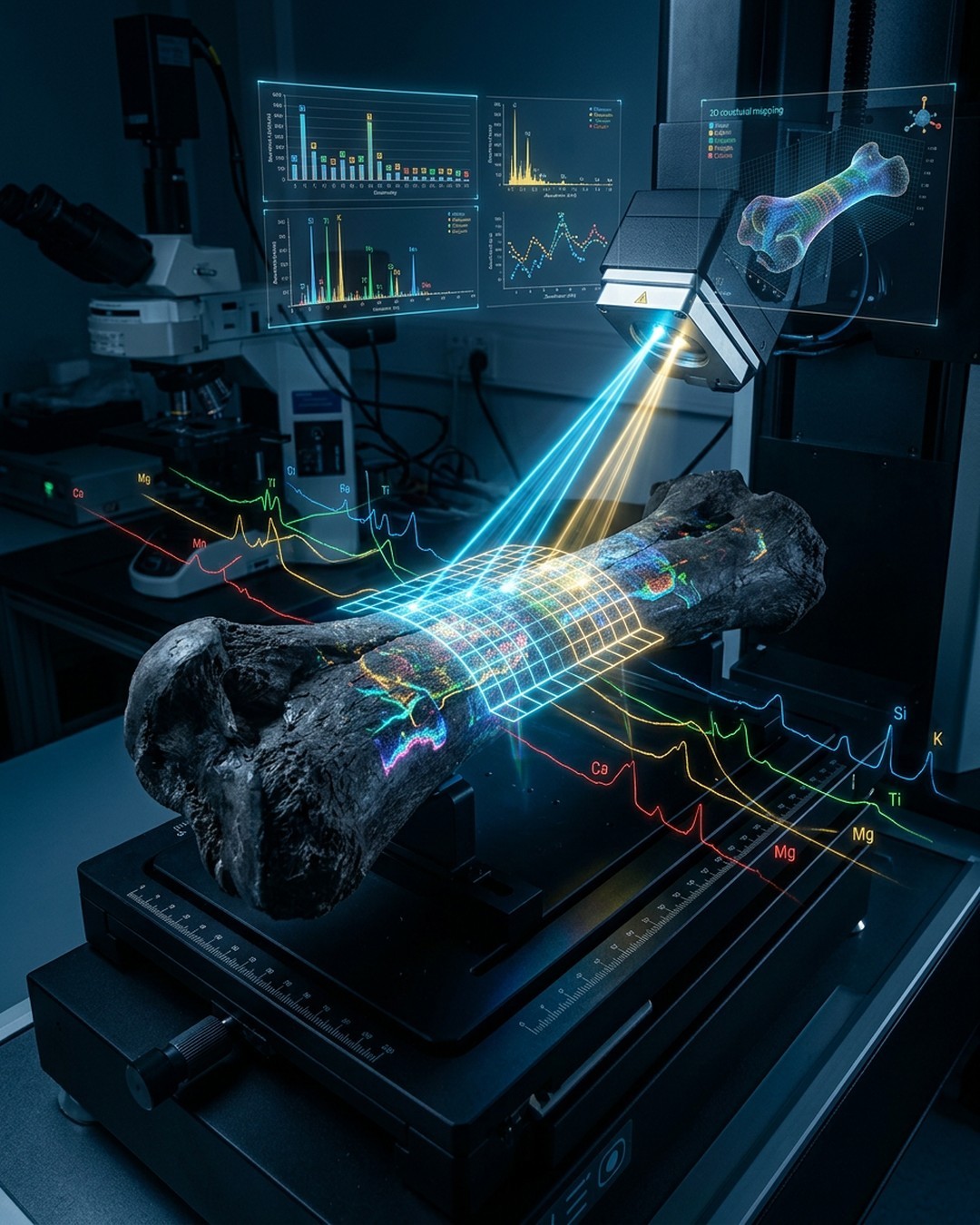
A team of paleontologists from China University of Geosciences studied 55-million-year-old Eocene penguin fossils from Seymour Island, Antarctica, published on August 25, 2026. The research reveals that ancient penguin bones preserve chemical evidence of past climate change, specifically documenting Antarctica's historical transition from a warm, humid environment to much cooler conditions. The researchers successfully utilized non-destructive micro-X-ray fluorescence (u-XRF) scanning to map chemical elements across irregularly shaped fossil surfaces without causing physical damage. Fossils dating back approximately 55 million years displayed significantly higher signals of titanium, silicon, and potassium, reflecting intense continental weathering and terrestrial runoff during the warm early Eocene. Beyond land-based climate indicators, patterns of iron, manganese, and sulfur embedded within the fossil bones successfully captured chemical shifts in surrounding marine sediments during burial. This methodology demonstrates how elemental mapping of existing fossil collections can serve as a reliable, complementary archive to marine sediment drilling for reconstructing prehistoric polar environments. This non-destructive chemical scanning approach provides researchers with an innovative tool to extract detailed paleoenvironmental data from museum collections. The findings enhance our scientific understanding of deep-time climate dynamics in Antarctica, offering critical baselines for evaluating contemporary global climate change mechanisms.

핵심 포인트

01

🔹 55-Million-Year-Old Penguin Fossils Discovery

【📌 Core Finding】Paleontologists from China University of Geosciences studied Eocene penguin fossils from Seymour Island, Antarctica, published on August 25, 2026. 【🔸 Climate Transition】The fossils record Antarctica's historical shift from a warm, humid climate during the early Eocene to much cooler conditions in the middle and late Eocene. 【⭐ Preservation】Ancient bird bones successfully act as geochemical archives preserving environmental changes spanning millions of years.

02

🔸 Micro-X-Ray Fluorescence Elemental Mapping

【📌 Methodology】Researchers used non-destructive micro-X-ray fluorescence (u-XRF) scanning to map chemical elements across fossil surfaces. 【🔸 Technical Challenge】To overcome irregular and curved bone surfaces, specimens were positioned horizontally with a constant distance maintained between the scanning head and the bone. 【⭐ Data Accuracy】This technique acquired reliable elemental profiles without damaging rare and delicate fossil specimens.

03

⭐ Geochemical Signatures of Warm Climates

【📌 Elemental Markers】Fossils dating to approximately 55 million years ago exhibited substantially stronger signals of titanium, silicon, and potassium. 【🔸 Environmental Cause】Researchers interpreted these elevated signals as direct evidence of intense continental weathering and greater terrestrial runoff during the warm early Eocene. 【⭐ Comparative Contrast】Younger fossils originating from subsequent cooler geological periods showed significantly weaker signals for these same elements.

04

📊 Marine Sedimentary and Burial Chemistry

【📌 Sediment Interaction】The u-XRF scanning captured data extending beyond terrestrial weathering into marine environmental conditions. 【🔸 Chemical Indicators】Patterns of iron, manganese, and sulfur preserved within the bones reflected chemical changes in surrounding marine sediments during early diagenesis and burial. 【⭐ Dual Archives】Fossil bones record both external terrestrial input and localized marine depositional environments simultaneously.

05

💡 Implications for Paleoenvironmental Research

【📌 Complementary Source】Fossil bone chemistry provides a vital auxiliary source of information to traditional methods like marine sediment drilling and microfossil analysis. 【🔸 Research Value】Non-destructive elemental mapping enables scientists to extract comprehensive climate data from existing museum fossil collections. 【⭐ Future Outlook】This technique expands the toolkit available to polar researchers studying Antarctica's deep-time climate history and global warming dynamics.

자신만의 마인드맵을 만들고 싶으신가요?

Neumap AI에 로그인하고 나만의 마인드맵 만들기를 시작하세요!

지금 시작하기