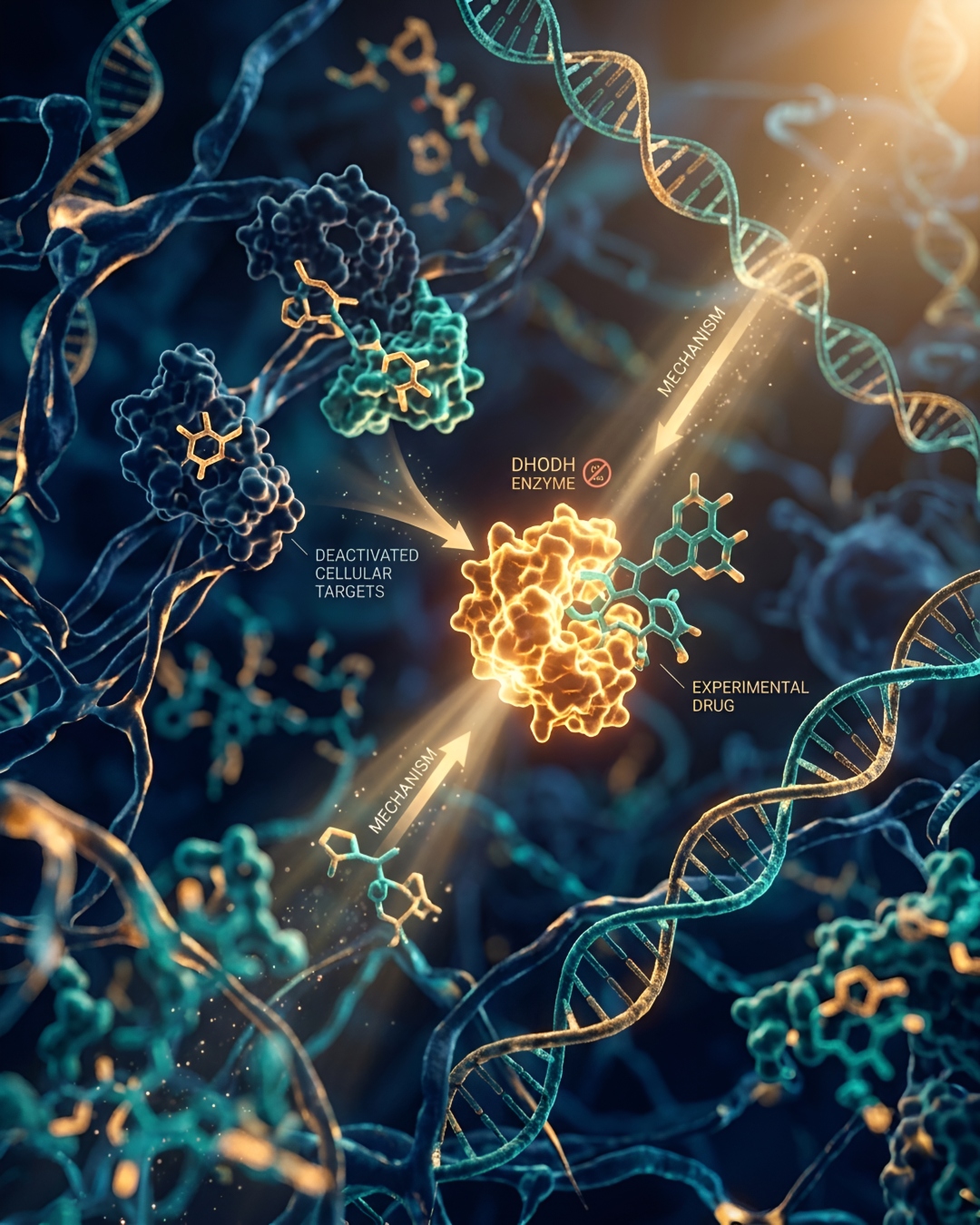
Unexpected Mechanism of Experimental Cancer Drugs

scitechdaily cancer-research pharmacology university-of-sydney nature-chemical-biology

요약

마인드맵 커버 이미지
AI 생성 커버 이미지

Recent brain cancer research reveals that experimental cancer drugs zavondemstat and QC6352 operate primarily by blocking the enzyme DHODH rather than their intended target KDM4, challenging fundamental assumptions about their anticancer mechanisms. Led by Professor Lenka Munoz at the University of Sydney, published in Nature Chemical Biology on October 6, 2026, the study demonstrates that these compounds cut off the supply of DNA building blocks required for rapid cancer cell division. The unexpected findings indicate that earlier studies utilizing QC6352 to investigate KDM4 biology must be reinterpreted, and ongoing clinical trials for zavondemstat may be targeting the wrong biological mechanism. Researchers emphasize that establishing a drug is true mechanism early is critical to prevent wasted research effort, avoid inappropriate patient selection, and ensure limited funding supports genuinely promising treatments.

핵심 포인트

01

🔹 Misidentified Drug Targets in Clinical Trials

Experimental cancer drugs zavondemstat and QC6352, currently evaluated in human trials and previously thought to inhibit KDM4 proteins, actually function primarily by blocking the DHODH enzyme in glioblastoma stem cells and tumor models.

02

🔸 DHODH Inhibition Mechanism

By blocking DHODH, an essential enzyme for producing DNA building blocks, the drugs deprive cancer cells of the materials necessary to copy DNA and sustain rapid division, directly halting tumor growth.

03

⭐ Implications for Prior Scientific Research

Because numerous global studies relied on QC6352 as a leading tool to investigate KDM4 biology, past findings attributed to KDM4 inhibition must now be reevaluated and potentially reinterpreted.

04

📊 Development of Accurate Research Tools

To help researchers isolate true KDM4 functions, the collaborative scientific team developed new compounds that successfully inhibit KDM4 without affecting DHODH activity.

05

💡 Clinical Trial Risks and Recommendations

Targeting the wrong biological mechanism can cause poorly designed clinical trials and inappropriate patient selection, prompting researchers to advocate for rigorous mechanism verification prior to human trials.

자신만의 마인드맵을 만들고 싶으신가요?

Neumap AI에 로그인하고 나만의 마인드맵 만들기를 시작하세요!

지금 시작하기