Virus Enzyme T7 Kinase Rewires Bacterial Proteome

scitechdaily biology microbiology bacteriophage research-news

요약

마인드맵 커버 이미지
AI 생성 커버 이미지

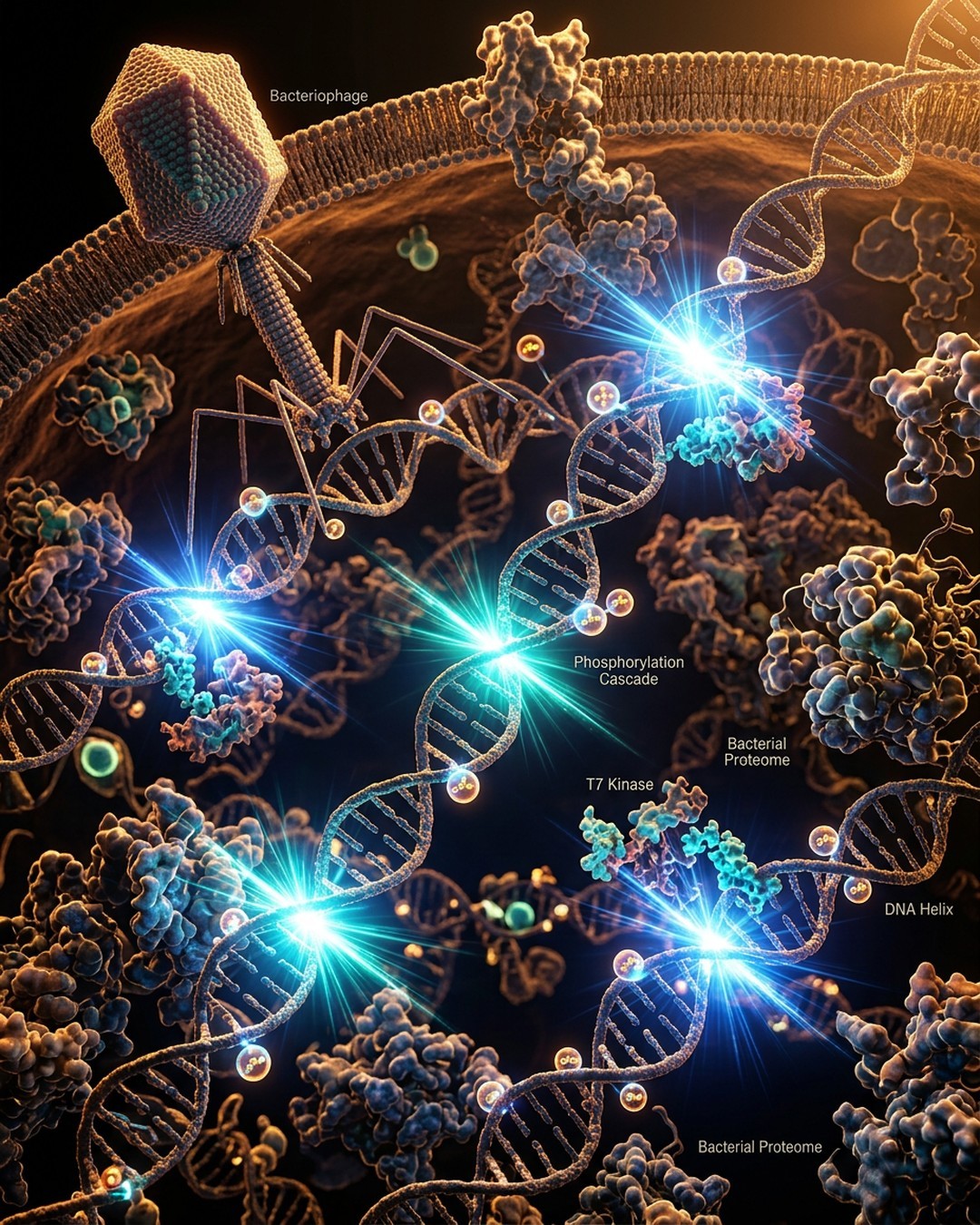
Researchers from European Molecular Biology Laboratory discovered that T7 bacteriophage utilizes a loose cannon enzyme called T7 kinase to trigger catastrophic and nonspecific phosphorylation across nearly the entire bacterial proteome of Escherichia coli within minutes of infection. This unprecedented massive protein modification cascade disables crucial host defense mechanisms and allows the virus to successfully invade its host despite the apparent lack of phenotype when the kinase is removed. The authors emphasize that this non-specific molecular weapon targets DNA-binding proteins specifically because these proteins act as core components of bacterial immune systems designed to recognize and destroy invading phage DNA. By briefly activating and anchoring itself near host DNA via a specialized shutoff domain before shutting itself down within five to six minutes, the viral enzyme effectively neutralizes host resistance without permanently damaging the cellular machinery required for viral replication. The essence of this strategic breakthrough lies in revealing a conserved evolutionary mechanism used by viruses to suppress diverse bacterial immune repertoires through overwhelming biochemical disruption. Advanced proteomics technologies developed by the Savitski Team and high-throughput interaction tracking by the Typas Group were crucial in mapping this pervasive proteome modification inside living bacterial cells. The practical application of these findings offers profound value for future bioengineering strategies and therapeutic treatments, specifically in designing engineered phages with broad anti-defense systems. Overcoming the diverse immune repertoires of pathogenic bacterial strains using such broad-spectrum viral enzymes could significantly enhance the efficacy of phage therapies against antibiotic-resistant infections.

핵심 포인트

01

🔹 Discovery of T7 Kinase as a Loose Cannon Enzyme

Researchers at EMBL Heidelberg uncovered that T7 phage utilizes T7 kinase to trigger massive, nonspecific phosphorylation across nearly every bacterial protein within minutes of infecting Escherichia coli. This unprecedented catastrophic phosphorylation event modifies more targets than any currently known kinase in nature, operating without an obvious pattern to disarm host defenses.

02

🔸 Targeting Bacterial DNA-Binding Proteins

Advanced single-cell proteomics experiments led by Tara Bartolec demonstrated that T7 kinase preferentially phosphorylates bacterial proteins that bind DNA. Because these specific proteins form the core of bacterial immune systems tasked with recognizing and destroying invading viral DNA, their functional disruption allows the phage to bypass host immunity.

03

⭐ Self-Limiting Kinetics and Structural Adaptations

The T7 kinase acts only briefly, shutting itself down within five to six minutes post-infection to prevent permanent destruction of the host machinery needed for viral replication. Its structure includes a shutoff domain that is non-essential for phosphorylation but is hypothesized to anchor the enzyme directly to DNA near vital host targets.

04

📊 Implications for Advanced Phage Therapies

Senior Scientist Mikhail Savitski and Athanasios Typas noted that pathogenic bacterial strains possess exceptionally diverse immune repertoires that frequently evolve new defense systems. Engineering therapeutic phages equipped with broad anti-defense mechanisms like T7 kinase could be the key to successfully infecting and destroying diverse strains of clinical pathogens.

05

💡 Collaborative Research Framework and Methodology

The breakthrough findings stem from a long-standing collaboration between the Typas Group, specializing in high-throughput bacterial interactions, and the Savitski Team, developers of advanced proteomics technologies at EMBL Heidelberg. Published in Nature on August 19, 2026, the study utilized sensitive experimental workflows to measure exact protein phosphorylation populations inside infected cells.

자신만의 마인드맵을 만들고 싶으신가요?

Neumap AI에 로그인하고 나만의 마인드맵 만들기를 시작하세요!

지금 시작하기