DeepMind WeatherNext AI Cyclone Prediction System

artificial-intelligence weather-forecasting deepmind cyclone-prediction climate-science

Samenvatting

Mindmap Omslagafbeelding
AI Gegenereerde Omslagafbeelding

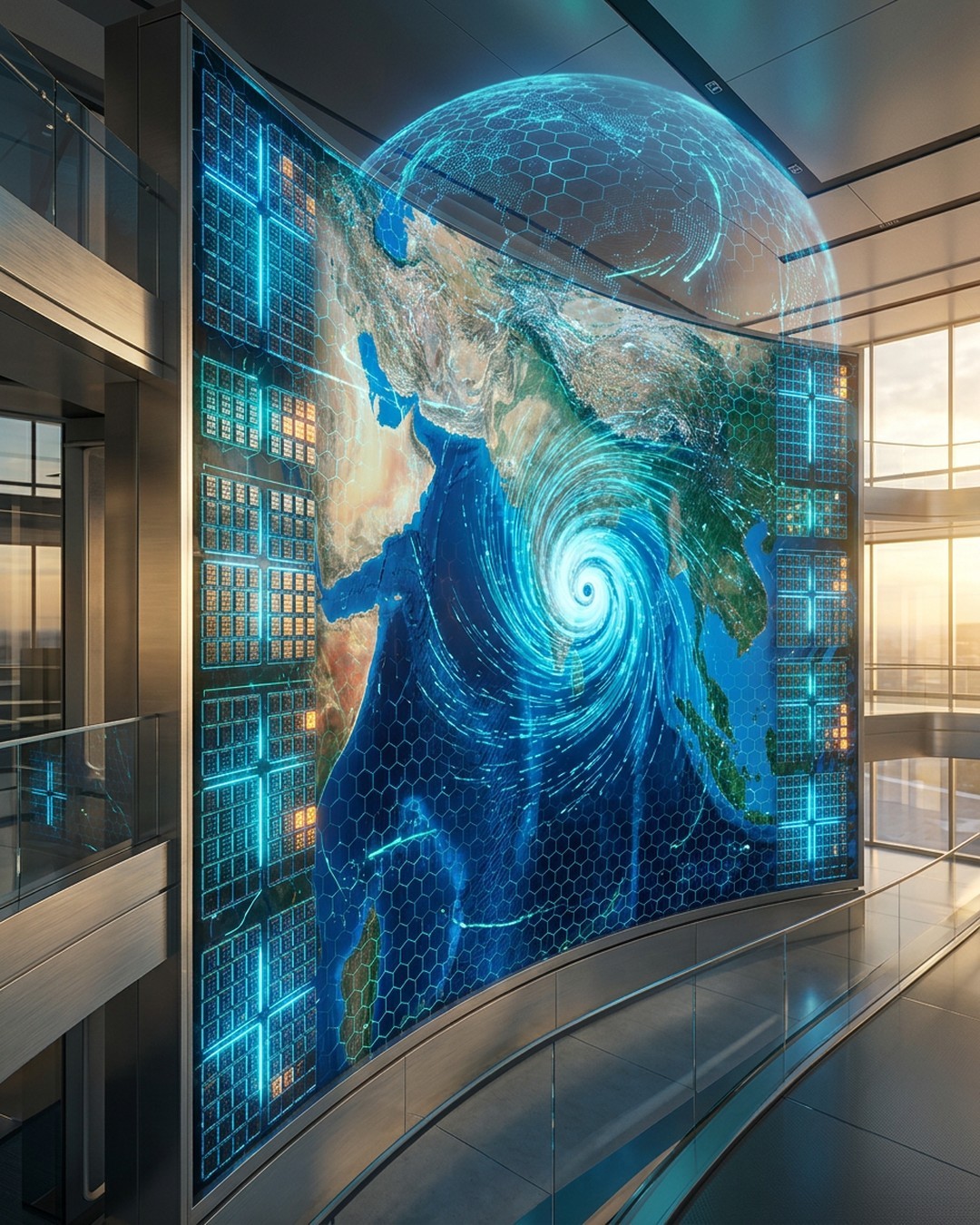
DeepMind has developed an advanced artificial intelligence weather model named WeatherNext, capable of predicting deadly cyclones one day further out than traditional methods, potentially saving lives by enabling timely evacuations. The model generates a 15-day global forecast in less than a minute on a single Google Tensor Processing Unit chip, drastically outperforming physics-based supercomputers that consume days of high-powered computer time. WeatherNext operates on an atmospheric simulation with a grid resolution of 28 square kilometres, having been trained on nearly 20 terabytes of global atmospheric data alongside historical records of 5000 storms. Comparative evaluations show that WeatherNext produces accurate three-day wind speed and location predictions that match what traditional models like NOAA's Hurricane Analysis and Forecast System achieve only two days out. Despite the remarkable speed and efficiency of machine-learning forecasting, experts like Hannah Cloke caution that maintaining traditional meteorological expertise is essential to ensure models produce sensible outputs. Furthermore, Oxford University researcher Tim Palmer warns that data-driven AI models might struggle to predict unprecedented anomalous events lacking historical analogues, and abandoning physics-based forecasting could undermine vital climate change modeling. Global forecasting agencies are increasingly adopting hybrid approaches, combining traditional physics simulations with machine-learning tools to enhance prediction accuracy. Future developments in meteorological AI will focus on pushing past current chaos barriers to provide even faster, highly reliable early warnings for extreme weather events worldwide.

Belangrijke punten

01

🔹 DeepMind WeatherNext AI Model Performance

【📌 Key Finding】DeepMind's WeatherNext AI model predicts deadly cyclones one day further out than existing methods, providing critical extra time for evacuation decisions. 【⭐ Data Support】The model generates a comprehensive 15-day forecast in under one minute using a single Google Tensor Processing Unit chip, compared to physics-based models that consume days of high-powered supercomputer time.

02

🔸 Training Data and Simulation Architecture

【📌 Architecture Details】WeatherNext operates on an atmospheric simulation with a grid resolution of 28 square kilometres. 【⭐ Training Scale】The model was trained on nearly 20 terabytes of global atmospheric data and historical records covering 5000 distinct storms, which significantly enhanced its accuracy in forecasting the behavior of newly formed cyclones.

03

⭐ Comparative Accuracy Analysis

【⚖️ Model Comparison】When evaluated against Google GenCast, ECMWF ENS, and NOAA Hurricane Analysis and Forecast System, WeatherNext demonstrated superior predictive capability. 【📊 Performance Metric】WeatherNext produces accurate three-day forecasts regarding maximum wind speed and location error that traditional physics models can only achieve two days out.

04

💡 Meteorological Expertise and Integration

【⚠️ Expert Warnings】Hannah Cloke from the University of Reading emphasizes the tension between rapid machine-learning advances and the necessity of retaining traditional meteorological expertise. 【🔍 Operational Risk】Many new practitioners come from data science backgrounds without deep meteorological training, risking misinterpretation of model outputs during critical weather events.

05

📊 Limitations and Climate Modeling Concerns

【⚠️ Generalization Risks】Tim Palmer from the University of Oxford warns that AI models trained on past data may fail to predict unprecedented, one-off anomalous events driven by climate change. 【🔗 Secondary Impact】Because weather forecasting and climate models share up to 90 percent of their code, abandoning physics-based weather models could severely damage long-term climate prediction capabilities.

Wilt u uw eigen mindmap maken?

Log in op Neumap AI en begin met het maken van uw eigen mindmaps!

Aan de Slag