TCIP3 Molecule Wipes Out Lymphoma Tumors

StanfordMedicine CancerResearch LymphomaTreatment Biochemistry MolecularBiology CellJournal2026

Samenvatting

Mindmap Omslagafbeelding
AI Gegenereerde Omslagafbeelding

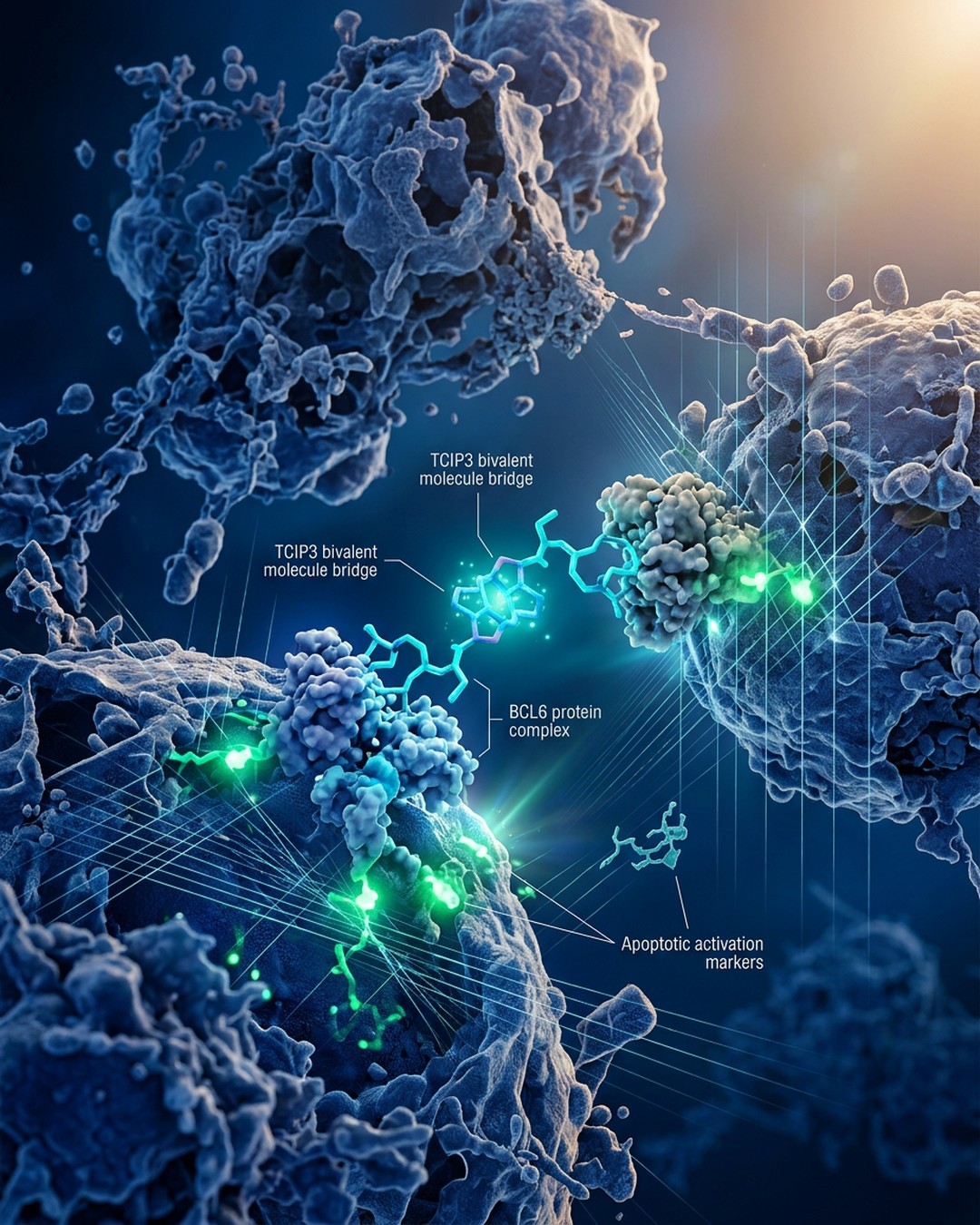
Stanford Medicine researchers have developed a novel molecule named TCIP3 that successfully eliminates aggressive diffuse large B-cell lymphoma tumors in mice within just 11 days of twice-daily treatment. Published on September 3, 2026, in the journal Cell, the study demonstrates a transformative chemical strategy that redirects the lymphoma-driving protein BCL6 rather than simply blocking it, converting its normal gene-silencing behavior into an active trigger for cell death. The core mechanism relies on chemically induced proximity, where the bivalent molecule TCIP3 physically bridges BCL6 to lysine acetyltransferases P300 and CBP. This connection deposits acetyl marks on both BCL6 and surrounding histone proteins, removing transcriptional repression and aggressively activating downstream death genes to destroy malignant cells at very low concentrations. Structural analyses using X-ray crystallography revealed that TCIP3 functions as a molecular glue, forming unexpected internal chemical contacts that rigidify the hybrid structure and secure the protein complex firmly in place. This high binding affinity allows the compound to achieve potent therapeutic outcomes without introducing observable toxicity or inflammatory spikes in the treated subjects. Beyond oncology, the targeted elimination of germinal center B-cells suggests promising therapeutic pathways for autoimmune conditions driven by hyperactive immune cell clusters, such as rheumatoid arthritis and myasthenia gravis. Future development requires chemical refinement and broader animal trials before clinical translation for human patients can be initiated.

Belangrijke punten

01

🔹 Breakthrough Molecule TCIP3 Eliminates Lymphoma

Stanford Medicine researchers designed a novel bivalent molecule called TCIP3 that successfully wiped out aggressive diffuse large B-cell lymphoma tumors in mice within just 11 days of twice-daily treatment, showing no observable toxicity or increased inflammatory markers in blood tests.

02

🔸 Rewiring the BCL6 Oncogene to Trigger Apoptosis

Rather than merely blocking or degrading the cancer-driving protein BCL6 (which normally suppresses cell death genes), TCIP3 physically connects BCL6 to enzymes P300 and CBP, actively driving the expression of apoptosis genes to destroy malignant cells.

03

⭐ Molecular Glue Mechanism and Structural Synergy

X-ray crystallography revealed that TCIP3 acts as a molecular glue, forming unexpected extra chemical contacts between joined proteins. This rigidifies the structure and holds the complex firmly in place, allowing the compound to kill lab-grown lymphoma cells at very low concentrations.

04

📊 Research Authorship and Collaborative Study Details

Published on July 20, 2026, in the journal Cell, the study was co-authored by senior researchers Gerald Crabtree, Nathanael Gray, Stephen Hinshaw, and Michael Green, with graduate student Meredith Nix and postdoctoral scholar Sai Gourisankar serving as lead authors.

05

💡 Potential Applications in Autoimmune Diseases

Because TCIP3 effectively eliminates germinal centers (clusters of rapidly dividing immune cells dependent on BCL6), the researchers suggest similar bivalent molecules could eventually be adapted to treat autoimmune conditions like rheumatoid arthritis and myasthenia gravis.

Wilt u uw eigen mindmap maken?

Log in op Neumap AI en begin met het maken van uw eigen mindmaps!

Aan de Slag