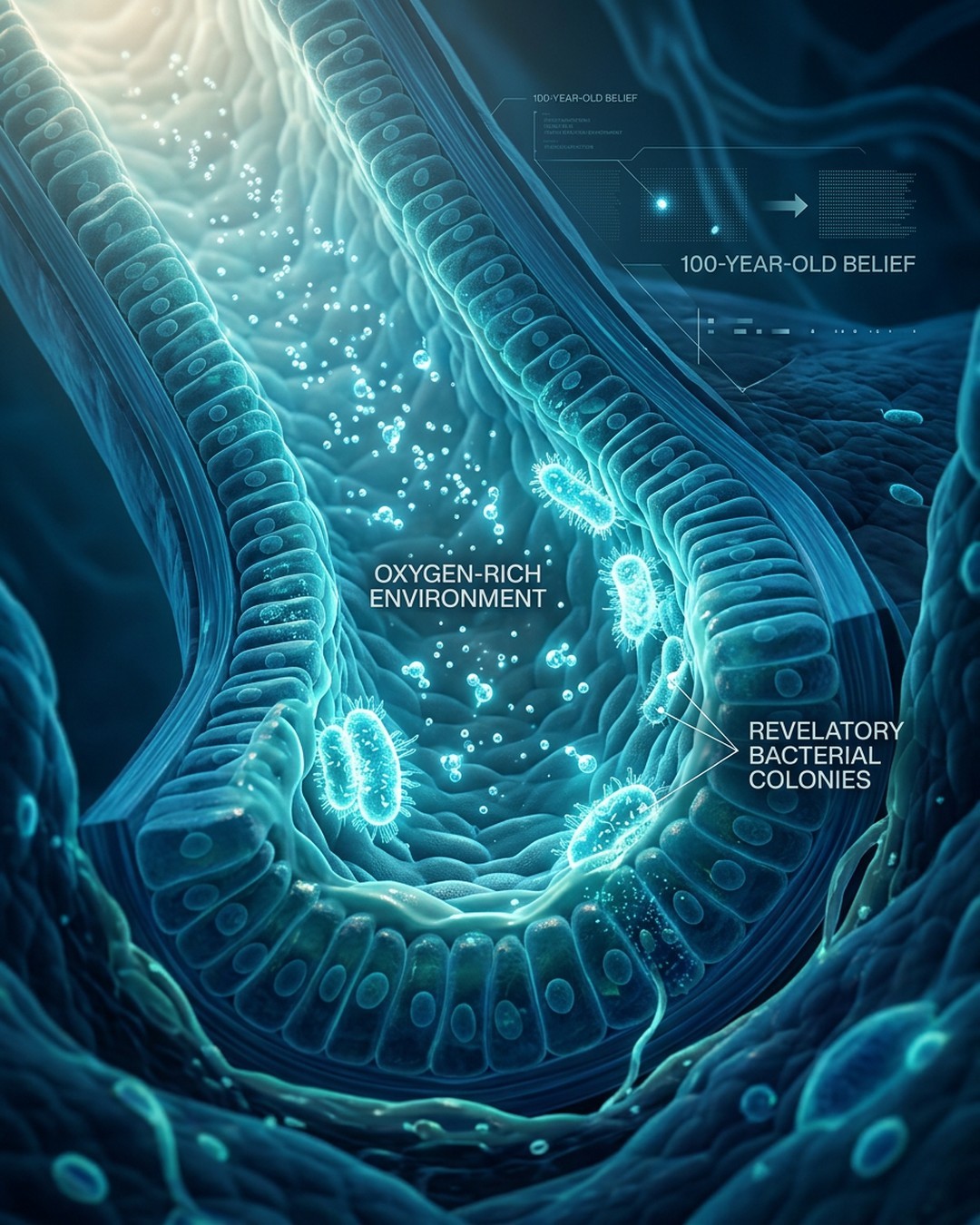
Overturning 100-Year-Old Belief About Lung Bacteria

scitechdaily biology microbiome bacteria university-of-michigan

Samenvatting

Mindmap Omslagafbeelding
AI Gegenereerde Omslagafbeelding

Recent research from the University of Michigan, published in the Journal of Bacteriology on July 14, 2026, has overturned a century-old belief regarding the lung bacterium Prevotella melaninogenica by demonstrating that it can tolerate significantly higher oxygen concentrations than previously assumed. Traditionally classified as an obligate anaerobe that cannot survive in oxygen, laboratory tests revealed this common respiratory microbe can grow at oxygen concentrations between 5 and 8 percent and briefly survive exposure levels up to 21 percent. Lead researcher Ariangela Kozik and her team aim to challenge rigid microbial categorizations, suggesting that a bacterium's ability to tolerate oxygen falls along a flexible spectrum rather than binary classifications. This discovery resolves a fundamental mystery regarding how Prevotella persists in the lungs, where it comprises roughly 10 percent of microbial populations in healthy individuals and up to 13 percent in those with chronic respiratory diseases such as asthma and COPD. The study utilized a novel real-time sensor platform and RNA sequencing to uncover mechanisms allowing Prevotella to consume oxygen and manage oxidative stress and DNA damage. These insights radically alter the scientific understanding of microbial survival strategies within the human respiratory tract and provide a foundational shift for studying lung microbiome dynamics. These findings pave the way for future investigations into how lung bacteria interact with the host immune system and produce metabolites in health versus disease states. Gaining a clearer picture of these microbial communities could eventually contribute to more targeted therapies for chronic lung conditions and decode complex host-pathogen interactions currently viewed as a major scientific black box.

Belangrijke punten

01

🔹 Overturning a Century-Old Assumption in Lung Microbiology

【📌 Key Finding】University of Michigan researchers challenged a 100-year-old scientific belief by proving that Prevotella melaninogenica, a common lung resident, is not an obligate anaerobe. 【🔸 Impact Factors】The study shifts the paradigm of rigid microbial oxygen classification toward a flexible spectrum. 【⭐ Data Support】Published on July 14, 2026, in the Journal of Bacteriology, led by assistant professor Ariangela Kozik.

02

🔸 Oxygen Tolerance and Survival Thresholds of Prevotella

【📌 Key Finding】Laboratory experiments exposed P. melaninogenica cultures to progressively higher oxygen concentrations to measure growth and survival metrics. 【🔸 Impact Factors】Bacteria successfully grew at oxygen concentrations between 5% and 8% and briefly survived exposure levels as high as 21%. 【⭐ Data Support】Advanced real-time sensor platforms and RNA sequencing revealed unexpected mechanisms for handling oxidative stress and DNA damage.

03

⭐ Prevalence of Prevotella in Healthy and Diseased Lungs

【📌 Key Finding】The discovery solves the mystery of how Prevotella persists in oxygenated environments like the human respiratory tract. 【🔸 Impact Factors】Microbes make up roughly 10% of microbial populations in healthy lungs and average up to 13% in individuals suffering from asthma and COPD. 【⭐ Data Support】Understanding these population metrics helps connect individual microbes to chronic respiratory conditions.

04

📊 Future Research Directions and Immune System Interactions

【📌 Key Finding】The research team plans to investigate how the immune system responds to Prevotella and how these bacteria function within the broader community. 【🔸 Impact Factors】Future studies will analyze secreted metabolites, immune signaling pathways, and activity differences between healthy and diseased lungs. 【⭐ Data Support】Targeting these microbial-host relationships aims to decode what researchers currently describe as a major biological black box.

05

💡 Clinical Implications for Targeted Therapeutics

【📌 Key Finding】A clearer understanding of how the body's microbiomes function will directly contribute to the development of advanced medical treatments. 【🔸 Impact Factors】Unlocking the mechanics of aerotolerant capacity enables more precise, targeted therapies for chronic lung diseases. 【⭐ Data Support】Led by researchers Claire Albright, Gouri Anil, Jacob Evans, Souzane Ntamubano, and Ariangela Kozik under DOI 10.1128/jb.00142-26.

Wilt u uw eigen mindmap maken?

Log in op Neumap AI en begin met het maken van uw eigen mindmaps!

Aan de Slag