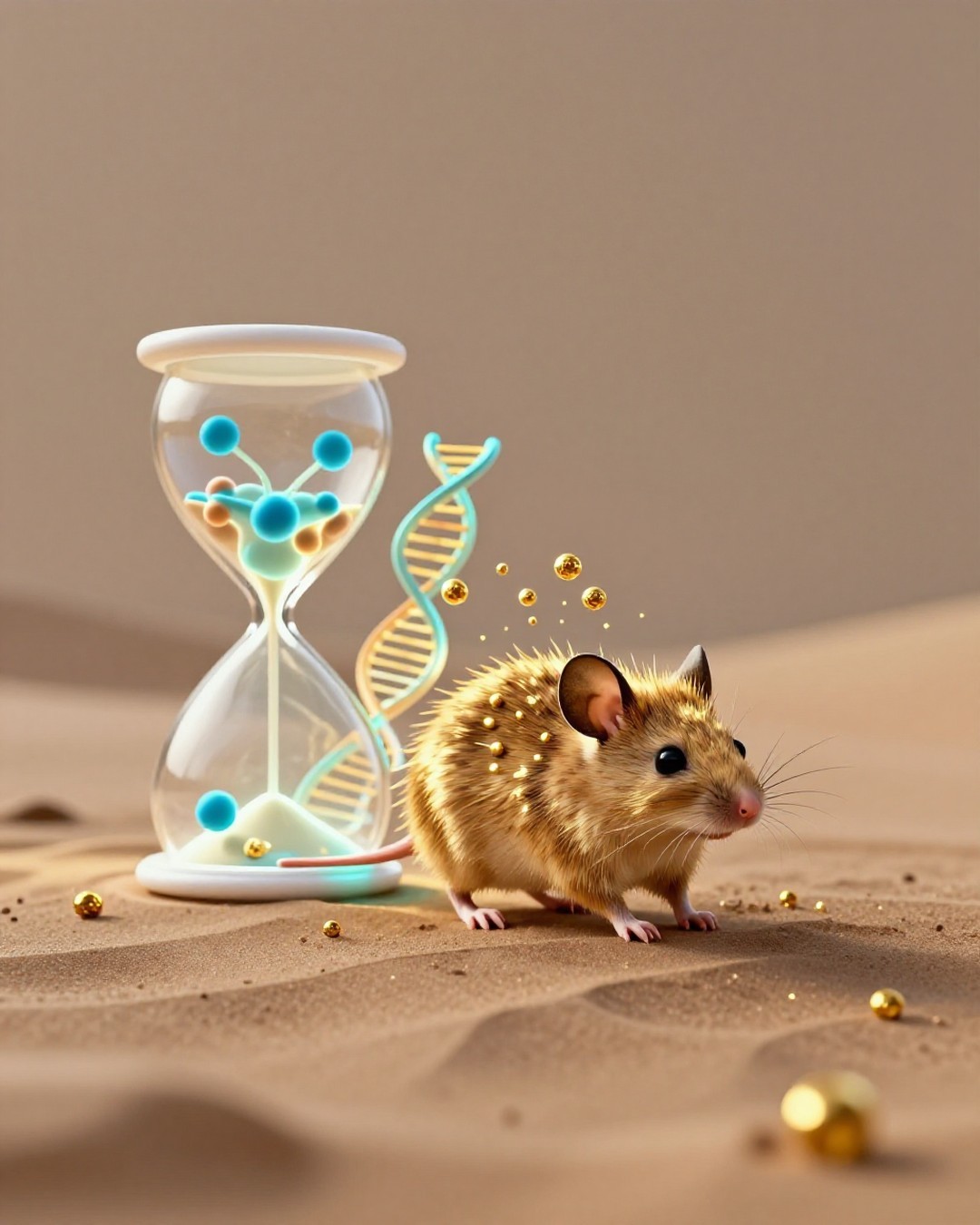
Golden Spiny Mouse Longevity Research

Longevity AgingResearch YaleUniversity ScienceAdvances Biology Clusterin GoldenSpinyMouse

Samenvatting

Mindmap Omslagafbeelding
AI Gegenereerde Omslagafbeelding

Researchers at the Yale School of Medicine have identified the golden spiny mouse (Acomys russatus) as a unique biological model that defies typical aging processes. Unlike standard wild mice, which live approximately nine months, these desert-dwelling rodents maintain physical, cognitive, and immune functions well into old age, with some observed living up to five years. This resilience is attributed to specific evolutionary adaptations that allow them to manage chronic inflammation and maintain tissue integrity. The study, published in Science Advances on February 25, 2026, highlights the role of the protein clusterin in mitigating age-related decline. By clearing misfolded proteins and reducing neuroinflammation, clusterin acts as a key operator in the mouse's ability to resist 'inflammaging.' Experimental application of clusterin to standard lab mice and human white blood cells demonstrated similar protective benefits, suggesting potential pathways for future human longevity therapies. The golden spiny mouse's ability to avoid age-related deterioration is linked to its unique metabolic pathways and evolutionary pressures. These mice possess adaptations such as scarless skin healing, a thymus that remains functionally intact throughout life, and the ability to conserve energy during food scarcity. These traits suggest that natural selection has favored mechanisms that promote healthy aging, providing a roadmap for future medical interventions. This research offers a promising foundation for developing new drugs aimed at promoting healthy aging in humans. By targeting the metabolic pathways that have become inactive in other species, scientists hope to replicate the protective effects observed in the golden spiny mouse, ultimately improving the quality of life and longevity for aging populations.

Belangrijke punten

01

🔹 Exceptional Longevity of Acomys russatus

The golden spiny mouse (Acomys russatus) exhibits a significantly longer lifespan than typical wild mice, which usually live around nine months. Researchers have observed these rodents living up to five years in the wild while maintaining high levels of physical activity, cognitive function, and immune health, effectively defying the standard biological decline associated with aging.

02

🔸 The Role of Clusterin in Anti-Aging

【📌 Key Finding】The protein clusterin is identified as a critical factor in resisting age-related decline. 【🔸 Impact Factors】It functions by clearing misfolded proteins and reducing neuroinflammation. 【⭐ Data Support】Experimental administration of clusterin to standard lab mice and human white blood cells resulted in reduced inflammaging and better maintenance of organ health, mirroring the natural resilience of the golden spiny mouse.

03

⭐ Preservation of Biological Pathways

Unlike most vertebrates, the golden spiny mouse maintains a functional thymus throughout its life, preventing the early immune system deterioration seen in other species. Additionally, these mice retain the ability to heal skin injuries without scarring into old age, and they do not exhibit the expected cognitive decline in learning and memory tasks.

04

📊 Evolutionary Adaptations for Survival

The species has evolved specific traits to survive harsh desert environments, including diurnal activity patterns to avoid nocturnal predators, high tolerance for toxins, and efficient energy conservation during food shortages. These survival advantages allow the mice to live long enough for natural selection to favor and pass on healthy aging traits to subsequent generations.

05

💡 Future Therapeutic Implications

The research suggests that the metabolic pathways responsible for healthy aging in the golden spiny mouse may also exist in humans but remain inactive. By identifying these pathways, researchers aim to develop new pharmacological interventions that use proteins like clusterin to turn these protective mechanisms back on, potentially improving human healthspan and longevity.

Wilt u uw eigen mindmap maken?

Log in op Neumap AI en begin met het maken van uw eigen mindmaps!

Aan de Slag