Zoo Lion Feeding Change and Wild Behavior Study

scitechdaily animal-behavior adelaide-university zoology conservation

Samenvatting

Mindmap Omslagafbeelding
AI Gegenereerde Omslagafbeelding

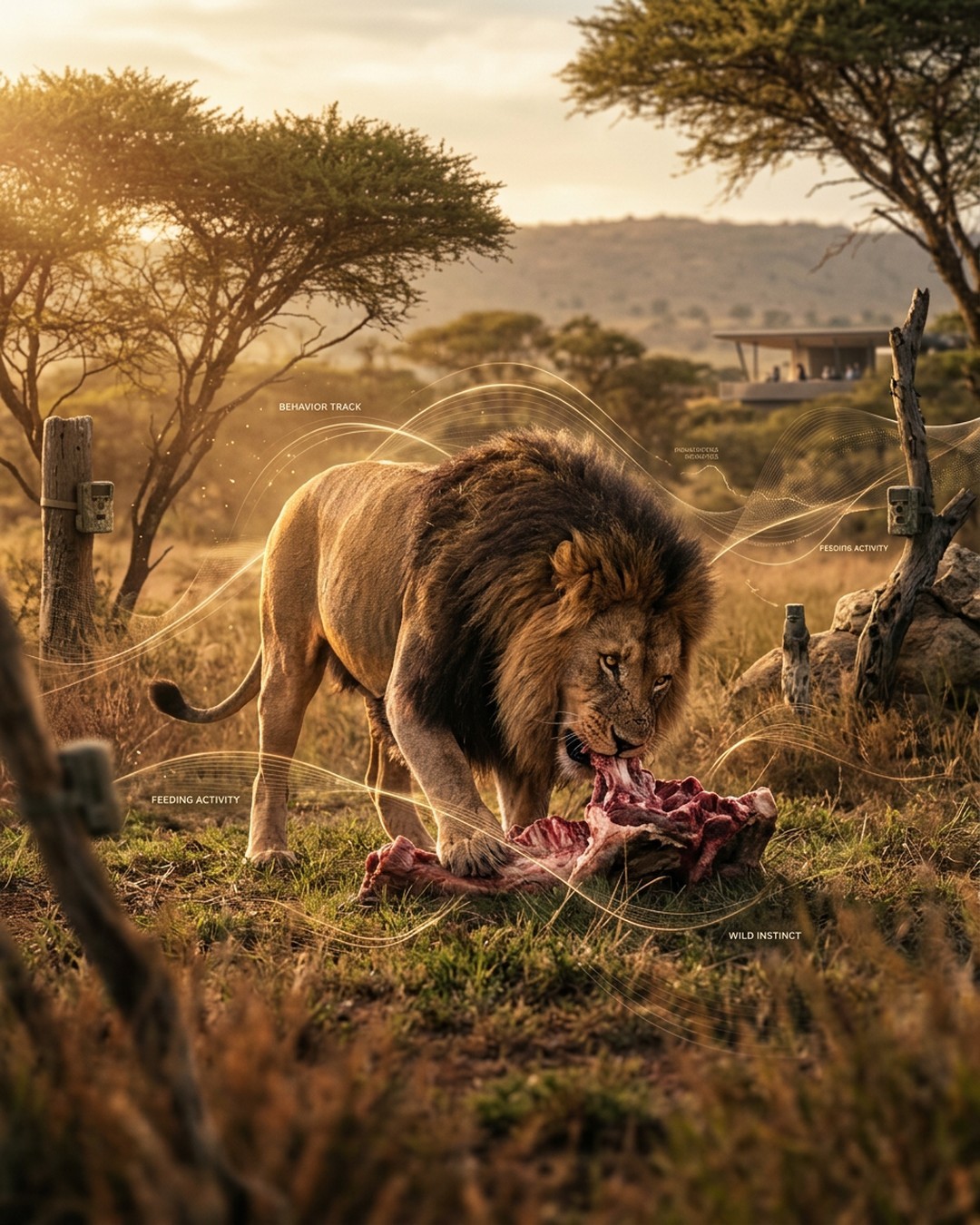
A study published on August 13, 2026, in Applied Animal Behavior Science by researchers from Adelaide University and Monarto Safari Park investigated how a simple feeding change affects zoo-housed lions. By introducing whole animal carcasses every nine days to create a feast-and-fast schedule, the research team found that adult male African lions significantly altered their natural behaviors to mimic wild counterparts. The authors emphasize that captive carnivores often experience overly predictable routines, which fail to stimulate natural physiological and behavioral cycles. Implementing irregular intervals with whole carcasses successfully encouraged natural patterns of tearing, feeding, extended resting, and gradually increasing activity levels during the fasting phase. During the three-month experiment, keepers provided approximately 200 kilograms of whole carcasses that remained available for up to three days. Continuous 24-hour video monitoring via eight infrared cameras revealed that lions spent nearly three times longer eating when carcasses were available, followed by prolonged periods of rest and a steady rise in movement over time. The findings offer vital insights for zoo management and animal welfare enhancement, demonstrating that long-term continuous observation across entire feeding cycles is essential. Furthermore, the study noted that repetitive behaviors like pacing correlated more strongly with predictable keeper routines than with actual hunger levels.

Belangrijke punten

01

🔹 Study Overview and Research Context

Published on August 13, 2026, in Applied Animal Behavior Science, a collaborative study between Adelaide University and Monarto Safari Park examined adult male African lions. Researchers introduced a whole-carcass feast-and-fast feeding regime every nine days to determine if altering meal predictability could encourage natural wild behaviors in captive carnivores.

02

🔸 Behavioral Changes from Whole Carcasses

【📌 Feeding Duration】Lions spent almost three times longer eating when whole carcasses were available compared to standard feeding routines. 【🔸 Natural Mechanics】The 200 kilograms of carcasses allowed animals to engage in natural behaviors such as tearing, pulling, and manipulating food over extended periods lasting up to three days.

03

⭐ Post-Feeding Rest and Activity Cycles

【📌 Rest Phase】Following a heavy feast on whole carcasses, the lions devoted substantially more time to lying down and resting. 【📈 Activity Progression】As the fasting period continued over the nine-day cycle, the lions' movement increased gradually, closely mirroring the natural feast-and-fast rhythms documented in wild lion populations.

04

📊 Monitoring Methodology and Pacing Analysis

【📌 24-Hour Surveillance】Researchers utilized eight infrared cameras to continuously monitor the lions across three months of observation. 【💡 Pacing Insights】Analysis of repetitive pacing behavior showed it correlated more strongly with predictable keeper arrivals and habitat-shifting times rather than actual hunger levels during fasting.

05

💡 Implications for Animal Welfare and Management

【📌 Long-Term Observation】Co-author Associate Professor Alexandra Whittaker emphasized that feeding schedules influence behavior for days, proving that evaluating animal welfare requires monitoring complete feeding cycles rather than single events. 【🛡️ Future Outlook】Combining continuous behavioral monitoring with physiological measurements can further optimize captive wildlife management practices.

Wilt u uw eigen mindmap maken?

Log in op Neumap AI en begin met het maken van uw eigen mindmaps!

Aan de Slag