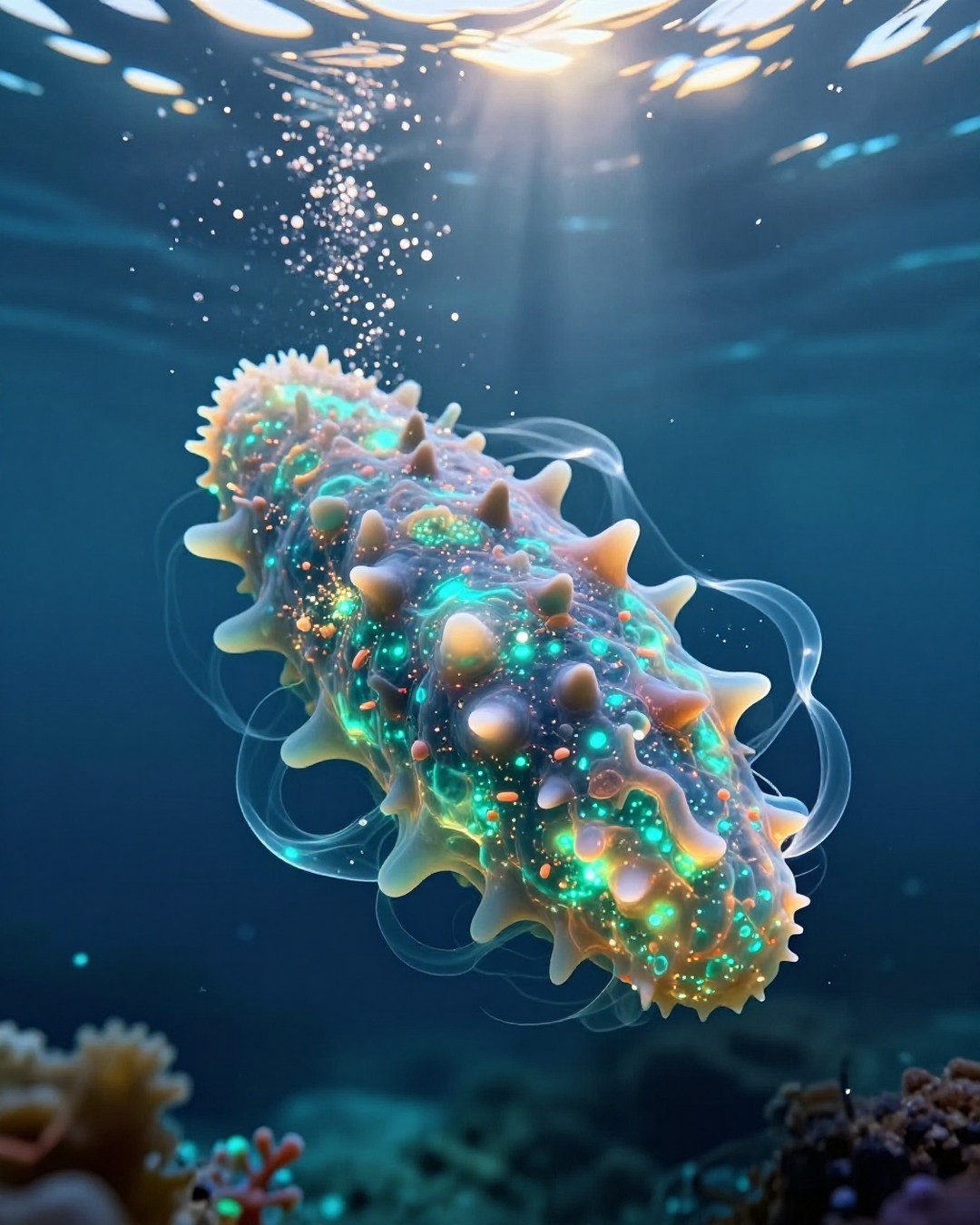
Regenerative Potential of Sea Cucumber Tissue

Biology Regeneration SeaCucumber MarineScience BiomedicalResearch CellularLongevity

Samenvatting

Mindmap Omslagafbeelding
AI Gegenereerde Omslagafbeelding

Researchers have discovered that detached tissue from the sea cucumber species Psolus fabricii can survive, heal, and continue growing in natural seawater for over three years. This finding challenges the biological assumption that separated animal tissue inevitably decays, marking the first documented case of such long-term independent development outside of controlled laboratory environments. The study, published in Science Advances on May 27, 2026, highlights the remarkable regenerative capacity of echinoderms. The detached tissue demonstrated cell diversification, immune activity, and structural reorganization, effectively absorbing nutrients directly from the surrounding seawater despite lacking a mouth or digestive system. This discovery offers a potential new model for biomedical research, providing a simpler, more accessible alternative to traditional cell cultures. Because the tissue is derived from an invertebrate, it faces fewer regulatory and ethical hurdles, making it a promising tool for studying tissue repair, antimicrobial healing, and cellular longevity. Practical applications include utilizing this natural model to advance tissue engineering and regenerative medicine. Scientists suggest that the ocean remains a vast, untapped source of biological innovations, and protecting these marine resources is essential for future scientific breakthroughs in human health and biotechnology.

Belangrijke punten

01

🔹 Discovery of Persistent Tissue Growth

【📌 Key Finding】Researchers observed that detached tissue from the sea cucumber Psolus fabricii survived and grew for over three years in natural seawater. 【🔸 Impact Factors】This challenges the biological dogma that separated animal tissue must decay, proving that certain marine organisms possess extreme cellular resilience and regenerative potential.

02

🔸 Mechanism of Survival and Development

【📌 Key Finding】The tissue maintained structural complexity and underwent cell diversification without a mouth. 【⭐ Data Support】The tissue absorbed amino acids directly from the seawater, which provided the necessary nutrients for healing and growth despite the environment being microbially diverse and non-sterile.

03

⭐ Comparison with Traditional Cell Cultures

【🔵 Traditional Cell Lines (e.g., HeLa)】Require tightly controlled, sterile (axenic) laboratory conditions to survive and multiply. 【🟠 Sea Cucumber Tissue】Thrives in natural, non-sterile seawater, demonstrating independent movement and healing capabilities that traditional cultures lack.

04

📊 Biomedical and Research Implications

【📌 Potential Applications】The tissue serves as a new, simple model for studying tissue repair and antimicrobial healing. 【⭐ Regulatory Advantage】As an invertebrate-derived model, it faces fewer ethical and legal restrictions compared to human or vertebrate cell lines, facilitating easier use in diverse laboratory settings.

05

💡 Scientific Significance and Future Outlook

【📌 Research Context】Led by Memorial University of Newfoundland and Bigelow Laboratory for Ocean Sciences, the study (published May 27, 2026) emphasizes the untapped potential of marine life. 【🎯 Conclusion】The discovery serves as a reminder of the vast, unknown biological innovations within the ocean that could revolutionize regenerative medicine.

Wilt u uw eigen mindmap maken?

Log in op Neumap AI en begin met het maken van uw eigen mindmaps!

Aan de Slag