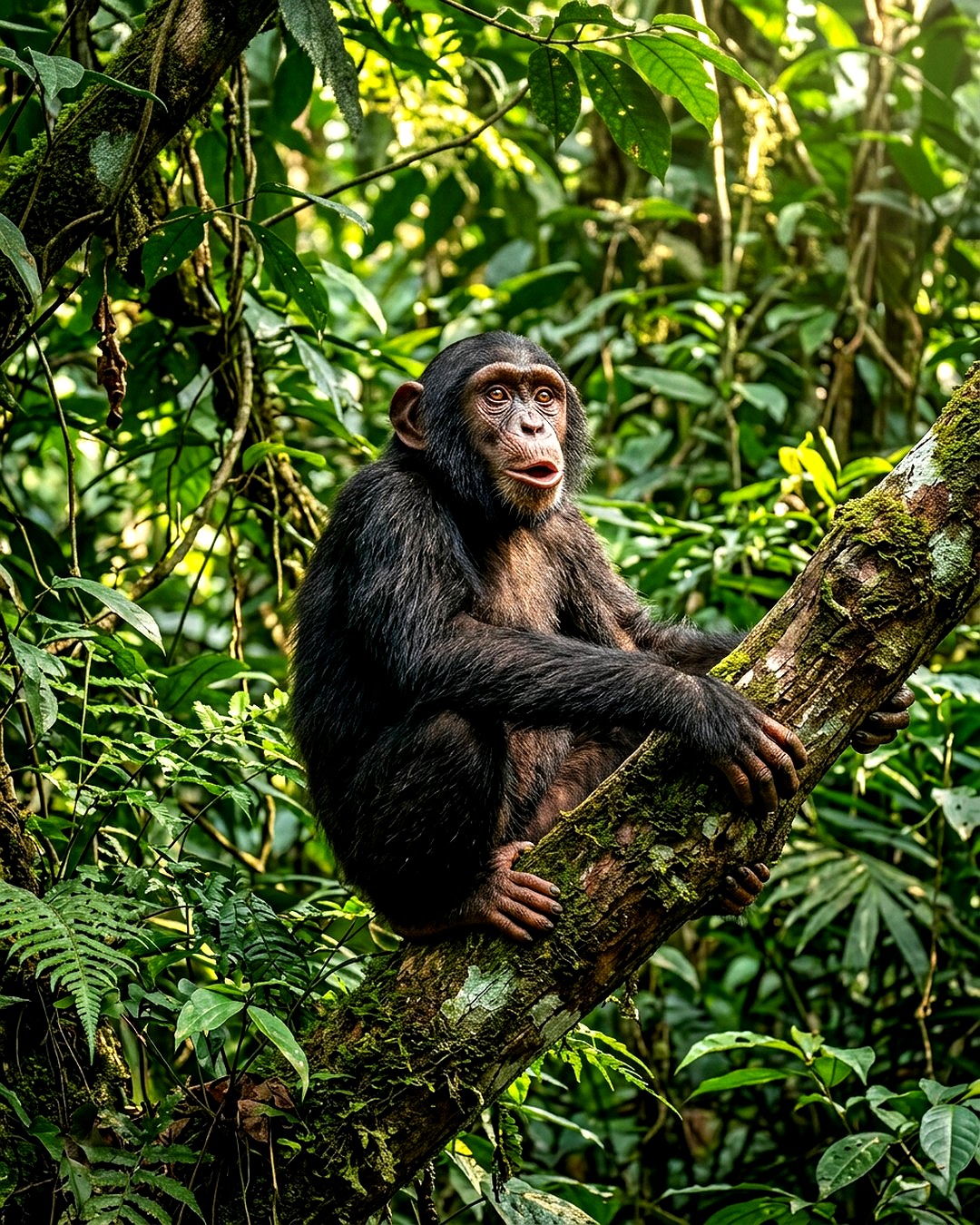
🐒 Chimpanzee Vocal Development

SciTechDaily Chimpanzee AnimalBehavior Primatology Primates QueenMaryUniversityOfLondon

Samenvatting

Mindmap Omslagafbeelding
AI Gegenereerde Omslagafbeelding

Young chimpanzees may develop distinct vocal patterns as they grow, indicating that their communication is shaped by more than genetics alone. Research published on September 2, 2026, in PLOS ONE reveals that chimpanzee vocalizations change during early development and vary across geographically separated populations. A scientific team compared the grunts, whimpers, and laughter of infant and juvenile chimpanzees from two distinct groups. The findings challenge long-held beliefs that animal calls are fixed entirely by genetics from birth. The research team, led by doctoral researcher Kassandra Giragosian from Queen Mary University of London in collaboration with the University of Portsmouth, argues against the notion of fixed animal communication. By examining communication across different stages of early life rather than solely comparing adults, the authors demonstrate that social and environmental factors play a crucial role. This perspective shifts the scientific understanding of primate vocal development and highlights that inherited traits alone cannot account for population differences. The study emphasizes that communication systems emerge and diversify dynamically throughout youth. The study examined infant and juvenile chimpanzees from two geographically separated populations, specifically analyzing grunts, whimpers, and laughter. The researchers discovered that differences between the groups became increasingly pronounced as the animals aged. Some population-specific vocal characteristics were detectable during infancy, while other distinct patterns emerged as the chimpanzees entered their juvenile years. The discovery does not imply that chimpanzees possess human-like speech or language, which requires an agreed vocabulary and grammar. Understanding how animal communication develops during early life offers valuable insights into animal behavior and the evolution of complex communication systems across species. Researchers and students of primatology can apply this developmental framework to investigate biological and environmental influences in other primates. The findings encourage broader exploration of how social interactions shape vocal behavior outside of human populations. Future studies can build upon this methodology to map the emergence of vocal patterns in diverse animal communities.

Belangrijke punten

01

📊 Regional Vocal Patterns in Young Chimpanzees

Young chimpanzees may develop regional vocal patterns as they grow, suggesting that their communication is shaped by environmental and social factors rather than solely by genetics. A research team compared the vocalizations of infant and juvenile chimpanzees from two geographically separated populations to understand how early development influences sound production. By examining specific calls, the researchers found that differences between the groups became more pronounced as the animals aged. Not all of these population-specific vocal traits appeared at the same time during early life.

02

🏛️ Research Leadership and Collaborating Institutions

The study was led by doctoral researcher Kassandra Giragosian from the School of Biological and Behavioural Sciences at Queen Mary University of London. The research was conducted in collaboration with the University of Portsmouth and included contributions from Marina Davila-Ross and Derry Taylor. The findings were officially published on September 2, 2026, in the academic journal PLOS ONE under the title Ontogeny of dialects across chimpanzee vocalisations. This multi-institution effort provides a fresh perspective on primate communication development.

03

🎯 Analysis of Specific Vocalizations Across Age Stages

The research team specifically examined sounds such as grunts, whimpers, and laughter across different stages of early life in chimpanzees. By looking at infant and juvenile animals rather than just comparing adult populations, the authors tracked how vocal differences evolve over time. Some population-specific vocal characteristics were already detectable during infancy in the young subjects. Other distinct patterns emerged later as the chimpanzees officially entered their juvenile years of development.

04

⚡ Distinction Between Animal Accents and Human Language

The discovery that young chimpanzees develop distinct vocal patterns does not mean that chimpanzees possess a true language or human-like speech. Human language involves an agreed vocabulary and a formal grammatical structure that is absent in primate calls. Instead, the finding offers a novel perspective on how communication systems develop and diverge across different animal communities. It sheds light on the subtle environmental and biological influences shaping primate vocalizations without overstating their complexity.

05

💡 Broader Implications for Primate and Animal Behavior

Understanding how communication develops during early life is fundamental to comprehending broader animal behavior and the evolution of complex signaling systems. The findings demonstrate that chimpanzee vocalizations continue to develop as young animals interact with their social and ecological surroundings. This research framework allows scientists to investigate the biological and environmental influences shaping vocal behavior across other species. It ultimately helps researchers map out how communication systems emerge and diversify throughout the animal kingdom.

Wilt u uw eigen mindmap maken?

Log in op Neumap AI en begin met het maken van uw eigen mindmaps!

Aan de Slag