Contagious Cancer Discovered in Freshwater Catfish

scitechdaily cancer-research marine-biology melanoma university-of-vermont

Samenvatting

Mindmap Omslagafbeelding
AI Gegenereerde Omslagafbeelding

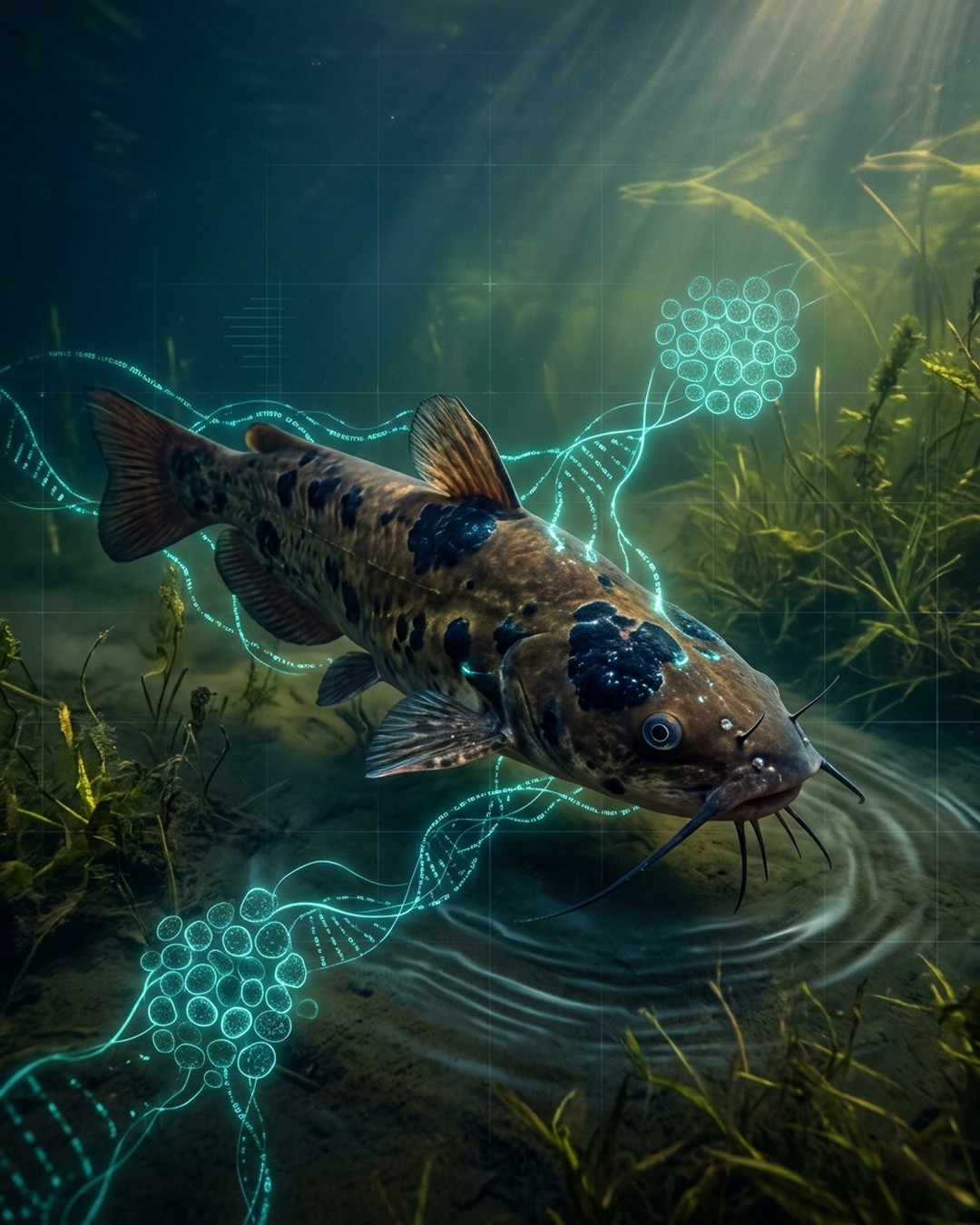
Scientists in Vermont have discovered the first contagious cancer in a freshwater animal, identifying a transmissible melanoma affecting brown bullhead catfish (Ameiurus nebulosus) in Lake Memphremagog and other New England and Canadian waters. Published on July 27, 2026, in Nature, whole-genome sequencing revealed that the tumor cells behave like parasites, passing directly between fish and sharing hundreds of thousands of genetic variants absent from the host catfish. The research team, co-led by scientists Julie Dragon and Mark Henderson from the University of Vermont, initially suspected viruses or pollution from nearby landfills such as the Coventry Landfill, but genetic and water quality analyses ruled out industrial contamination. Instead, the geographical distribution correlates with elevated arsenic concentrations in regional soil, though exact transmission mechanisms and ecological impacts remain under investigation. This marks only the fourth recognized type of transmissible cancer in the animal kingdom, joining facial tumor disease in Tasmanian devils, canine transmissible venereal tumors, and leukemia-like cancers in bivalve mollusks. Historical journals from Henry David Thoreau in 1852 and 1858 describing similar dark lesions on catfish suggest this transmissible cancer may have a long and unrecognized history in regional waters. Researchers emphasize that the disease poses no known threat to humans, as the cancer cells cannot infect or survive in other species, and affected fish waters supply drinking water to over 175,000 people safely. Scientists are currently surveying Massachusetts ponds and rivers to map the distribution, understand cancer evolution, and uncover the biological boundaries that normally keep cancers confined to single animals.

Belangrijke punten

01

🔹 Discovery of First Contagious Freshwater Cancer

On July 27, 2026, researchers at the University of Vermont published a study in Nature revealing a transmissible melanoma affecting brown bullhead catfish (Ameiurus nebulosus) in Lake Memphremagog on the Vermont/Quebec border. By 2014, raised black lesions were visible on nearly one-third of the fish examined, marking the first time a contagious cancer has been identified in any freshwater animal and only the fourth in the entire animal kingdom.

02

🔸 Genetic Evidence and Parasitic Behavior

Whole-genome sequencing demonstrated that the cancer cells act like infectious parasites passing between hosts. Tumor samples shared hundreds of thousands of genetic variants that were completely absent from the healthy tissue of the host catfish, distinguishing this condition from conventional tumors arising from an animal's own cellular mutations.

03

⭐ Potential Transmission Routes and Ecological Context

Scientists suspect that spawning behavior in shallow water—where larger fish gather in close physical contact—facilitates the transfer of tumor cells. Additionally, the lack of scales and bottom-dwelling habits of brown bullhead catfish expose them to sediment that may contain free-floating cancer cells, alongside potential immune suppression from natural environmental stressors.

04

📊 Geographic Spread and Arsenic Correlation

Sampling across Vermont, New Hampshire, Maine, and New Brunswick confirmed that the disease extends beyond Lake Memphremagog into pristine waters far from industrial discharges or landfills like the Coventry Landfill. Researchers found elevated arsenic levels inside the cancer cells, correlating geographically with high natural arsenic concentrations in regional soil.

05

💡 Historical Records and Human Safety Implications

Historical records from Henry David Thoreau in 1852 and 1858 describe similar inky-black lesions on catfish in Massachusetts, suggesting the disease has existed for over a century. Researchers assure that the disease poses zero threat to humans, as the cells cannot infect other species, though scientists continue mapping the spread to study cancer evolution and containment boundaries.

Wilt u uw eigen mindmap maken?

Log in op Neumap AI en begin met het maken van uw eigen mindmaps!

Aan de Slag