California Insect Biodiversity Study

ScitechDaily Biology Biodiversity California Ecology Entomology

Samenvatting

Mindmap Omslagafbeelding
AI Gegenereerde Omslagafbeelding

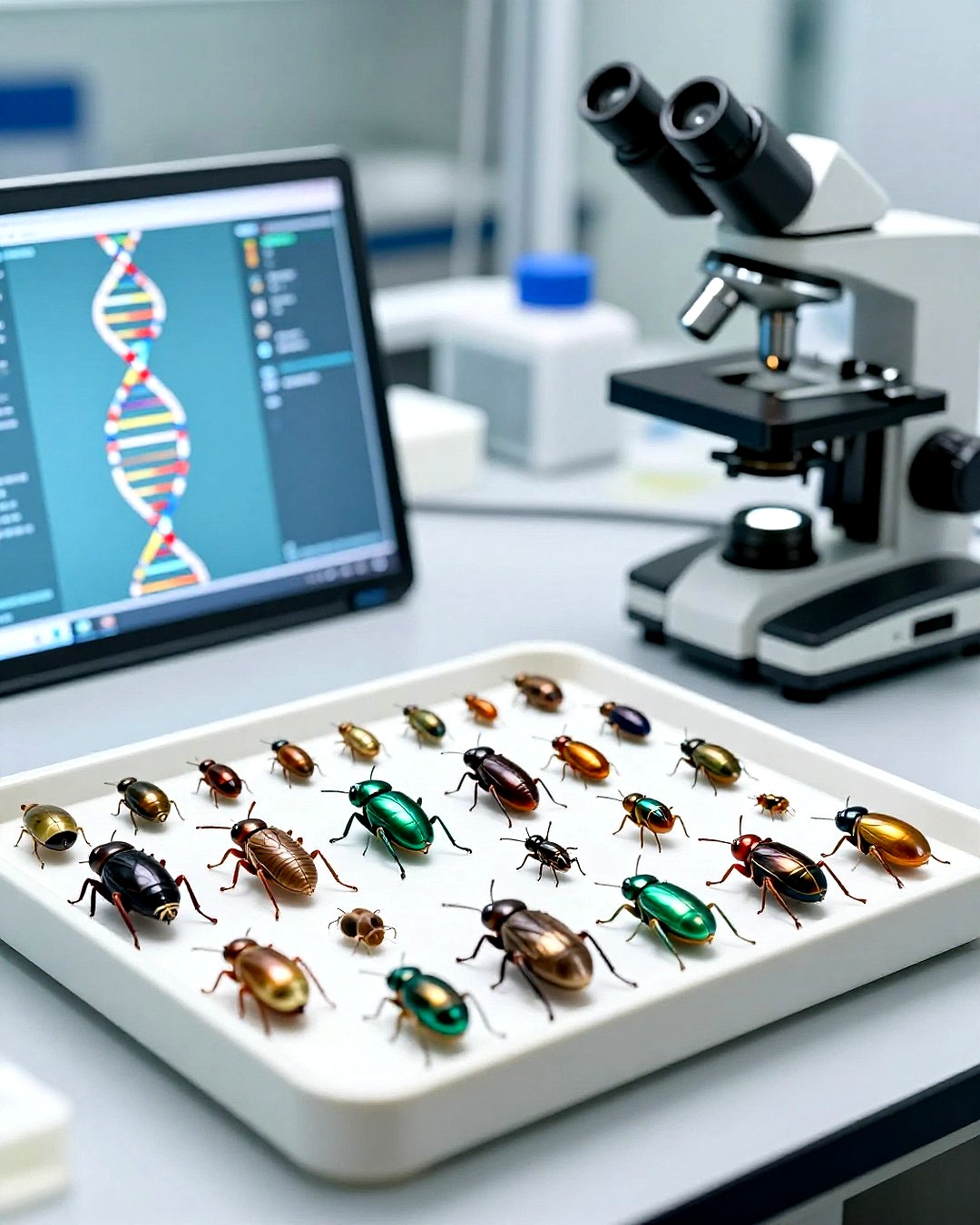
A groundbreaking study published on November 12, 2026, in the journal Ecography and led by researchers at the Natural History Museum of Los Angeles County estimates that California supports more than 60,000 insect species, far exceeding earlier scientific expectations. Scientists have formally described only about two-thirds of these tiny creatures, revealing that nearly every sampled location holds its own distinct insect community. This research represents the first major publication from the California Insect Barcode Initiative (CIBI), a 6 million dollar project aimed at collecting and identifying every insect species across the state through DNA barcoding. The research team and community science volunteers analyzed over one million insect specimens collected from museum archives, 72 ecoregions using Malaise traps, and 454 field expeditions. The findings indicate that protecting California's rich insect biodiversity cannot be achieved through a single protected area because even geographically similar environments harbor unique insect faunas. The Mojave Basin and Range region emerged with the highest number of insect species, while dedicated volunteers maintained continuous trapping sites for over three years to ensure comprehensive data collection. The study underscores the crucial role of community science and DNA barcoding technology in modern conservation biology. By comparing short sections of DNA rather than relying solely on visual appearances, researchers can accurately distinguish cryptic species and map biodiversity patterns across complex ecosystems. This comprehensive baseline data provides critical insights for future environmental assessments and targeted habitat conservation initiatives. Conservationists, policymakers, and environmental scientists should utilize these findings to design multi-habitat protection plans that account for localized insect endemism. Recognizing that individual sites maintain distinct communities means that conservation strategies must prioritize micro-habitat preservation across diverse ecological zones to prevent biodiversity loss in vulnerable regions.

Belangrijke punten

01

🔹 Landmark Insect Diversity Estimate in California

【📌 Key Finding】A new study published in Ecography estimates California supports over 60,000 insect species, significantly surpassing previous estimates. 【🔸 Description】Scientists have formally described only about two-thirds of these species, highlighting a massive hidden diversity. 【⭐ Data Support】Led by the Natural History Museum of Los Angeles County, the research analyzed more than one million insect specimens using DNA barcoding techniques.

02

🔸 The California Insect Barcode Initiative (CIBI)

【📌 Project Details】The study is the first major publication from the CIBI, a 6 million dollar project with the ambitious goal of collecting and identifying every insect species in California. 【🔸 Methodology】Researchers gathered tissue samples from museum collections and deployed Malaise traps across 72 ecoregions alongside 454 field expeditions. 【⭐ Collaboration】The initiative brought together multiple academic and government institutions including UC Berkeley, UC Riverside, and the California Department of Food and Agriculture.

03

⭐ Distinct Regional and Local Insect Communities

【📌 Ecological Distribution】Nearly every sampled location in California hosts its own distinct insect community, with the Mojave Basin and Range showing the greatest number of species. 【🔸 Habitat Implications】Even areas with similar climates harbor different species, demonstrating that single protected areas cannot represent the state's full diversity. 【⭐ Scale Variation】Distinct insect communities were observed not only across major EPA Level 3 ecoregions but also at smaller scales between individual collecting sites.

04

📊 DNA Barcoding and Community Science Contribution

【📌 Technological Approach】Researchers used DNA barcoding on over one million specimens to distinguish species that are difficult to identify by appearance alone. 【🔸 Volunteer Effort】Community science played an essential role, with dedicated volunteers managing Malaise traps continuously for years, such as a high desert site maintained for over three years. 【⭐ Research Continuity】This grassroots participation provided the continuous weekly sampling and project reach that the research team could not have achieved independently.

05

💡 Conservation and Policy Implications

【📌 Protection Strategy】Conserving California insect life requires protecting a wide range of diverse habitats rather than relying on generalized regional reserves. 【🔸 Environmental Need】Insects remain underrepresented in large-scale conservation assessments despite being the most diverse land animal group. 【⭐ Future Direction】The CIBI findings establish a critical baseline for addressing habitat fragmentation and preserving localized insect ecosystems across the state.

Wilt u uw eigen mindmap maken?

Log in op Neumap AI en begin met het maken van uw eigen mindmaps!

Aan de Slag