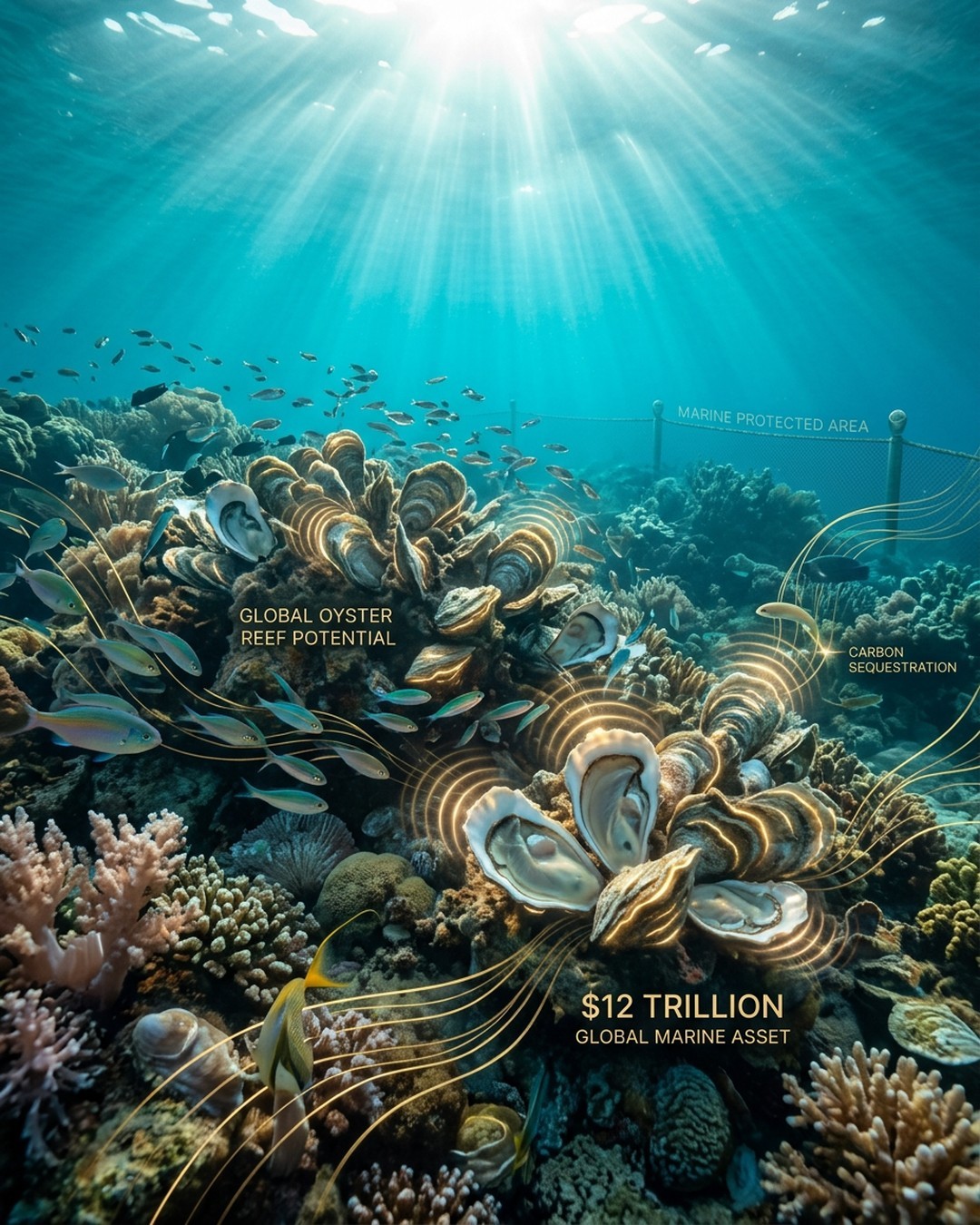
A new study published in Frontiers in Marine Science on October 8, 2026, reveals that fully restoring the world oyster reefs in top hotspot countries could yield a staggering gross ecosystem product of 12 trillion dollars. Researchers led by Dr Matteo Convertino at Tsinghua University utilized machine learning and global databases to estimate the ecological and economic benefits of oyster habitats. The study highlights that 85 percent of global oyster reefs have vanished over the past century, while only 10 percent of suitable reef areas currently contain oyster populations. Furthermore, merely 23 percent of identified suitable habitats currently fall within marine protected areas, indicating an urgent need for massive conservation efforts.
The authors emphasize that oyster reefs provide critical ecological services beyond seafood production, including water purification, nutrient regulation, wave energy reduction, and carbon sequestration. For instance, restored reefs in the United States alone could filter 77.58 quadrillion liters of water annually and sequester 12.3 million metric tons of carbon, generating an estimated annual value of 25.1 billion dollars in ecosystem services. The research stresses that strategic restoration and formal protection can unlock immense economic and environmental value for coastal zones worldwide.
The research framework combines geographically referenced reef records with environmental parameters such as water temperature, salinity, light availability, nutrient concentrations, and dissolved oxygen to identify optimal restoration sites across the globe. Ten key countries were identified with exceptional potential, encompassing approximately 295,000 square kilometers of suitable coastal zones. However, the study notes substantial uncertainty in the 12 trillion dollar valuation because calculations rely on global ecosystem service averages rather than direct local measurements.
Users and policymakers should prioritize identifying unprotected suitable coastal zones for immediate conservation and active oyster reef restoration. While climate change threatens overall habitat quality and could reduce global gross ecosystem product over time, certain regions like Australia, Indonesia, South Korea, Japan, and France may experience expanding suitability, presenting targeted opportunities for regional ecological investment and climate resilience planning.