Climate Impact of Scrapping Petrol Cars for EVs

NewScientist ElectricVehicles ClimateChange CarbonEmissions AutomotiveResearch

Samenvatting

Mindmap Omslagafbeelding
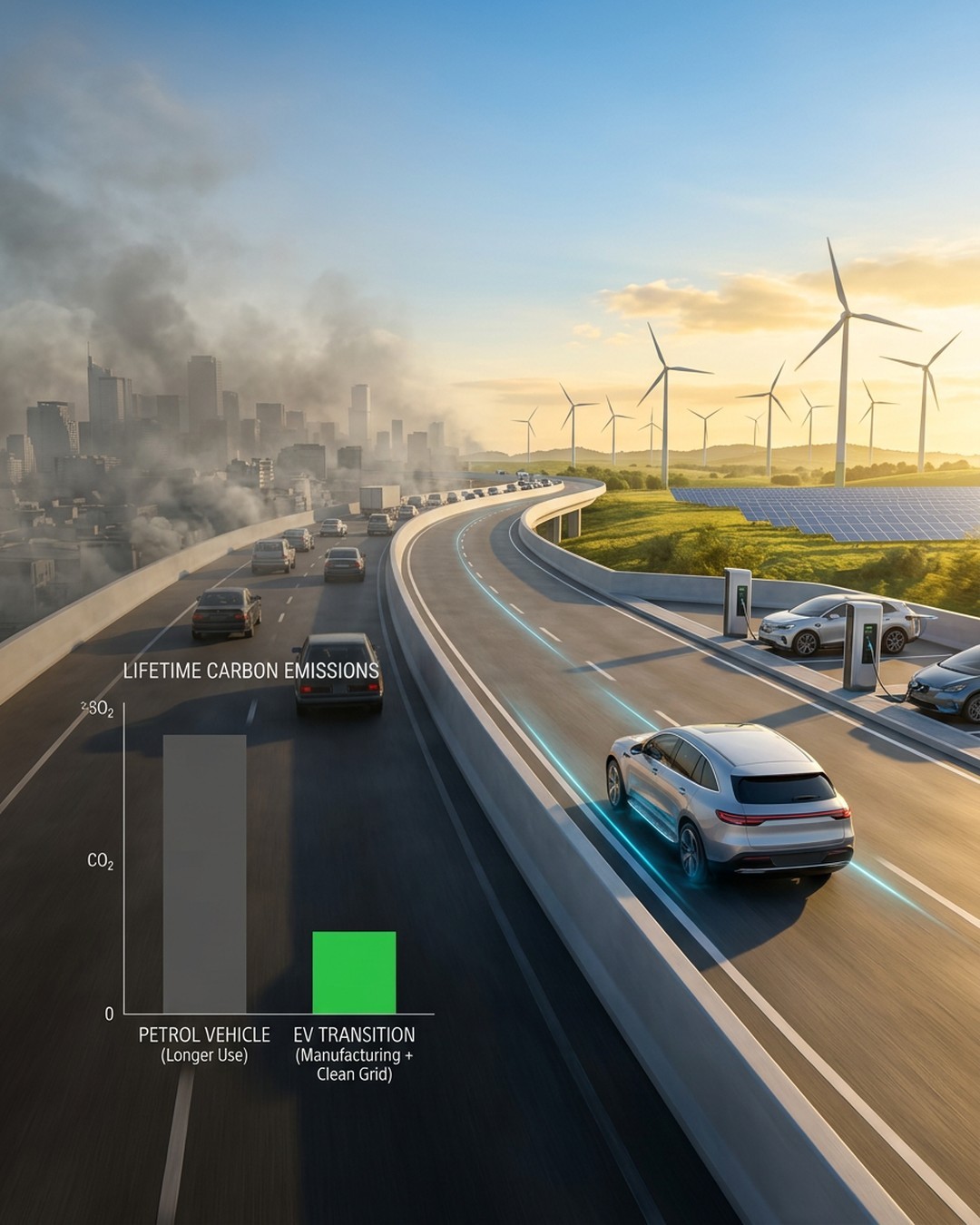
AI Gegenereerde Omslagafbeelding

Recent research reveals that scrapping a new petrol car in favour of an electric vehicle (EV) yields a lower overall climate impact, despite EVs producing higher emissions during their manufacturing phase. The study, conducted by Elliott Campbell at the University of California, Santa Cruz, and Roland Geyer at UC Santa Barbara using US data, demonstrates that whole-life emissions for EVs are almost 90 per cent lower than those of combustion engine vehicles, with driving emissions savings significantly outweighing upfront manufacturing costs. The authors emphasize that keeping a fossil fuel car on the road until the end of its life offers zero environmental benefit, challenging the popular belief that retaining a functional petrol car is greener. Their findings hold true across almost all scenarios, with exceptions only occurring when electricity grids are heavily reliant on coal power or when a fossil fuel car is driven less than approximately 7,000 kilometres per year. While experts like Kenneth Gillingham from Yale University praise the study's clever angle, others like Gregory Keoleian from the University of Michigan note that retiring a brand new combustion vehicle is an extreme case. Such cars typically enter the second-hand market, potentially lowering used car prices and encouraging shifts from public transport to car use, which requires further economic and behavioural modelling. The study provides robust support for subsidised scrappage schemes to accelerate the electric vehicle transition in the United States, where transportation emissions represent the single largest source of carbon emissions. Consumers can transition to electric vehicles with confidence, knowing there are no environmental deterrents to abandoning fossil fuel vehicles early.

Belangrijke punten

01

🔹 Core Findings on EV vs Petrol Emissions

【📌 Key Finding】Scrapping a working petrol car to buy an electric vehicle (EV) reduces overall climate impact, contrary to popular belief. 【⭐ Data Support】Whole-life emissions for an electric car are almost 90 per cent lower than for internal combustion engine vehicles. 【🔸 Impact Factors】Although manufacturing EVs generates more carbon emissions, the subsequent savings from driving them swamp all upfront production costs.

02

🔸 Research Methodology and Scope

【📌 Researchers】Elliott Campbell at the University of California, Santa Cruz, and Roland Geyer at UC Santa Barbara. 【📊 Data Sources】Using US data, researchers analysed emissions impacts across various vehicle lifespans, ranging from one-year-old cars to end-of-life vehicles. 【⚙️ Variables】Modelling accounted for grid electricity mix variability, vehicle efficiency, manufacturing emissions, and annual mileage.

03

⭐ Scenarios and Exceptions

【📌 Environmental Benefit】There is zero environmental benefit in keeping a fossil fuel car on the road until its natural end. 【⚠️ Exceptions】The findings apply universally except when electricity grids rely heavily on coal power or when petrol cars are driven less than approximately 7,000 km per year. 【💡 Author Stance】Campbell clarifies the study aims to show EV advantages rather than urging immediate mass discarding of brand new cars.

04

📊 Expert Perspectives and Debates

【🔵 Kenneth Gillingham (Yale University)】Praises the study as a clever angle that makes complete sense. 【🟠 Gregory Keoleian (University of Michigan)】Points out that retiring a combustion vehicle after just a year is an extreme case. 【⚖️ Secondary Market Impact】Scrapped cars usually enter the second-hand market, potentially lowering used car prices and altering public transport versus car usage behaviors.

05

💡 Policy Implications and Transportation Emissions

【📌 Policy Support】Findings provide strong backing for subsidised scrappage schemes to encourage switching from older fossil-fuel cars to EVs. 【🇺🇸 National Impact】Such policies can accelerate the EV transition in the US, directly targeting transportation emissions which constitute the single largest source of carbon emissions in the country. 【🎯 Consumer Guidance】Drivers can transition to electric vehicles without environmental hesitation when opportunities arise.

Wilt u uw eigen mindmap maken?

Log in op Neumap AI en begin met het maken van uw eigen mindmaps!

Aan de Slag