Major Brain Immune Change Starting at Age 50

scitechdaily neuroscience aging brain-health national-institutes-of-health

Resumo

Imagem de Capa do Mapa Mental
Imagem de Capa Gerada por IA

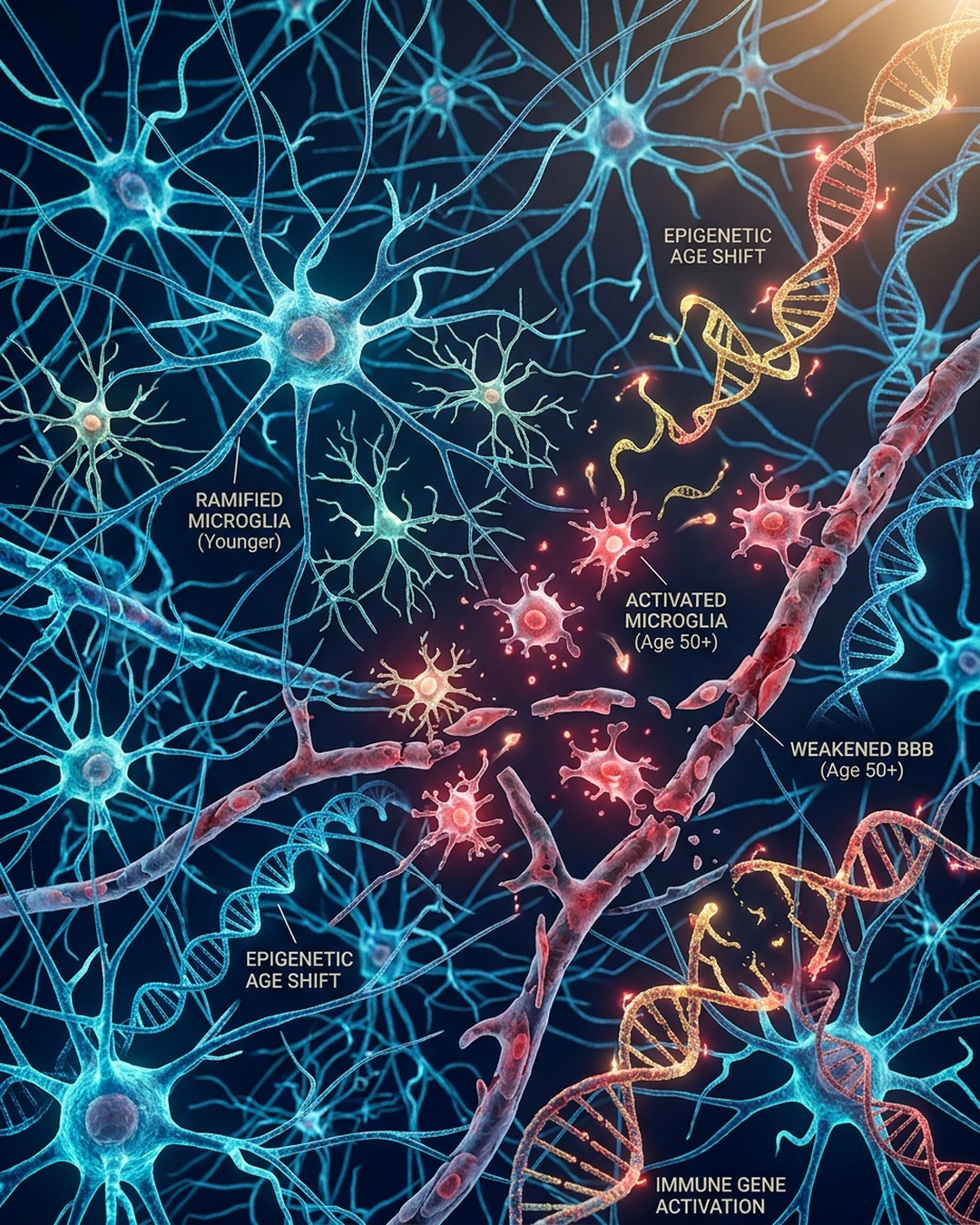
Scientists supported by the National Institutes of Health have discovered a major and rapid transformation in the human brain's immune system beginning around age 50. Published on July 23, 2026, in Science, researchers examined postmortem hippocampal tissue from 40 neurologically healthy adults aged 20 to 95 and found that resident microglia steadily decrease between ages 50 and 75, being replaced by cells with stronger inflammatory signatures and peripheral blood-derived features. The researchers utilized advanced single-cell methods, conventional gene activity measurements, and 3D genome and epigenome mapping to uncover these hidden cellular transitions. Led by scientists from UC San Diego, the New York Genome Center, and UC Irvine, the study challenges the long-standing assumption that embryonic microglia continually renew themselves and remain unchanged throughout life. Beyond immune cell shifts, the analysis revealed the deterioration of cells responsible for maintaining the protective blood-brain barrier alongside coordinated structural disruptions in genome organization across numerous brain cell types. These progressive structural changes link directly to shifts in gene regulation and cell identity during human brain aging. While the exact downstream consequences for neurodegenerative conditions like Alzheimer's disease remain uncertain, understanding these midlife cellular transitions offers potential new pathways for developing targeted interventions to preserve cognitive function and reduce vulnerability to dementia later in life.

Pontos-chave

01

🔹 Microglial Population Shift in Midlife

【📌 Key Finding】Researchers discovered that microglia, the brain main resident immune cells, steadily decrease in the hippocampus from approximately age 50 to 75. 【🔸 Impact Factors】Cells with stronger inflammatory signatures and features resembling peripheral blood-derived immune cells take their place. 【⭐ Data Support】The study analyzed postmortem hippocampal tissue from 40 neurologically healthy adults between 20 and 95 years old using advanced single-cell methods.

02

🔸 Multimodal Genomic and Epigenetic Analysis

【📌 Key Finding】Scientists combined conventional gene expression measurements with technologies mapping 3D genome structure and the epigenome. 【🔸 Impact Factors】Epigenetic signatures preserve information about cell origins and lineage, revealing a major shift that gene expression data alone could not identify. 【⭐ Data Support】Research was conducted by teams from UC San Diego Center for Epigenomics, New York Genome Center, and UC Irvine, published in Science on July 23, 2026.

03

⭐ Blood-Brain Barrier and Genome Disruption

【📌 Key Finding】Aging disrupts more than just immune cells, leading to the deterioration of cells maintaining the protective blood-brain barrier. 【🔸 Impact Factors】Broad and coordinated changes in three-dimensional genome organization were observed across numerous brain cell types. 【⭐ Data Support】Structural disruptions were closely linked to shifts in gene regulation and cell identity, highlighting a fundamental feature of human brain aging.

04

📊 Implications for Neurodegenerative Disease

【📌 Key Finding】Aging is the single largest risk factor for dementia, but the connection between aging and chronic brain inflammation remains incompletely understood. 【🔸 Impact Factors】This hidden microglial shift may connect normal aging processes with neurodegenerative diseases like Alzheimer's disease. 【⭐ Data Support】Funded by NIA grants R01AG067153, R01AG082127, and NIH Common Fund 4D Nucleome program grant 1U01DA052769.

05

💡 Future Therapeutic and Research Directions

【📌 Key Finding】Further research is required to determine what causes resident microglia to disappear and whether this immune transition directly drives neurological disorders. 【🔸 Impact Factors】Understanding these cellular transitions may provide new opportunities to develop interventions preserving brain function. 【⭐ Data Support】Principal investigators include Dr. Richard Hodes, Dr. Nathan Zemke, Dr. Bing Ren, and Dr. Xiangmin Xu.

Quer criar seu próprio mapa mental?

Faça login no Neumap AI e comece a criar seus próprios mapas mentais!

Começar