Predictability of Antarctic Ice Loss and Sea Level Rise (June 2026)

ClimateChange Antarctica SeaLevelRise EnvironmentalScience MonashUniversity NatureJournal

Resumo

Imagem de Capa do Mapa Mental
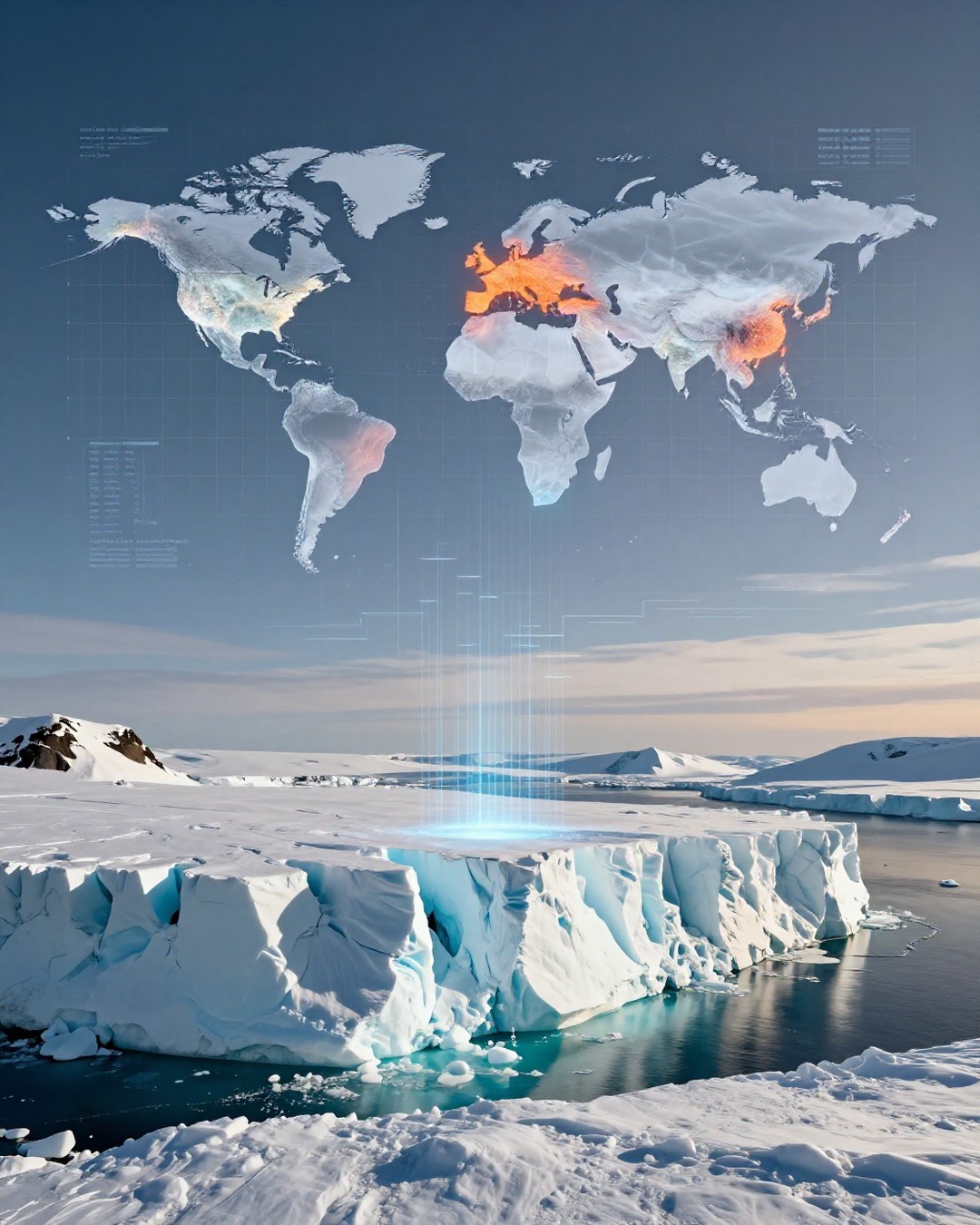
Imagem de Capa Gerada por IA

A study published in Nature on June 17, 2026, led by Dr. Felicity McCormack of Monash University, reveals that Antarctic ice loss is more predictable over the next 30 to 50 years than previously assumed. By validating ice sheet models against current observational data, researchers can now provide more reliable projections for sea level rise, which is critical for near-term coastal planning and government policy. The research emphasizes that while long-term uncertainty remains due to complex physical feedbacks, the mid-century window offers a stable period for climate action. The authors argue that separating projections into near-term predictable phases and long-term complex phases allows policymakers to better manage risks associated with potential sea level rises of over 2 meters by 2100 under high-emissions scenarios. This study provides a strategic framework for climate adaptation, particularly for the Indo-Pacific region. By improving observational systems and model accuracy, governments can make informed decisions regarding infrastructure, land use, and community relocation, effectively turning scientific predictability into actionable foreign policy and regional responsibility. For users and policymakers, this research underscores the necessity of immediate investment in climate observation infrastructure. The findings suggest that current models are robust enough for short-term planning, providing a clear mandate to prioritize adaptation strategies within the next three decades to mitigate the severe humanitarian and economic impacts of rising sea levels.

Pontos-chave

01

🔹 Predictability of Antarctic Ice Loss

【📌 Key Finding】Antarctic ice loss is relatively predictable over the next 30 to 50 years. 【🔸 Impact Factors】Reliability is achieved when ice sheet models accurately reproduce current observed rates of ice mass loss. 【⭐ Data Support】This predictability allows for more dependable estimates of sea level rise, which is essential for coastal planning and government policy through the mid-century.

02

🔸 Risks of Long-Term Instability

【📌 Key Finding】Predictability decreases later in the century due to complex physical feedbacks. 【🔸 Impact Factors】Ice resting on bedrock below sea level can trigger rapid, irreversible retreat once initiated. 【⭐ Data Support】Under high-emissions scenarios, the IPCC projects global sea levels could rise by more than 2 meters by 2100 if large-scale ice sheet collapse occurs.

03

⭐ Strategic Framework for Policymakers

【📌 Key Finding】Researchers recommend separating projections into two distinct timeframes. 【🔸 Impact Factors】Near-term (30-50 years) focuses on predictable ice loss for immediate adaptation, while long-term focuses on complex feedbacks. 【⭐ Data Support】This dual-framework approach helps governments manage infrastructure, community relocation, and land use decisions with greater confidence.

04

📊 Socio-Economic Consequences

【📌 Key Finding】Unchecked sea level rise poses severe global threats. 【🔸 Impact Factors】Potential flooding of one-quarter of Australian homes and making large areas of Pacific sovereign territory uninhabitable. 【⭐ Data Support】Hundreds of millions of people worldwide could be forced to relocate, leading to some of the most significant humanitarian and economic impacts in history.

05

💡 Call to Action and Regional Responsibility

【📌 Key Finding】There is a critical window for climate action. 【🔸 Impact Factors】Professor Steven Chown emphasizes the need to invest in stronger observation systems to improve model accuracy. 【⭐ Data Support】Australia and other nations have a regional responsibility to assist Pacific Island governments by applying these scientific findings to practical adaptation strategies.

Quer criar seu próprio mapa mental?

Faça login no Neumap AI e comece a criar seus próprios mapas mentais!

Começar