Pomegranates and Urolithin A for Heart Failure Treatment

scitechdaily cardiology health research kings-college-london

Resumo

Imagem de Capa do Mapa Mental
Imagem de Capa Gerada por IA

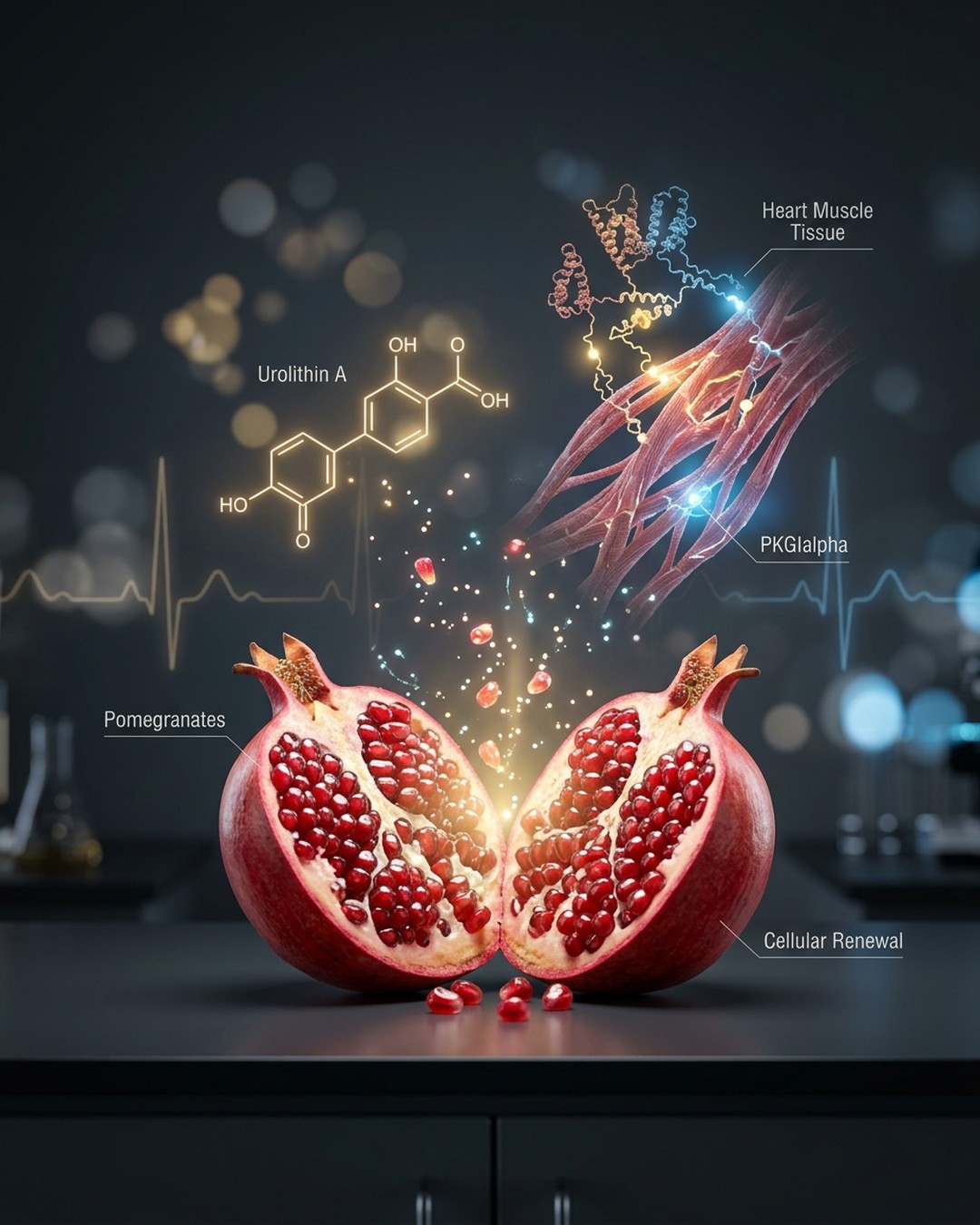
Recent scientific research published on August 19, 2026, by a team at King's College London reveals that urolithin A, a natural compound produced by the body after consuming pomegranates, walnuts, and certain berries, can improve heart function by up to 80 percent in experimental models of heart failure with preserved ejection fraction (HFpEF). The researchers found that urolithin A acts on a specific protein called PKGIalpha, activating a relaxation pathway that helps stiff heart muscle tissue relax and fill with blood more effectively between beats while also reducing cardiac fibrosis and cellular enlargement. Affecting nearly half a million people in the UK and accounting for roughly half of all global heart failure cases, HFpEF currently has very limited treatment options because conventional therapies primarily target pumping ability rather than the stiffness that prevents proper refilling. Although these findings demonstrate remarkable improvements in animal models and engineered human heart tissue grown from stem cells, clinical trials involving human patients are still required to confirm efficacy and safety before dietary or pharmaceutical interventions can be formally prescribed for heart failure treatment.

Pontos-chave

01

🔹 Research Breakthrough on Urolithin A and Heart Failure

Published on August 19, 2026, in Science Advances by researchers at King's College London, a new study demonstrates that urolithin A can improve measures of heart function by up to 80 percent in experimental models of heart failure with preserved ejection fraction (HFpEF).

02

🔸 Mechanism of Action via the PKGIalpha Protein

Scientists discovered that urolithin A specifically activates a protein named PKGIalpha by targeting a particular amino acid (Cys42), which triggers a vital relaxation pathway that enhances blood vessel function and allows stiff heart muscle to relax more effectively.

03

⭐ Reversal of Harmful Cardiac Tissue Changes

In laboratory and animal tests, treatment with urolithin A not only improved the heart's ability to relax and fill with blood between beats but also significantly reduced fibrosis (harmful scar tissue buildup) and limited abnormal enlargement of heart muscle cells.

04

📊 Validation Using Engineered Human Heart Tissue

To bridge animal testing and human application, researchers tested urolithin A on engineered human heart tissue created from stem cells, observing significant improvements in tissue relaxation that strongly suggest relevance to human cardiovascular physiology.

05

💡 Clinical Implications and Future Directions

While urolithin A possesses a favorable safety profile from prior human studies, principal investigator Dr. Joseph Burgoyne and British Heart Foundation Director of Research Professor James Leiper emphasize that rigorous human clinical trials are essential before doctors can recommend specific dietary changes or supplements to treat HFpEF.

Quer criar seu próprio mapa mental?

Faça login no Neumap AI e comece a criar seus próprios mapas mentais!

Começar