3000-Year-Old Egyptian Tomb Discovery

scitechdaily archaeology egyptology climate-change history

Resumo

Imagem de Capa do Mapa Mental
Imagem de Capa Gerada por IA

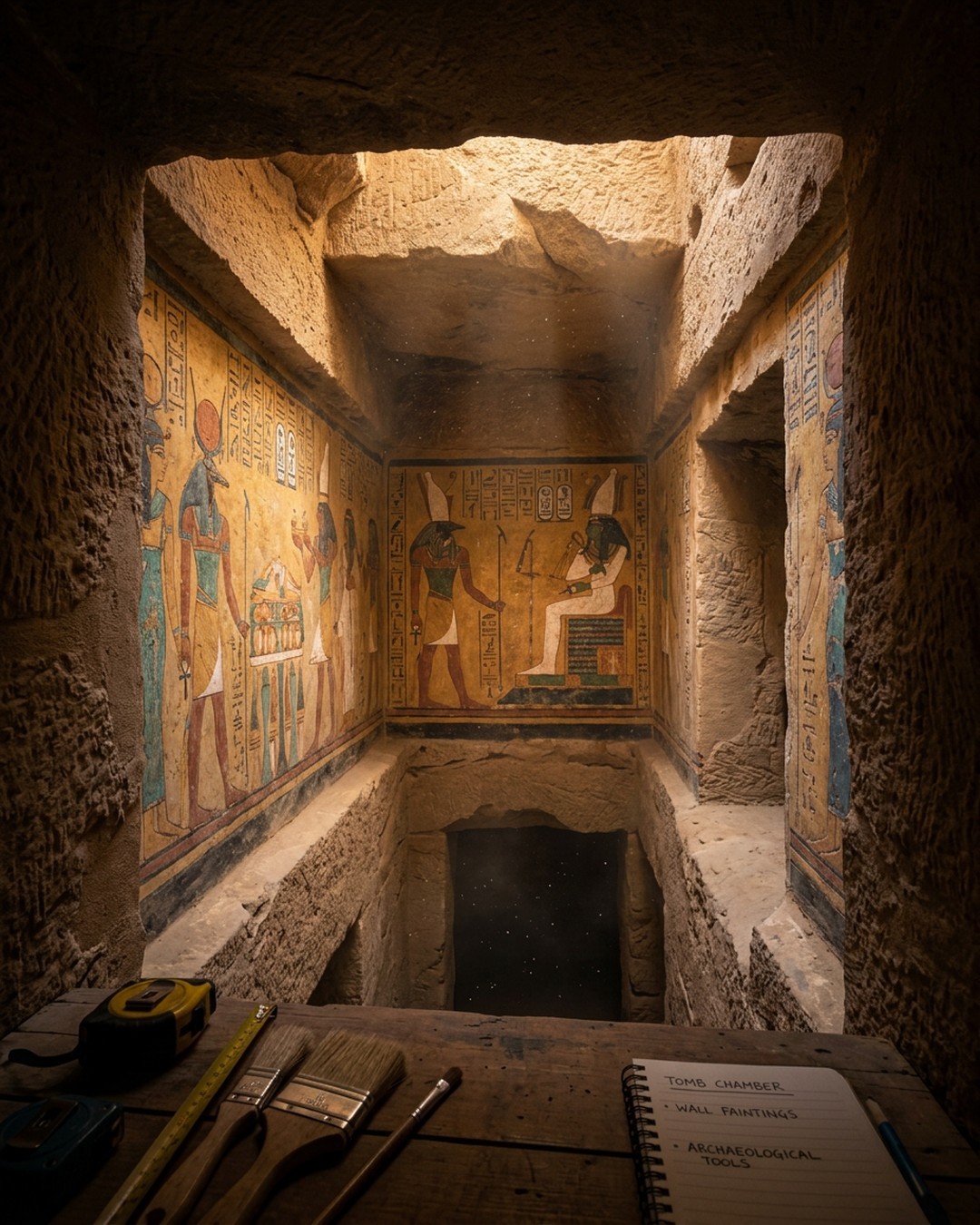
Archaeologists directing an international research team in the Theban necropolis near Luxor have unexpectedly discovered a 3,000-year-old Ramesside tomb dating back to roughly 1292-1069 BC. The team, operating under Leiden University in collaboration with the Egyptian Ministry of Tourism and Antiquities since August 2018, initially focused on establishing a conservation and risk management program at Lower Sheikh Abd el-Qurna to mitigate flash flooding threats caused by climate change. The newly uncovered elite tomb features an outer courtyard with a mudbrick platform, a stela niche, a staircase with lateral ramps, a rock-cut chapel, and subterranean burial chambers. Initial analysis of the painted wall decorations identifies the main tomb owner as a male official named Paser, depicting him adoring deities and dining with his wife before an offering table laden with provisions. This discovery provides critical historical insight into ancient Egyptian daily life, social hierarchy, burial practices, and the phenomenon of tomb reuse during the New Kingdom period. Researchers are examining how topographical features and ancestral proximity influenced Ramesside officials to modify or reuse 18th-dynasty monuments instead of constructing new ones. The ongoing excavation operates as a race against time due to climate change-induced flash floods that threaten structural integrity, salt crystal formation, and painted decorations. Preventive conservation efforts are vital for safeguarding these neglected archaeological assets, expanding archaeological knowledge beyond heavily studied sites like the Valley of the Kings.

Pontos-chave

01

🔹 Discovery of the Ramesside Tomb

【📌 Key Finding】An international research team directed by Leiden University uncovered a forgotten 3000-year-old Egyptian tomb in August 2026 at Lower Sheikh Abd el-Qurna near Luxor. 【🔸 Impact Factors】The discovery occurred during systematic excavations designed to clear debris and divert flash floodwaters away from vulnerable monuments in the Theban necropolis. 【⭐ Data Support】The tomb dates to the Ramesside period spanning approximately 1292-1069 BC within the broader New Kingdom era from 1550 to 1069 BC.

02

🔸 Architectural Layout and Wall Paintings

【📌 Key Finding】The tomb features a classic elite structural layout comprising an outer courtyard with a mudbrick platform, a niche for a stela grave marker, a staircase with ramps, a rock-cut chapel, and subterranean burial chambers. 【🔸 Impact Factors】Interior walls display vivid paintings of the primary owner adoring deities and sitting with his wife before an offering table laden with bread, beer, fruits, meat, and flowers. 【⭐ Data Support】Iconography and painting styles confirm the owner is a male official named Paser, whose identity will be clarified further after conservation cleaning.

03

⭐ Research Significance on Tomb Reuse

【📌 Category Listing】Analysis of Paser's tomb addresses core research questions regarding mortuary landscape utilization, processional route proximity, and the tradition of tomb modification. 【⚖️ Comparative Context】Researchers are investigating why Ramesside officials chose to reuse, modify, or build adjacent to 18th-dynasty elite monuments rather than constructing entirely new sepulchers. 【⭐ Data Support】The site forms part of the expansive 10 square kilometer Theban necropolis situated on the west bank of the River Nile opposite ancient Thebes.

04

📊 Climate Change Threats and Preservation

【📌 Core Risk】Accelerated climate change has increased the frequency and intensity of flash flooding in the region, posing severe structural and chemical threats to ancient monuments. 【🔸 Damage Mechanisms】Water infiltration triggers moisture-activated growth of salt crystals, loss of delicate painted decorations, and potential structural collapse. 【⭐ Strategic Solutions】The fieldwork team is executing a preventive conservation and risk management program in collaboration with the Egyptian Ministry of Tourism and Antiquities.

05

💡 Uncovering Neglected Archaeological Material

【📌 Knowledge Expansion】The Lower Sheikh Abd el-Qurna necropolis has historically received far less academic study compared to famous nearby locations like the Valley of the Kings or the Karnak temple complexes. 【🔸 Research Outcomes】Ongoing conservation and excavation activities are successfully revealing previously unstudied material regarding the daily lives, funerary beliefs, artistry, and societal roles of ordinary Egyptian people and officials over multiple centuries.

Quer criar seu próprio mapa mental?

Faça login no Neumap AI e comece a criar seus próprios mapas mentais!

Começar