BRAF Protein as a Novel Driver and Therapeutic Target for Chronic Nerve Pain

scitechdaily chronic-pain neurology neuroscience pain-management university-of-texas

Resumo

Imagem de Capa do Mapa Mental
Imagem de Capa Gerada por IA

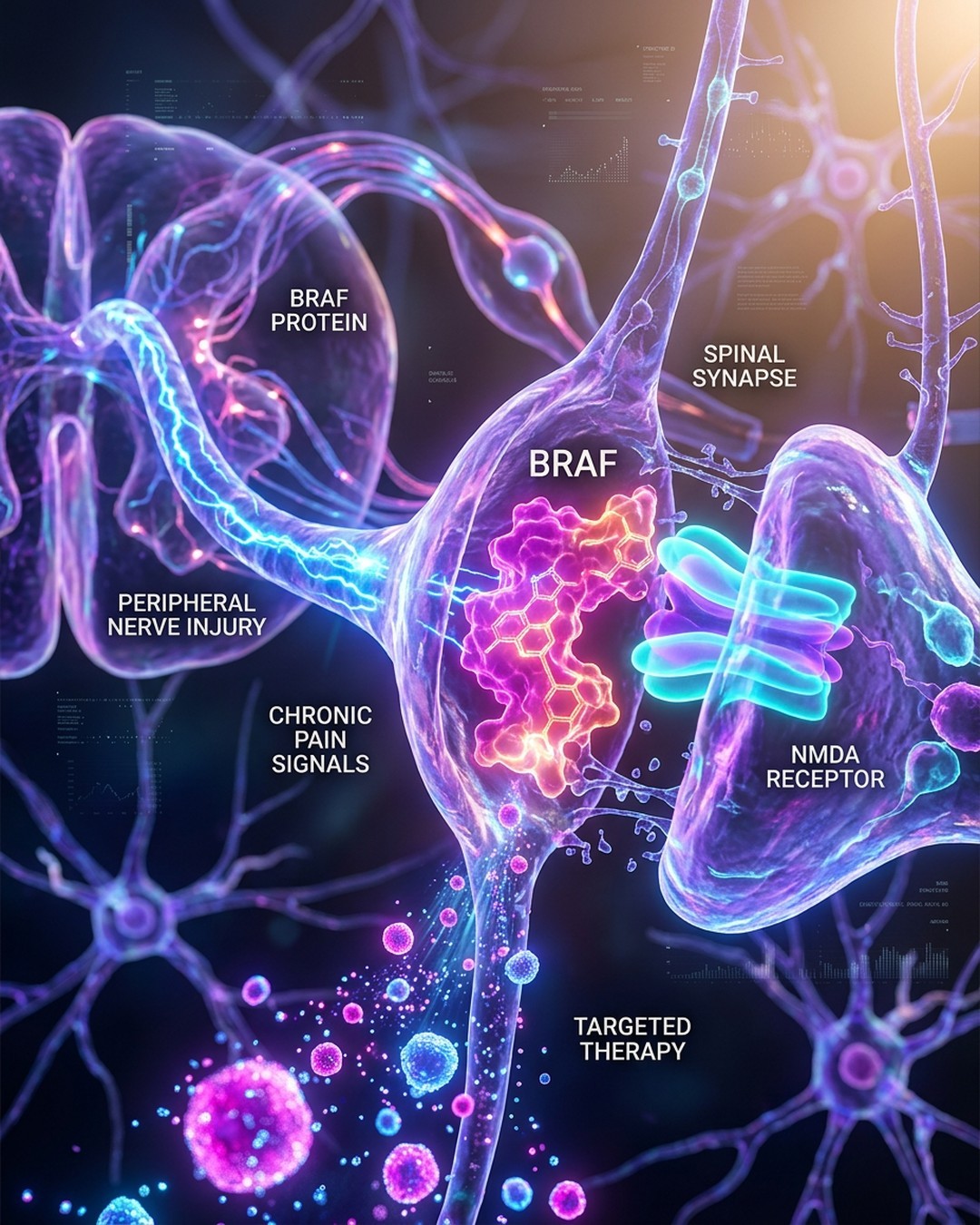
Researchers at The University of Texas MD Anderson Cancer Center published a study on August 30, 2026, in Science Signaling revealing that the cancer-linked protein BRAF plays a critical role in driving chronic neuropathic pain following nerve injury. Co-led by Dr. Shao-Rui Chen and Dr. Hui-Lin Pan, the team discovered that BRAF travels from peripheral sensory nerves to spinal synapses, where it activates molecular signaling that excessively strengthens NMDA receptor activity and sustains pain signaling. The research team demonstrated that administering existing cancer drugs, specifically the BRAF inhibitor vemurafenib and the MEK inhibitor selumetinib, effectively reduced touch, pressure, and heat pain sensitivity in preclinical models without altering normal responses in uninjured subjects. Furthermore, genetic experiments confirmed that deleting the Braf gene reduced persistent pain sensitivity, whereas directly activating BRAF induced pain sensitivity in uninjured models. This breakthrough establishes a direct mechanistic bridge between cancer signaling pathways and pathological pain processing in the central nervous system. By identifying how BRAF recruitment to spinal sensory synapses potentiates transsynaptic NMDA receptor activity, the study uncovers a novel therapeutic target that can potentially bypass traditional opioid treatments. The clinical implication of this research offers a promising pathway for rapidly repurposing FDA-approved oncology drugs to treat severe chronic nerve pain. Before human clinical trials can commence, researchers must establish precise dosing guidelines, optimize delivery methods, and fully evaluate potential side effects, opening a new frontier in non-opioid pain management.

Pontos-chave

01

🔹 Core Discovery of BRAF in Neuropathic Pain

Published on August 30, 2026, in Science Signaling, researchers at The University of Texas MD Anderson Cancer Center discovered that the cancer-promoting protein BRAF drives pathological pain signaling following nerve injury. Co-led by Dr. Shao-Rui Chen and Dr. Hui-Lin Pan, the study found that BRAF travels from peripheral sensory nerve cells to their endings in the spinal cord, initiating, intensifying, and sustaining chronic nerve pain.

02

🔸 Mechanism Linking Nerve Injury to NMDA Receptors

Following nerve damage, BRAF translocates to spinal sensory synapses where it triggers molecular signaling that excessively activates NMDA receptor protein channels. This heightened activity strengthens communication between nerve cells, amplifying pain signals entering the spinal cord and correlating directly with observations in human spinal cord tissue samples.

03

⭐ Efficacy of Repurposed Cancer Drugs in Preclinical Models

Preclinical testing demonstrated that the BRAF inhibitor vemurafenib and the MEK inhibitor selumetinib successfully reduced sensitivity to touch, pressure, and heat in injured models without disrupting normal responses in uninjured subjects. These findings provide a translational framework for rapidly repurposing existing oncology therapies for pain management.

04

📊 Genetic Validation and Experimental Evidence

Genetic knockout experiments confirmed that removing the Braf gene led to less persistent pain sensitivity, while direct activation of BRAF artificially triggered pain sensitivity in healthy models without nerve damage. These opposing results validate BRAF as both a driver and maintainer of neuropathic pain persistence.

05

💡 Future Clinical Translation and Required Steps

While the findings bridge cancer signaling and neurobiology, researchers emphasize that future work must determine precise doses, safe delivery methods, and potential side effects before human clinical trials. Additionally, investigators aim to uncover the exact triggers causing BRAF to migrate from peripheral nerves to the spinal cord post-injury.

Quer criar seu próprio mapa mental?

Faça login no Neumap AI e comece a criar seus próprios mapas mentais!

Começar