Faecal Microbiome Transplants and Brain Plasticity in Mice

neuroscience microbiome brain-plasticity FMT gut-brain-axis research-summary

Resumo

Imagem de Capa do Mapa Mental
Imagem de Capa Gerada por IA

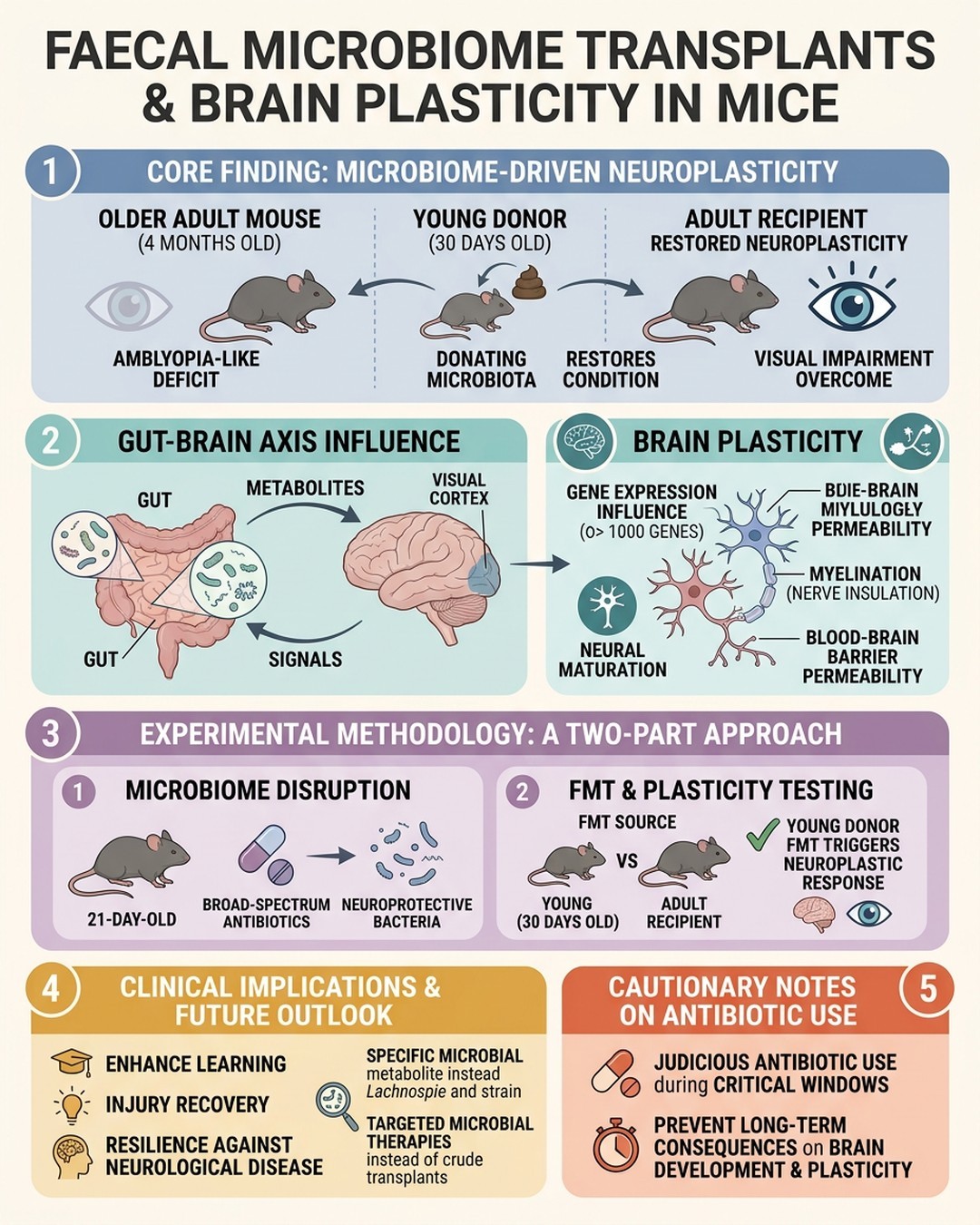
Recent research published in 2026 indicates that faecal microbiome transplants (FMT) from young mice can restore brain plasticity in older adult mice. By manipulating the gut microbiome, researchers successfully enabled adult mice to overcome conditions similar to amblyopia, a visual impairment typically treatable only during childhood development. This discovery highlights the gut-brain axis as a critical regulator of neural circuit maturation and suggests that the microbiome acts as an active partner in brain development alongside genetic and environmental factors. The study, led by Paola Tognini, demonstrates that the gut microbiome influences gene expression in the visual cortex, specifically affecting myelination and blood-brain barrier permeability. Antibiotic-induced depletion of gut bacteria in young mice was shown to inhibit neuroplasticity, while the introduction of young microbiota into adult mice effectively rejuvenated their brain's ability to remodel neural connections. This suggests that the microbiome plays a foundational role in defining the windows of heightened plasticity throughout an organism's lifespan. The findings imply that targeting specific microbial metabolites or strains could eventually offer therapeutic avenues for enhancing learning, recovery from brain injuries, and resilience against age-related neurological decline in humans. However, experts caution that direct translation to human clinical practice remains premature due to the complexity of human brains and the significant influence of diet and lifestyle on the microbiome. For practitioners and researchers, this study underscores the necessity of judicious antibiotic use during critical developmental windows. Future applications may involve personalized microbiome interventions to support cognitive health, though identifying the precise microbial mechanisms responsible for these neuroplastic effects remains a primary challenge for the scientific community.

Pontos-chave

01

🔹 Core Finding: Microbiome-Driven Neuroplasticity

Researchers discovered that faecal microbiome transplants (FMT) from 30-day-old mice into 4-month-old adult mice restored neuroplasticity. This allowed adult mice to overcome amblyopia-like visual deficits, a condition previously thought to be treatable only during early childhood developmental windows.

02

🔸 Mechanism: Gut-Brain Axis Influence

The gut microbiome regulates neural circuit maturation by influencing gene expression in the visual cortex. RNA sequencing revealed that antibiotic-treated mice showed altered expression in over 1000 genes, specifically those related to myelination (nerve insulation) and blood-brain barrier permeability, which are essential for maintaining brain plasticity.

03

⭐ Experimental Methodology

The study utilized a two-part approach: first, 21-day-old mice were treated with broad-spectrum antibiotics for 10 days to disrupt their microbiome, resulting in reduced levels of neuroprotective bacteria like Lachnospiraceae. Second, researchers performed FMT from young donors to adult recipients, confirming that only the young microbiota could successfully trigger neuroplastic responses in the adult visual cortex.

04

📊 Clinical Implications and Future Outlook

The potential to enhance learning, injury recovery, and resilience against neurological disease exists if these findings translate to humans. However, experts like Harriët Schellekens emphasize that the field must move toward identifying specific microbial metabolites or strains rather than relying on crude faecal transplants to ensure safety and efficacy.

05

💡 Cautionary Notes on Antibiotic Use

Parisa Gazerani notes that while antibiotics are lifesaving, the study reinforces the importance of using them judiciously during critical developmental windows. High and prolonged antibiotic exposure in early life may have long-term consequences on brain development and plasticity, necessitating careful clinical management.

Quer criar seu próprio mapa mental?

Faça login no Neumap AI e comece a criar seus próprios mapas mentais!

Começar