Cancer Stem Cells Energy Addiction and NAMPT Vulnerability

scitechdaily cancer-research stem-cells medical-science hematology

Resumo

Imagem de Capa do Mapa Mental
Imagem de Capa Gerada por IA

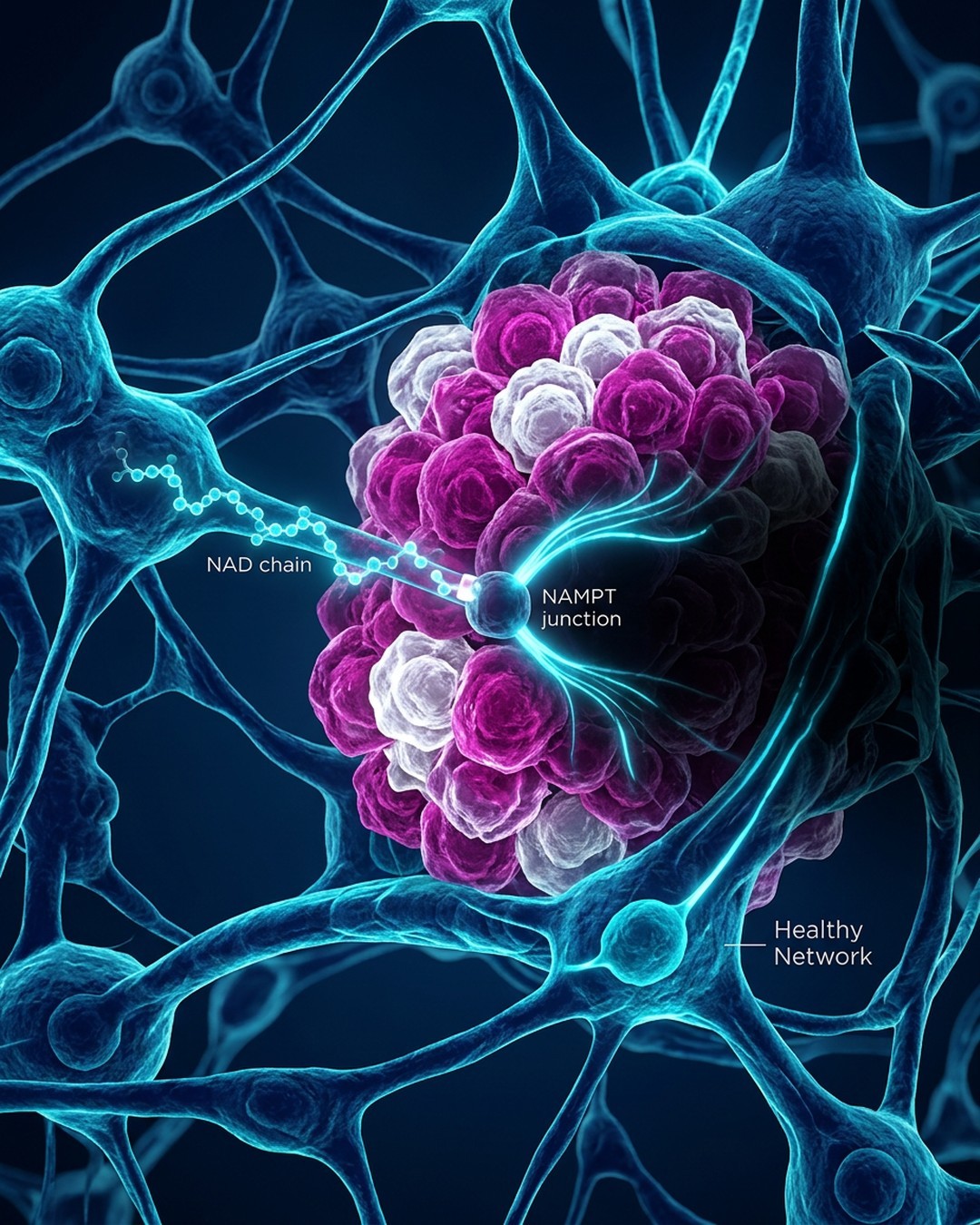
Researchers at the University of Colorado Anschutz Cancer Center published a study on August 14, 2026, in Blood Cancer Discovery revealing that high-risk myelodysplastic syndromes (MDS) stem cells exhibit an energy addiction tied to their metabolism. Specifically, these malignant cells demonstrate a high dependence on nicotinamide adenine dinucleotide (NAD) and rely heavily on the NAD salvage pathway and the enzyme nicotinamide phosphoribosyltransferase (NAMPT) to maintain their energy supply. The primary objective of the researchers is to exploit this metabolic vulnerability to selectively target and weaken aggressive cancer stem cells while sparing healthy blood-forming stem cells, which possess greater metabolic flexibility and can adapt when NAMPT is inhibited. The study highlights that blocking NAMPT creates a severe energy crisis in malignant MDS stem cells, reducing the population of cells responsible for driving disease progression into acute myeloid leukemia (AML), thus offering a promising therapeutic strategy for older adults affected by high-risk MDS. Future directions involve advancing these preclinical findings by evaluating NAMPT-targeting drugs in clinical trials for patients with MDS and related blood cancers, paving the way for more precise and effective cancer treatments.

Pontos-chave

01

🔹 Metabolic Vulnerability in MDS Stem Cells

【📌 Key Finding】High-risk myelodysplastic syndromes (MDS) stem cells possess a unique metabolic vulnerability characterized by an energy addiction to nicotinamide adenine dinucleotide (NAD). 【🔸 Impact Factors】Published on August 14, 2026, in Blood Cancer Discovery by researchers at the University of Colorado Anschutz Cancer Center, the study shows that malignant cells consume NAD at a much higher rate than normal cells. 【⭐ Data Support】MDS impacts roughly 10,000 to 20,000 new patients annually in the United States, with an age-adjusted incidence of about 4.4 to 4.6 cases per 100,000 people, often progressing into acute myeloid leukemia (AML).

02

🔸 Role of the NAD Salvage Pathway and NAMPT

【📌 Key Finding】Malignant MDS stem cells rely heavily on the NAD salvage pathway and the enzyme nicotinamide phosphoribosyltransferase (NAMPT) to restore their NAD supplies. 【🔸 Impact Factors】When researchers interfered with NAMPT, NAD levels plummeted, triggering an energy crisis that preferentially weakened the cancer stem cells. 【⭐ Data Support】Unlike cancer cells, healthy blood-forming stem cells displayed metabolic flexibility, adapting to NAMPT inhibition by utilizing alternative metabolic routes to maintain essential functions.

03

⭐ Therapeutic Potential of Targeting NAMPT

【📌 Key Finding】Blocking NAMPT exposes a distinct difference in metabolic dependency between malignant and healthy stem cells. 【🔸 Impact Factors】Preclinical tests using patient-derived MDS cells and animal models demonstrated that disrupting NAD metabolism effectively reduced the stem cell populations sustaining the disease. 【⭐ Data Support】This targeted disruption offers a potential solution to overcome the limitations of current treatments like allogeneic stem cell transplants, which carry high risks for older adult populations.

04

📊 Clinical Implications and Future Directions

【📌 Key Finding】Abnormal NAD metabolism represents a broader vulnerability across various cancers, prompting increased interest in NAMPT as a therapeutic target. 【🔸 Impact Factors】The next phase of research involves evaluating drugs that target NAMPT in upcoming clinical studies involving patients with MDS and related blood cancers. 【⭐ Data Support】Led by researchers such as associate professor Eric M. Pietras, the ultimate goal is to develop more precise and effective therapies tailored to the metabolic differences of cancer cells.

05

💡 Background on MDS and Treatment Challenges

【📌 Key Finding】MDS originates in the bone marrow where mutated stem cells fail to produce functional red blood cells, white blood cells, and platelets. 【🔸 Impact Factors】Patients experience severe anemia, recurrent infections, bleeding issues, and frequent transfusion needs. 【⭐ Data Support】Current standard treatments include supportive care, drugs like azacitidine or decitabine, chemotherapy, and high-risk stem cell transplants, necessitating the discovery of safer, more precise molecular targets.

Quer criar seu próprio mapa mental?

Faça login no Neumap AI e comece a criar seus próprios mapas mentais!

Começar