New Research to Break China Rare Earth Magnet Monopoly

scitechdaily uppsala-university rare-earth-magnets materials-science green-energy sustainability

Resumo

Imagem de Capa do Mapa Mental
Imagem de Capa Gerada por IA

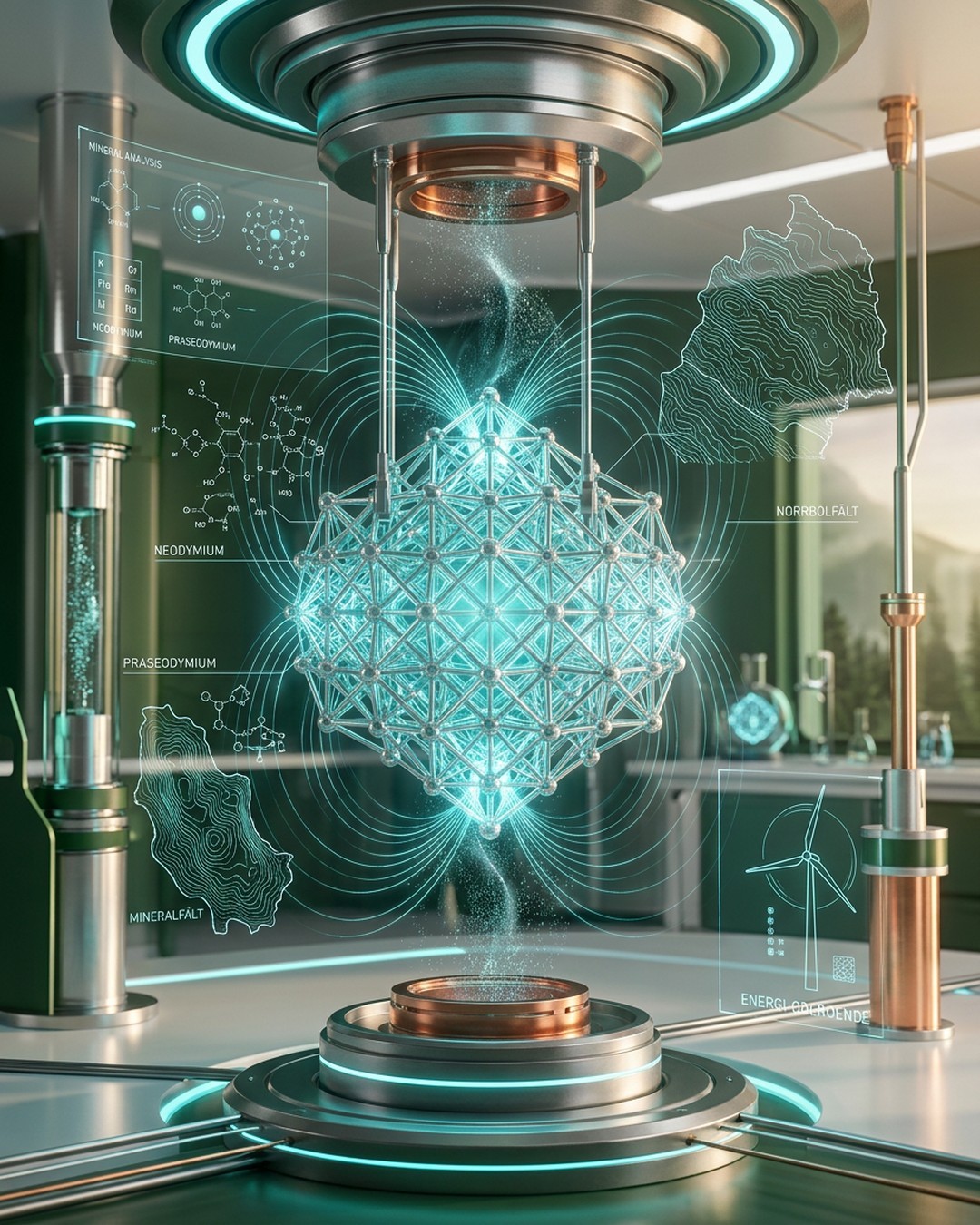
New research from Uppsala University published on July 9, 2026, explores innovative methods to produce cleaner rare earth magnets and reduce global dependency on China's near-monopoly. Rare earth magnets are essential for electric vehicles, wind turbines, and defense systems, but their traditional production involves environmentally intensive refining and complex supply chains. Led by Professor Martin Sahlberg, the research initiative aims to redesign magnet manufacturing by mapping the full chemical composition of regional mineral deposits rather than mining for a single target metal. By creating custom magnet recipes based on locally available elements, Sweden hopes to bypass heavy purification stages and significantly lower ecological impacts. Sweden possesses strategic mineral reserves, notably in Kiruna, Bergslagen, and Norra Kärr, with the Per Geijer deposit hosting over 1.3 million tonnes of rare earth oxides. This application-inspired basic research combines theoretical physics, geology, and materials engineering to trace an eco-friendly pathway from raw rock to finished components. The development holds substantial practical value for European clean energy independence and resilient supply chain management. By optimizing domestic resources alongside accessible green energy and water, this project sets a scalable precedent for sustainable critical raw material extraction.

Pontos-chave

01

🔹 Core Research Objective & Leadership

【📌 Research Initiative】Led by Martin Sahlberg, Professor of Materials Chemistry at Uppsala University on July 9, 2026. 【🔸 Strategic Goal】Develop cleaner rare earth magnet alternatives to break China's dominant global monopoly and mitigate fragile supply chain vulnerabilities. 【⭐ Application Scope】Critical components driving electric vehicles, offshore wind turbines, consumer electronics, and advanced defense systems.

02

🔸 Environmental Challenges of Rare Earth Production

【📌 Pollution Factors】Traditional extraction requires harsh chemicals to separate materials from rock, often accompanied by radioactive elements. 【🔸 Industry Status】Described by researchers as a dirty business with intensive refining footprints. 【⭐ Core Paradox】Rare earth elements are actually common in Earth's crust, but finding high-grade deposits and separating them cleanly remains extremely difficult.

03

⭐ Swedish Mineral Deposits & Strategic Advantage

【📌 Regional Reserves】Deposits identified in Kiruna, Bergslagen, and Norra Kärr outside Gränna. 【📊 Key Statistics】LKAB reports Europe's largest known rare earth deposit at Per Geijer, containing over 1.3 million tonnes (1.4 million U.S. tons) of rare earth oxides. 【⭐ Production Assets】Sweden combines strong mineral potential with abundant water access, relatively cheap energy, and a commitment to the green transition.

04

📊 Innovative 'What's in Your Fridge' Approach

【📌 Methodology Shift】Moving away from traditional single-metal mining (iron, copper, gold) where unselected elements are treated as waste. 【🔸 Chemical Mapping】Comprehensive inventory mapping of all elements present in Swedish deposits in exact proportions. 【⭐ Custom Magnet Recipes】Designing new magnets around available local mineral chemistry to minimize intensive purification steps and reduce environmental impacts.

05

💡 Interdisciplinary Collaboration & Outlook

【📌 Team Structure】Bringing together theoretical physicists, geologists, and materials engineers. 【🔸 Research Classification】Application-inspired basic research bridging academic discovery with industrial manufacturing needs. 【⭐ Strategic Outcome】Establishing a sustainable, geographically diversified supply chain for critical raw materials across Europe.

Quer criar seu próprio mapa mental?

Faça login no Neumap AI e comece a criar seus próprios mapas mentais!

Começar