CS18 Overcomes Cancer Treatment Resistance

scitechdaily baylor-college-of-medicine cancer-treatment drug-discovery oncology molecular-biology

Resumo

Imagem de Capa do Mapa Mental
Imagem de Capa Gerada por IA

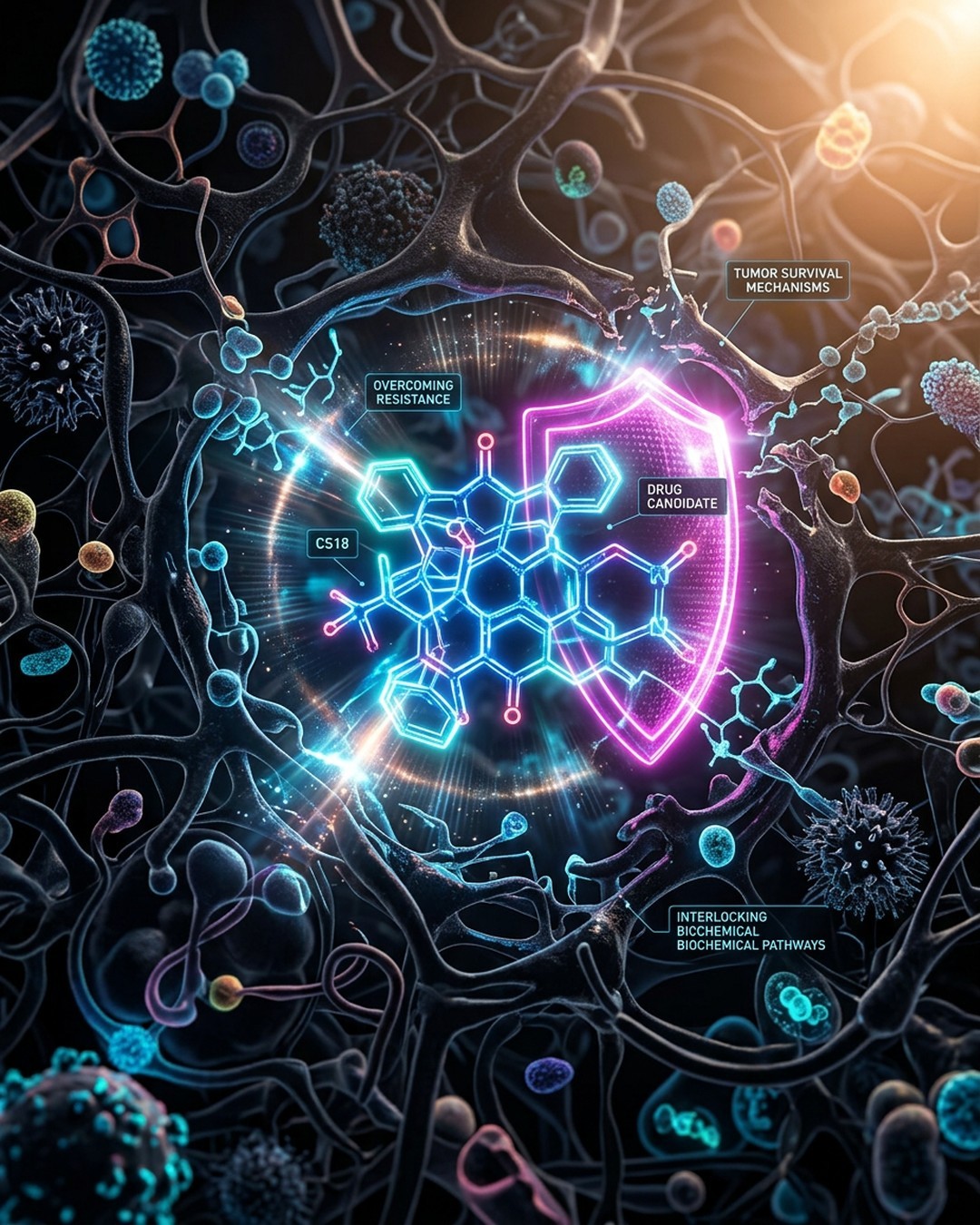
Researchers at Baylor College of Medicine have developed an experimental drug candidate named CS18 designed to overcome therapeutic resistance in cancer treatment by interfering with multiple tumor survival mechanisms simultaneously. Published in Science Advances on August 12, 2026, the study demonstrates that CS18 targets the topoisomerase II beta-binding protein 1 (TopBP1) switch BRCT7/8, effectively disrupting pathways driven by MYC and mutant p53 while reducing DNA repair activity. Led by corresponding author Dr. Weei-Chin Lin, the research team focused on TopBP1 because it acts as a biological control center interacting with several key regulators of cancer growth, including MIZ1, mutant p53, PLK1, and CIP2A. By blocking the BRCT7/8 region, CS18 weakens cancer cell defenses, increases the expression of tumor-suppressing genes, and lowers toxicity in non-cancerous cells during laboratory and animal studies. The strategic significance of CS18 lies in its ability to enhance existing cancer therapies rather than acting as a standalone treatment. Preclinical trials combining CS18 with PARP inhibitors and osimertinib showed significantly improved efficacy, successfully restoring drug sensitivity in lung cancer cells that had previously developed resistance to osimertinib without causing major animal weight loss or toxicity. Medical professionals and researchers can utilize these findings to advance combination therapies aimed at preventing clinical relapse in patients with triple-negative breast cancer, ovarian cancer, lung adenocarcinoma, lung squamous cell carcinoma, and acute myeloid leukemia. Future development will focus on clinical trials to validate CS18 safety and efficacy profiles in human oncology applications.

Pontos-chave

01

🔹 Core Discovery of CS18 Drug Candidate

【📌 Key Finding】Researchers at Baylor College of Medicine developed the experimental drug CS18 to target topoisomerase II beta-binding protein 1 (TopBP1). 【🔸 Impact Factors】It disrupts multiple cancer survival mechanisms simultaneously, addressing therapeutic resistance which is a main obstacle in durable cancer treatments. 【⭐ Data Support】Published in Science Advances on August 12, 2026, the drug successfully weakened tumor defenses across triple-negative breast cancer, ovarian cancer, lung adenocarcinoma, lung squamous cell carcinoma, and acute myeloid leukemia.

02

🔸 Mechanism of Action on TopBP1

【📌 Biological Switch】CS18 targets the BRCT7/8 region of TopBP1, which acts as a biological control center for cancer growth regulators. 【🔸 Pathway Interruption】The drug inhibits cancer-promoting activities of MYC and mutant p53, reduces DNA repair protein activity, and upregulates genes that stop uncontrolled cellular proliferation. 【⭐ Regulatory Interaction】BRCT7/8 interacts with MIZ1, mutant p53, PLK1, and CIP2A, making it an ideal multi-pathway therapeutic target.

03

⭐ Synergy with Existing Cancer Therapies

【📌 Combination Efficacy】Combining CS18 with established therapies like PARP inhibitors and osimertinib killed cancer cells more effectively than single-agent treatments. 【🔸 Resistance Reversal】In lung cancer cells resistant to osimertinib, adding CS18 restored drug sensitivity and significantly reduced tumor growth. 【⭐ Toxicity Profile】Animal models treated with the combination showed significant tumor reduction with no major weight loss or systemic toxicity.

04

📊 Development Pipeline and Evolution

【📌 Initial Screening】The search began with thousands of chemical compounds evaluated via computer modeling and laboratory assays. 【🔸 Lead Optimization】Researchers identified an initial compound named 3B6, modified its chemical structure, and tested numerous versions before optimizing CS18. 【⭐ Future Outlook】CS18 is positioned as a candidate for further preclinical and clinical development in combination regimens to prevent patient relapse.

05

💡 Research Leadership and Funding Support

【📌 Author Information】Led by Dr. Weei-Chin Lin, professor of medicine at Baylor College of Medicine and member of the Dan L Duncan Comprehensive Cancer Center. 【🔸 Grant Support】The study was funded by National Institutes of Health grants (R01CA203824, R01CA269971, T32CA174647, T32GM136560) and Department of Defense grants (W81XWH-18-1-0329, W81XWH-19-1-0369, W81XWH-22-1-0226, W81XWH-22-1-0534, HT9425-24-1-0045). 【⭐ Additional Backing】Additional support included a Rivkin Center for Ovarian Cancer Pilot Award and a Taiwan Ministry of Science and Technology grant.

Quer criar seu próprio mapa mental?

Faça login no Neumap AI e comece a criar seus próprios mapas mentais!

Começar