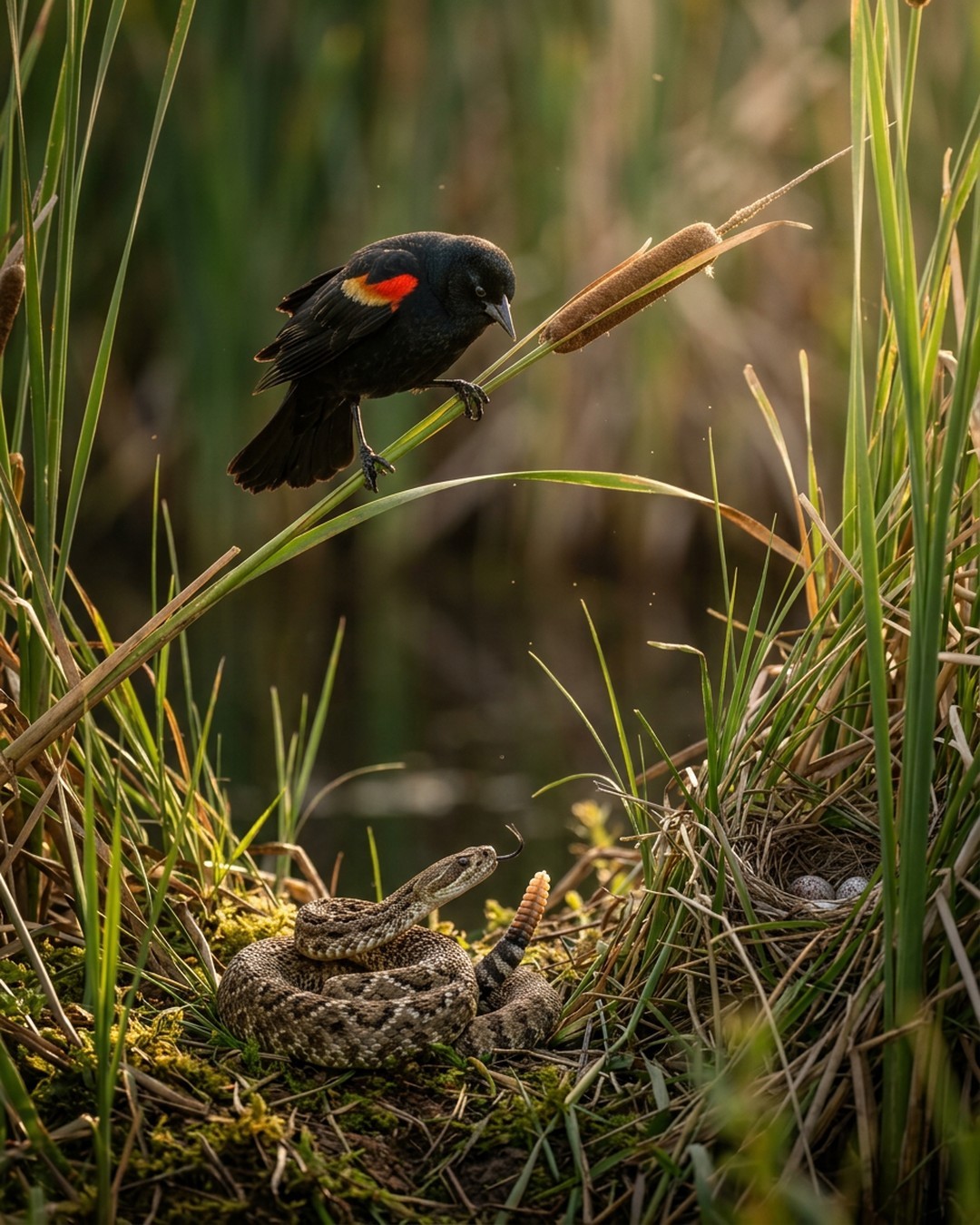
Blackbird Predator Recognition and Snake Defense Strategy

scitechdaily biology ornithology animal-behavior oregon-state-university ecology

Resumo

Imagem de Capa do Mapa Mental
Imagem de Capa Gerada por IA

Recent research published on August 26, 2026, in Behavioral Ecology by Oregon State University scientists reveals that red-winged blackbirds exhibit remarkable restraint when encountering venomous rattlesnakes compared to nonvenomous gopher snakes. Lead researcher Shelby Lawson and her team conducted experiments using realistic inanimate models of various nest predators placed near blackbird nests across western Oregon. The study discovered that while blackbirds aggressively attacked gopher snakes more than 80 times during the nestling stage, they struck a rattlesnake only once across dozens of tests. This differential treatment occurs despite rattlesnakes having been largely eliminated west of the Cascade Range during the 1800s, suggesting the birds possess an innate or rapidly generalized capacity to recognize viperid features or venomous threats. The findings provide a novel empirical test of parental investment theory, demonstrating how perching birds balance brood protection against personal survival risks. While blackbirds swooped toward both snake types, the presence of venom critically altered their physical strike behavior without entirely eliminating defensive posturing or alarm calling. Researchers emphasize that incorporating venomous and nonvenomous reptiles into ecological frameworks bridges a major gap in understanding avian anti-predator adaptations. Future studies aim to pinpoint the precise visual or auditory cues, such as head shape or rattling sounds, that trigger this sophisticated risk assessment in wild bird populations.

Pontos-chave

01

🔹 August 2026 Behavioral Ecology Study

Published on August 26, 2026, in Behavioral Ecology by Oregon State University researchers including Shelby Lawson and David Kikuchi, investigating how red-winged blackbirds defend nests against different snake types in western Oregon.

02

🔸 Extreme Contrast in Physical Strikes

During nest defense experiments using realistic inanimate models, red-winged blackbirds struck nonvenomous gopher snakes over 80 times during the nestling stage but struck rattlesnakes only a single time across dozens of tests.

03

⭐ Parental Investment Theory Application

The study tests parental investment theory by showing how birds calibrate defensive aggression based on predator lethality; parents attack egg-eating pests like jays and squirrels but show restraint against deadly venomous vipers.

04

📊 Experimental Methodology and Controls

Researchers tested bird responses at nests containing eggs or nestlings using models of gopher snakes, rattlesnakes, scrub jays, ground squirrels, brood-parasitic cowbirds, and control song sparrows to isolate behavioral variables.

05

💡 Implications for Avian Predator Recognition

Despite rattlesnakes being historically rare in western Oregon since the 1800s, blackbirds adjusted their strike behavior based on venom risk, raising new questions about innate versus learned recognition of dangerous predators.

Quer criar seu próprio mapa mental?

Faça login no Neumap AI e comece a criar seus próprios mapas mentais!

Começar