🦖 Infernogallus jamesi Fruit-Eating Dinosaur

SciTechDaily Dinosaurs Paleontology EvolutionaryBiology Fossils RoyalOntarioMuseum

Resumo

Imagem de Capa do Mapa Mental
Imagem de Capa Gerada por IA

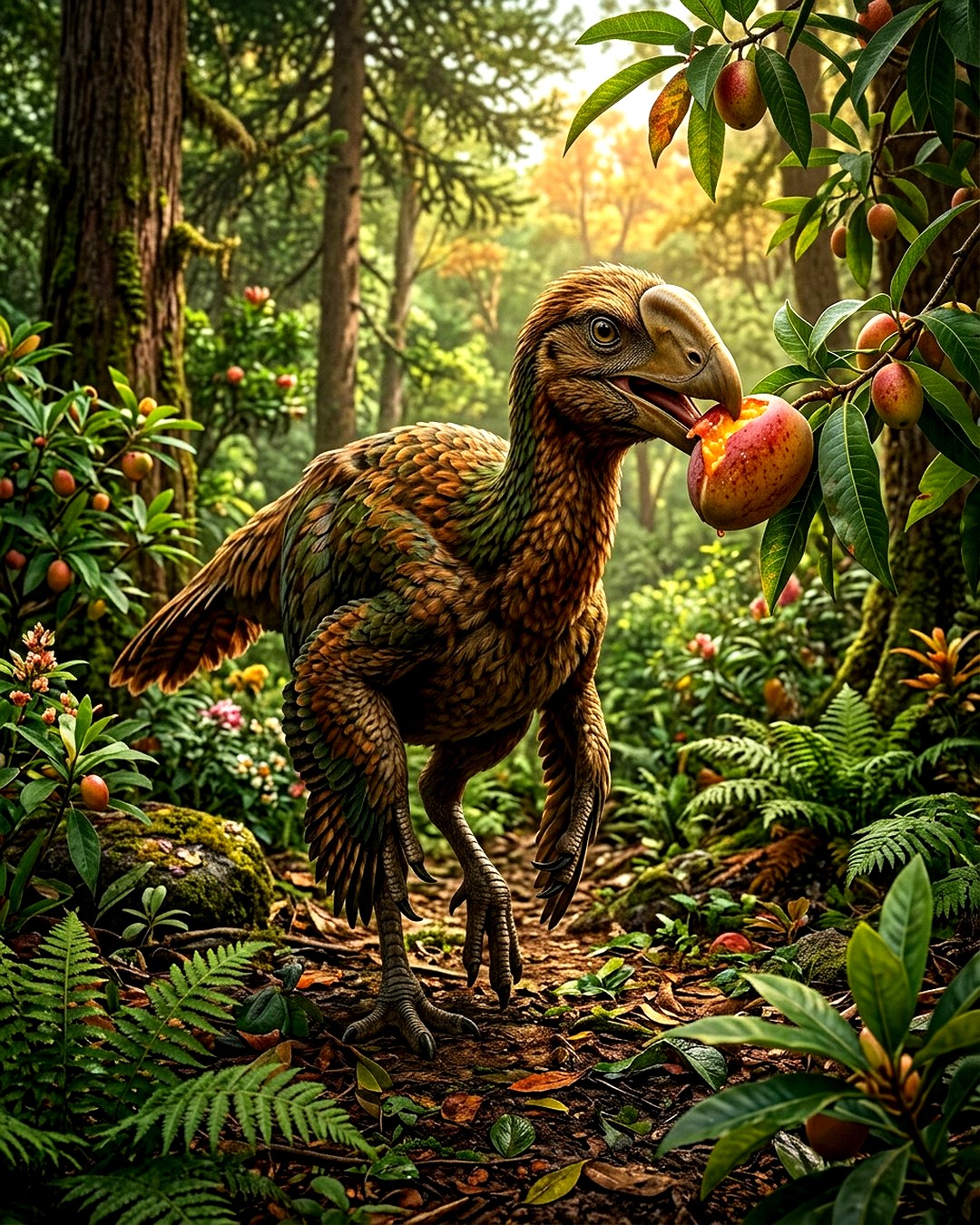
Paleontologists have discovered a new species of dinosaur, Infernogallus jamesi, that evolved specialized anatomical traits for eating fruit during the Cretaceous period. The authors argue that this discovery provides important clues about how prehistoric animals adapted as flowering plants transformed terrestrial ecosystems. The newly identified turkey-sized caenagnathid featured forward-facing chewing muscles and a toothless beak suited for processing soft foods like stone fruits. This finding suggests that dinosaur diets and ecological roles were more diverse than previously recognized near the end of the Cretaceous. The research team, led by Dr. Gregory Funston and published in Nature Communications on October 10, 2026, highlights how the spread of flowering plants reshaped animal behavior. Researchers from Stony Brook University, the Royal Ontario Museum, and the North Dakota Geological Survey analyzed a nearly complete skull discovered in the Hell Creek Formation. The anatomical features resemble those of modern vulturine parrots and indicate that some dinosaurs helped disperse seeds. This insight challenges ongoing debates regarding whether dinosaur populations were already in decline before their final extinction. Readers gain a deeper appreciation for the complex ecological interactions between early flowering plants and specialized herbivorous dinosaurs. The study demonstrates that specialized feeding habits evolved independently in multiple lineages, including theropod dinosaurs that shifted away from strict meat-eating. Understanding these ancient relationships helps scientists reconstruct prehistoric food webs and evaluate ecosystem resilience prior to major extinction events. Researchers can apply these comparative anatomical methods when analyzing other poorly understood fossil groups.

Pontos-chave

01

🦖 Discovery of Infernogallus jamesi

Researchers discovered a new species of feathered, toothless dinosaur named Infernogallus jamesi, which translates to hell chicken. Weighing approximately 25 pounds or 12 kilograms as a fully grown adult, it belonged to a group of oviraptorosaurs known as caenagnathids. Its fossils were unearthed in the Hell Creek Formation, a region stretching across Montana, North Dakota, South Dakota, and Wyoming. The specimen includes a nearly complete skull with connected bones and a partial skeleton now on display at the Royal Ontario Museum.

02

🍏 Specialized Fruit-Eating Anatomy

Using CT scans, scientists revealed that the bones forming the roof of the mouth in Infernogallus jamesi curved downward to position chewing muscles horizontally. This unique muscle arrangement allowed the dinosaur to move its beak back and forth in a chewing motion similar to modern humans. This anatomical setup resembles that of the modern vulturine parrot and was especially suited for separating the flesh of stone fruits from their hard central pits. This represents the first known dinosaur with anatomical adaptations specifically linked to fruit consumption.

03

🌿 Co-Evolution with Flowering Plants

As flowering plants gradually replaced cone-bearing gymnosperms as the dominant land vegetation during the Cretaceous period, fruits became larger and more abundant. By eating fruit, dinosaurs like Infernogallus jamesi may have helped disperse seeds and influenced plant evolution. This ecological role parallels the functions that birds, reptiles, and small mammals fulfill in modern ecosystems. This parallel highlights sophisticated ecological interactions during a transformative geological era.

04

🏛️ Research Collaboration and Publication

The study was conducted by researchers from Stony Brook University, the Royal Ontario Museum, and the North Dakota Geological Survey. Dr. Gregory Funston, an assistant professor at Stony Brook University, led the investigation alongside co-author Dr. Thomas Dudgeon and senior author Dr. David Evans. The findings were officially published on October 10, 2026, in the scientific journal Nature Communications. The holotype specimen cataloged as ROMVP 65050 is housed in the James and Louise Temerty Galleries of the Age of Dinosaurs in Toronto.

05

🔍 Implications for Late Cretaceous Diversity

The specialized feeding behavior of Infernogallus jamesi contributes to an ongoing debate over whether dinosaurs were already in decline before their extinction. The findings suggest that the diversity of dinosaurs and their ecological roles near the end of the Cretaceous were greater than the fossil record has previously shown. Complete remains of small dinosaurs are exceptionally rare, making this discovery a crucial addition to understanding prehistoric ecosystems alongside predators like T. rex.

Quer criar seu próprio mapa mental?

Faça login no Neumap AI e comece a criar seus próprios mapas mentais!

Começar