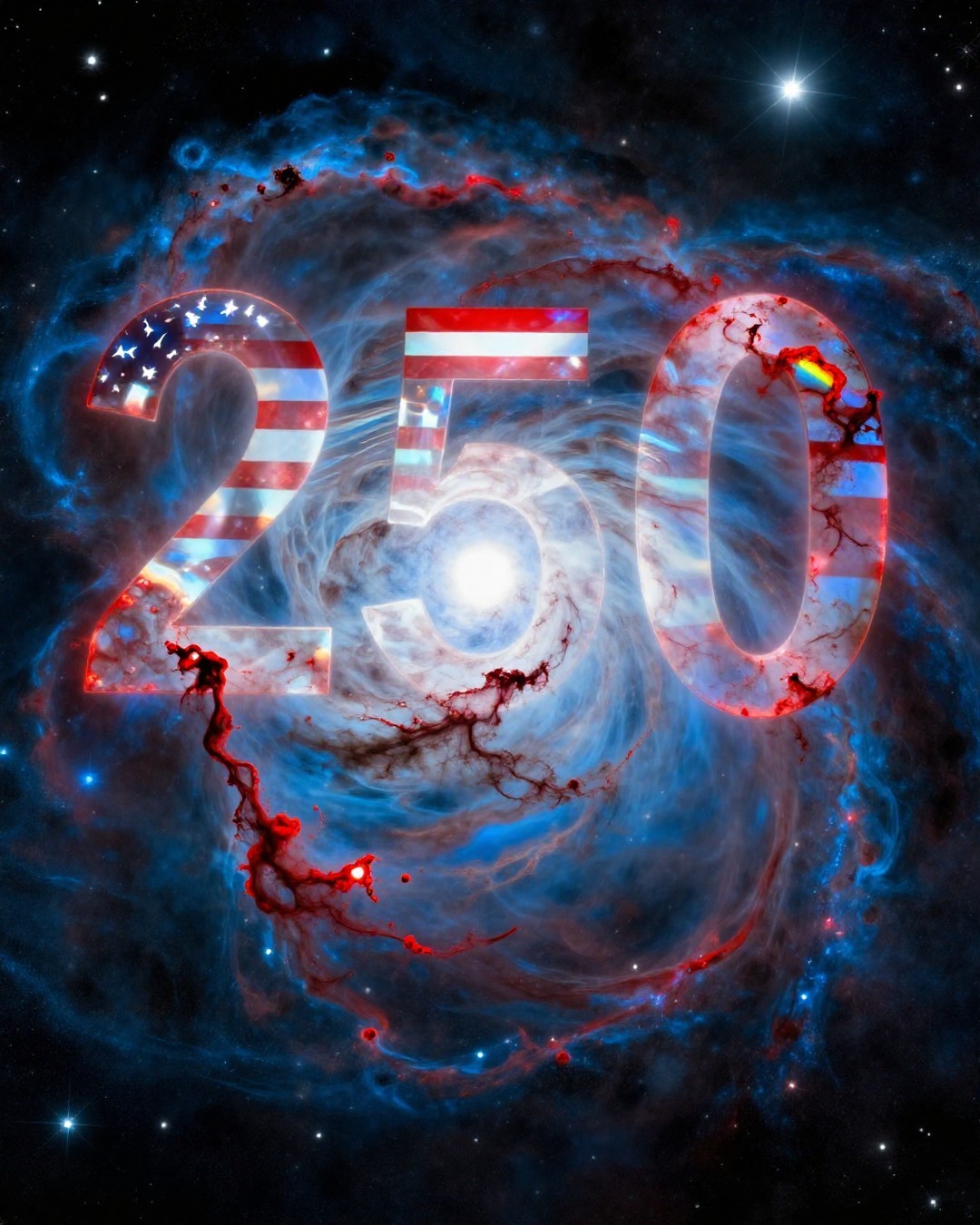
NASA Cosmic Masterpieces for US 250th Anniversary

NASA Astronomy ChandraX-rayObservatory SpaceExploration US250thAnniversary

Summary

Mind Map Cover Image
AI Generated Cover Image

NASA has released a collection of four cosmic images rendered in red, white, and blue to commemorate the 250th anniversary of the United States. These images utilize multi-wavelength data from the Chandra X-ray Observatory, combined with observations from the James Webb Space Telescope and the Hubble Space Telescope, to highlight the dynamic processes occurring within our universe. The agency aims to bridge the gap between scientific discovery and public celebration by showcasing the aesthetic beauty of celestial phenomena. By processing high-energy X-ray data alongside infrared and optical light, NASA provides a unique perspective on stellar evolution, galaxy formation, and the mysterious nature of dark matter. The featured objects include the supernova remnant Cassiopeia A, the star-forming region NGC 3603, the spiral galaxy Messier 94, and the distant galaxy cluster ZwCl 0024+1652. Each image serves as a testament to the power of modern space observatories in mapping the complex structures of the cosmos. These visualizations offer both educational value and inspiration, demonstrating how advanced technology allows humanity to visualize invisible forces like dark matter and high-energy radiation. The project encourages public engagement with space exploration as the nation approaches its historic milestone.

Key Points

01

🔹 Cassiopeia A: Supernova Aftermath

【📌 Key Finding】Cassiopeia A represents the debris field of an exploded star. 【🔸 Impact Factors】The image combines Chandra X-ray data (blue/purple) showing blast waves and elements like iron, calcium, and oxygen, with Webb infrared data (red/white) highlighting the expanding shell and cosmic dust.

02

🔸 NGC 3603: Stellar Nursery

【📌 Key Finding】Located in the Milky Way, this nebula is a massive star factory. 【⭐ Data Support】Chandra X-ray data (red/white) reveals a dense swarm of young, massive stars shedding powerful winds, while Hubble optical/UV/IR data (red-orange/green/blue/yellow) maps the surrounding cold dust pillars and gas blankets.

03

⭐ Messier 94: Starburst Galaxy

【📌 Key Finding】NGC 4736 (M94) features a prominent starburst ring where new stars are actively forming. 【🔸 Impact Factors】The star formation is likely fueled by gas flowing inward through the galaxy's unique oval-shaped bar structure, visualized using a blend of Chandra X-rays and ground-based optical light.

04

📊 ZwCl 0024+1652: Dark Matter Evidence

【📌 Key Finding】This distant galaxy cluster provides critical evidence for dark matter. 【⭐ Data Support】Chandra X-rays (red) show a reservoir of superheated gas containing more mass than all galaxies in the cluster combined, while Hubble data (blue) maps the invisible ring of dark matter through gravitational light warping.

05

💡 Project Significance

【📌 Key Finding】The 'Red, White, and Blue' collection serves as a public outreach initiative for the US 250th anniversary. 【🔸 Impact Factors】By utilizing multi-messenger astronomy (X-ray, IR, Optical, UV), NASA demonstrates the capability of modern observatories to reveal the hidden architecture of the universe, from stellar birth to large-scale dark matter distribution.

Want to create your own mindmap?

Login to Neumap AI and start creating your own mindmaps!

Get Started