Evolutionary Discovery of Australyichthys aegis

ScitechDaily MarineBiology EvolutionaryBiology Taxonomy AustralyichthysAegis

Summary

Mind Map Cover Image
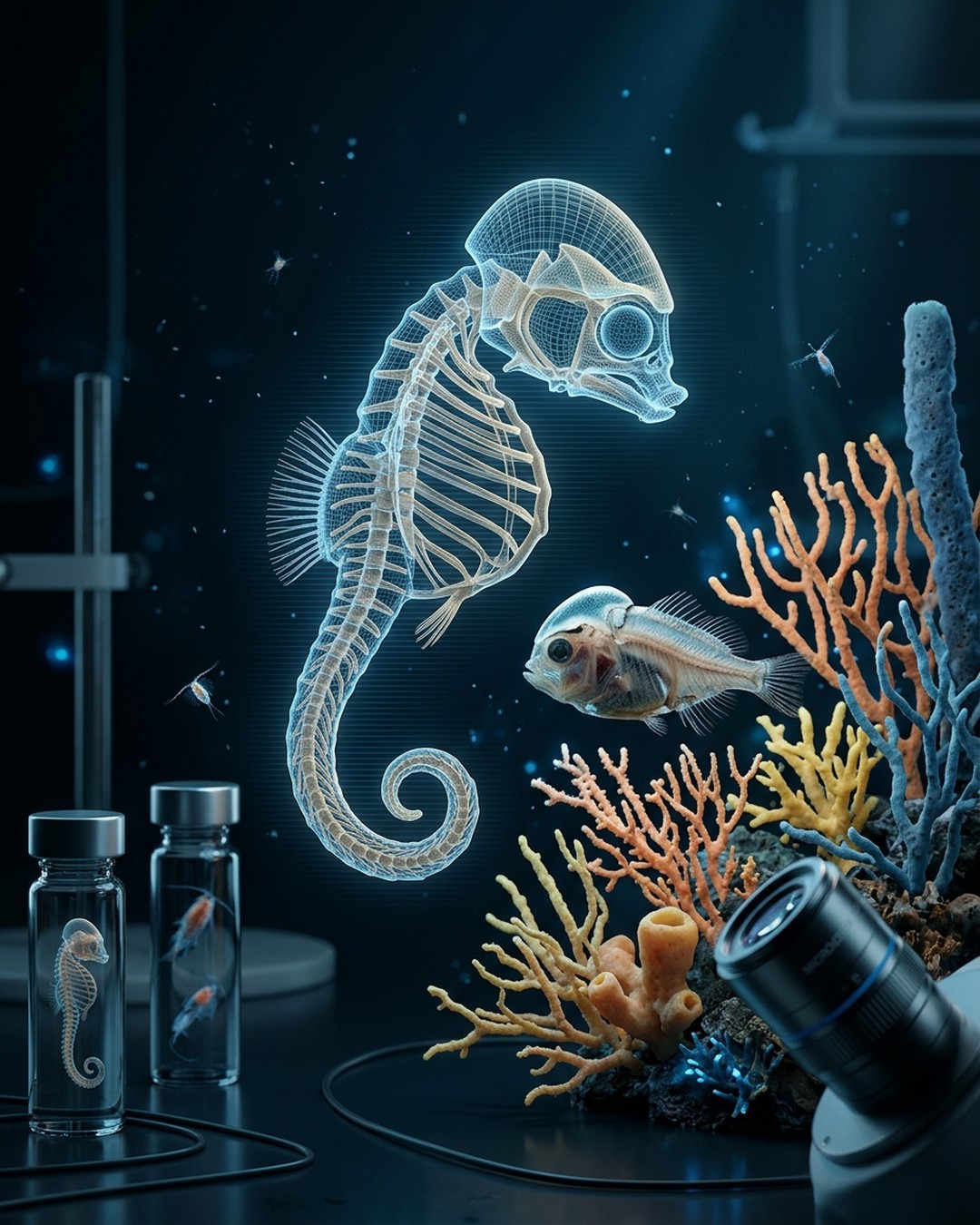
AI Generated Cover Image

Researchers from the Australian Museum and Southern Cross University published a study on July 29, 2026, in the Journal of Lost Species revealing that a tiny fish from southern Australia, Australyichthys aegis, belongs to a separate evolutionary lineage despite its striking resemblance to seahorses. Utilizing micro-CT scanning and DNA sequencing, scientists determined that these creatures, informally called sea muppets, evolved their horse-shaped profile, curling tail, and brood pouch independently through convergent evolution. The authors emphasize that museum collections frequently harbor misidentified specimens collected from deep reefs at depths of 50 to 125 meters over the past 65 years. By disproving the initial classification of these specimens within the true seahorse genus Hippocampus, the researchers established the new genus Australyichthys, demonstrating how convergent evolution repeatedly arrives at identical morphological solutions within the family Syngnathidae. The investigation relies heavily on advanced non-destructive imaging technologies like micro-CT scanning to build three-dimensional skeletal models without damaging irreplaceable museum specimens. Combined with rare ethanol preservation that left genetic material intact for DNA sequencing, the team successfully bridged the gap between external appearance and true phylogenetic classification. These findings highlight the vast, underexplored biodiversity of the Great Southern Reef and emphasize the critical need for targeted marine surveys rather than relying on accidental trawl net catches. The study serves as a vital reminder that numerous lost species remain hidden in deep offshore zones, waiting for modern scientific techniques to uncover their true evolutionary histories.

Key Points

01

🔹 Discovery of Australyichthys aegis

Published on July 29, 2026, in the Journal of Lost Species, researchers identified Australyichthys aegis, a tiny fish from deep reefs off southern Australia, as a new species nicknamed the helmethead sea muppet. Growing no longer than a human thumb, it features a domed helmet-like crest and was discovered alongside relatives like the bullneck sea muppet (A. minotaur) and the paradoxical sea muppet (A. paradoxus).

02

🔸 Misidentification in Museum Collections

Specimens of Australyichthys had been collected accidentally in trawl nets and dredges at depths of 50 to 125 meters over a 65-year span. Due to accidental placement in the South Australian Museum and other institutions like the Australian Museum, Museums Victoria, and CSIRO, the fish remained unrecognized and misidentified as true seahorses for decades.

03

⭐ Micro-CT Scanning and Skeletal Analysis

Because specimens were irreplaceable, researchers used non-destructive micro-CT scanning to build three-dimensional skeletal models. The scans revealed that unlike true seahorses (Hippocampus) which possess a rigid cage of fused bony plates and a coronet, Australyichthys features a completely different internal arrangement of bones supporting the belly.

04

📊 DNA Confirmation and Convergent Evolution

DNA sequencing from an ethanol-preserved specimen of A. aegis placed the fish outside the seahorse genus on a separate evolutionary branch. This demonstrates convergent evolution within the family Syngnathidae, where separate lineages independently evolved identical physical traits like bent heads, gripping tails, and brood pouches.

05

💡 Ecological Implications for the Great Southern Reef

The study underscores the hidden biodiversity of Australia's Great Southern Reef, where deeper zones remain barely explored and vertebrate species remain lost in museum drawers. Researchers advocate for targeted marine surveys in mesophotic zones rather than waiting for accidental catches to better understand and protect these elusive marine lineages.

Want to create your own mindmap?

Login to Neumap AI and start creating your own mindmaps!

Get Started