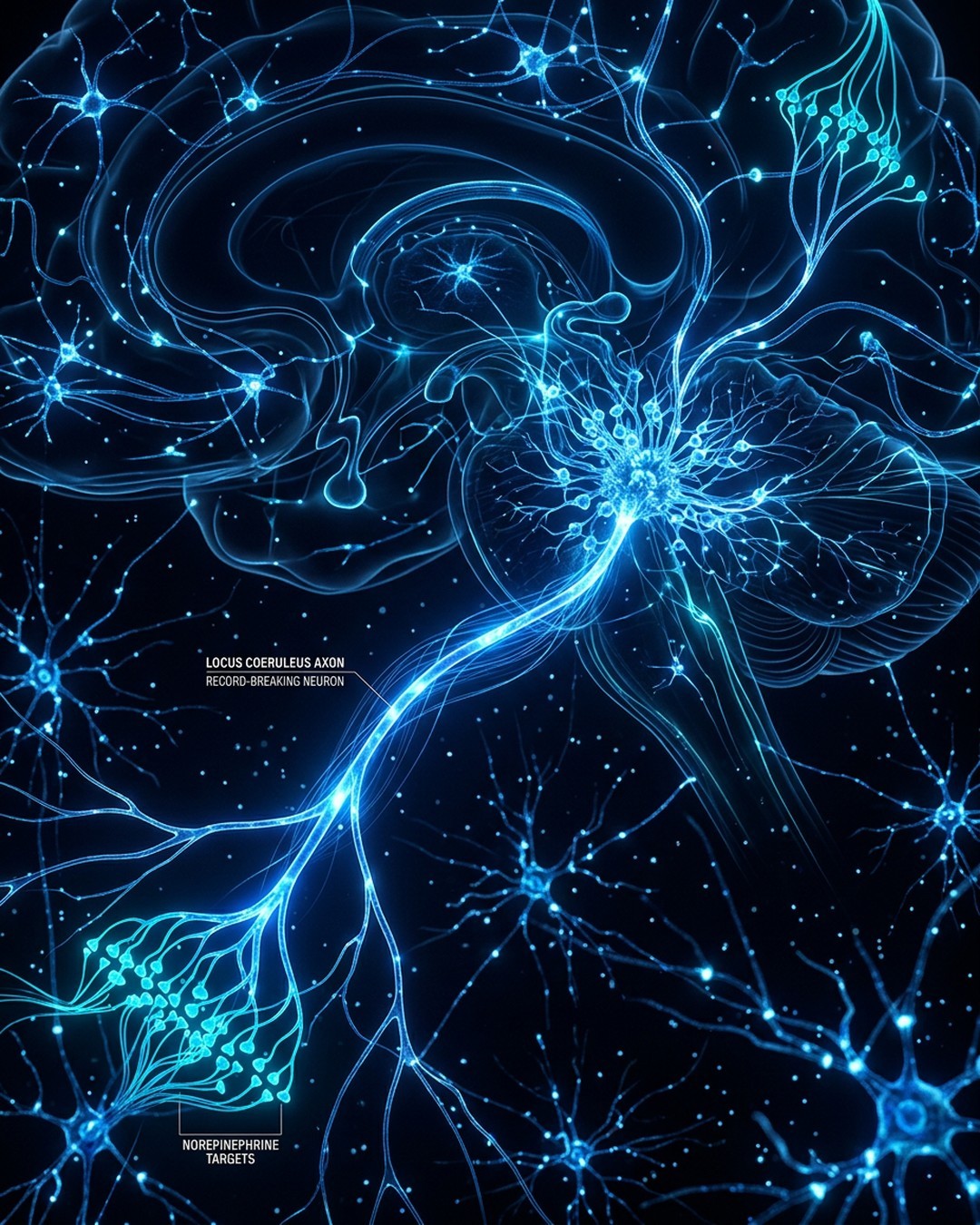
Allen Institute researchers have mapped the locus coeruleus (LC), the brainstem region known as the blue place, revealing that its norepinephrine-releasing system functions like a targeted postal network rather than a uniform foghorn. Published in Nature on September 16, 2026, the study combined whole-brain imaging of nearly 35,000 neurons, genetic profiling of approximately 400,000 cells, and behavioral experiments in mice to uncover distinct functional routes and structural organization.
The researchers discovered that upper dorsal LC neurons project upward to the cerebral cortex and forebrain to govern learning processes, while lower ventral LC neurons project downward to the brainstem and spinal cord to regulate environmental engagement. These anatomical differences correspond to distinct gene expression patterns, providing foundational insights into how the brain manages attention, stress, and behavioral adaptation.
A groundbreaking discovery of the study is a record-breaking single mouse neuron measuring 70.32 centimeters, or approximately 27.7 inches, in length. This extraordinary axon supplies norepinephrine to a massive volume of the cerebral cortex while selectively bypassing the cerebellum, brainstem, and spinal cord, demonstrating a level of spatial specificity previously unrecognized in neuromodulatory systems.
These findings establish a collaborative learning platform between the norepinephrine and dopamine systems to process complex abstract concepts simultaneously. Furthermore, because locus coeruleus neurons are among the earliest to degenerate in Alzheimer's disease and serve as targets for depression, anxiety, and ADHD medications, this detailed topological mapping opens new pathways for precision therapeutics.