Breakthrough in Magnon Lifetimes for Compact Quantum Computing

QuantumComputing Magnons UniversityOfVienna PhysicsBreakthrough Nanotechnology QuantumHardware

Summary

Mind Map Cover Image
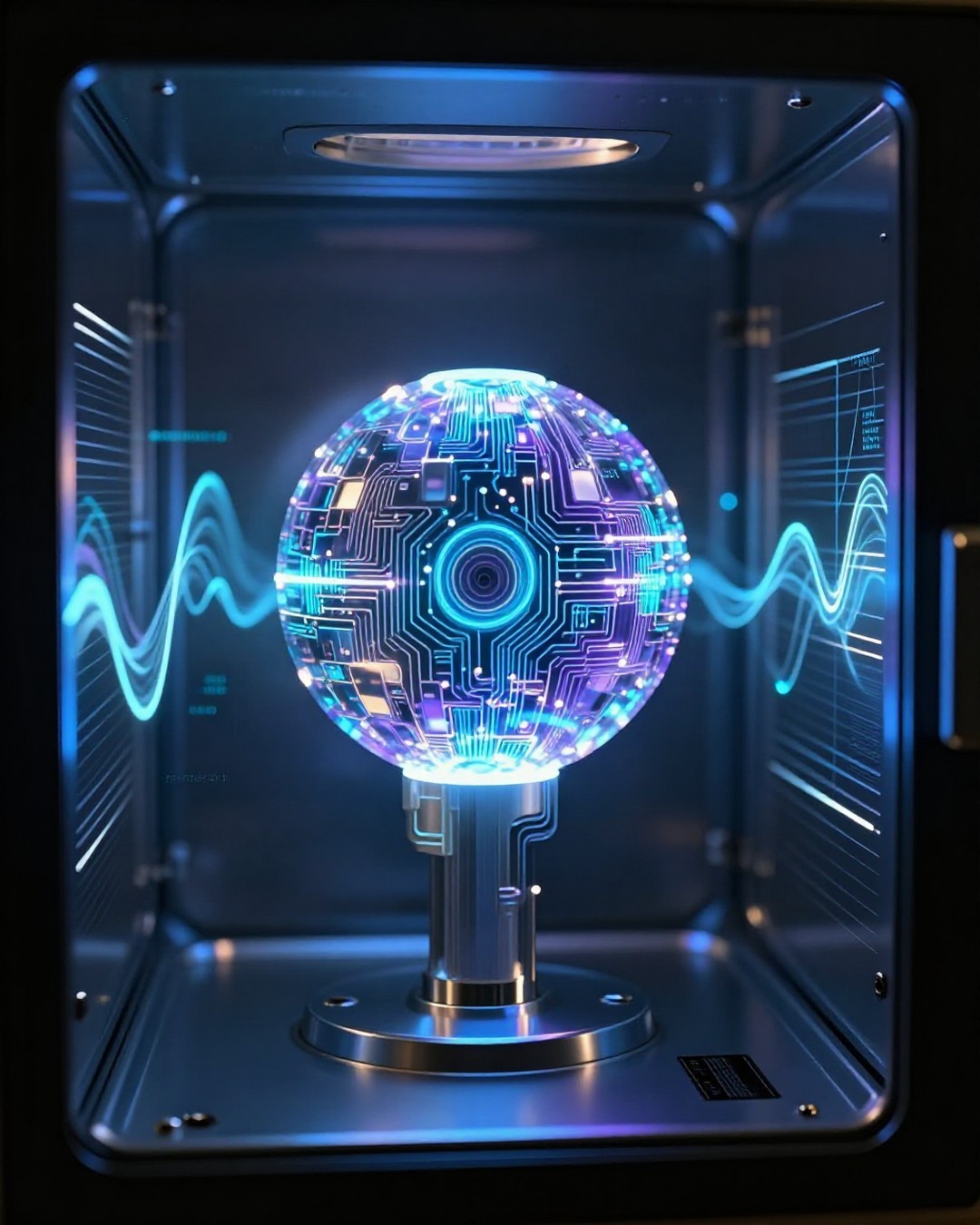
AI Generated Cover Image

Physicists at the University of Vienna have achieved a major breakthrough in quantum technology by extending the lifespan of magnons—magnetic excitations—from a few hundred nanoseconds to 18 microseconds. This nearly 100-fold increase overcomes a critical barrier that previously prevented magnons from being used as reliable carriers of quantum information. The research, published on June 25, 2026, suggests that the primary limitation on magnon longevity is material purity rather than fundamental physics, opening a viable path toward developing highly compact quantum computers the size of a coin. The research team, led by Andrii Chumak, utilized short-wavelength magnons and ultra-pure yttrium iron garnet (YIG) spheres cooled to 30 millikelvin. By minimizing thermal interference and surface defects, the team demonstrated that magnons can function as durable quantum memories and communication channels. This discovery positions magnons as potential universal translators in hybrid quantum architectures, capable of connecting disparate quantum systems that currently struggle to communicate. The findings indicate that future advancements in quantum hardware will rely heavily on material science improvements. By refining the purity of magnetic materials, researchers can further extend magnon lifetimes, potentially enabling the creation of a quantum bus that connects hundreds of qubits on a single chip. This development represents a significant step toward scalable, miniaturized quantum computing architectures that could eventually rival the functionality of current superconducting qubit processors. For researchers and industry professionals, this discovery provides a clear roadmap for hardware development. The ability to manipulate magnons at the nanometer scale allows for the integration of quantum circuits into standard chip sizes. Future efforts should focus on material synthesis and the integration of these long-lived magnons into existing hybrid quantum systems to enhance scalability and connectivity.

Key Points

01

🔹 Magnon Lifetime Breakthrough

【📌 Key Finding】Researchers at the University of Vienna successfully extended the lifespan of magnons from a few hundred nanoseconds to 18 microseconds. 【⭐ Data Support】This represents a nearly 100-fold increase in stability, transforming magnons from fleeting signals into reliable carriers of quantum information comparable to superconducting qubits.

02

🔸 Material Purity and Performance

【📌 Key Finding】The study identified that magnon longevity is primarily constrained by material defects rather than fundamental physical laws. 【🔸 Impact Factors】Testing three spheres with varying levels of purity confirmed that higher purity directly correlates with longer magnon survival, establishing a clear path for future hardware optimization.

03

⭐ Experimental Methodology

【📌 Process】The team employed two primary strategies: 1) Utilizing short-wavelength magnons to bypass surface defects, and 2) Cooling ultra-pure yttrium iron garnet (YIG) spheres to 30 millikelvin in a mixed-phase cryostat. This effectively 'froze out' thermal processes that typically destroy magnon states.

04

📊 Potential for Miniaturized Quantum Computers

【📌 Application】Because magnons operate at the nanometer scale, they can be integrated into circuits as small as current smartphone chips. 【⭐ Impact】This discovery could enable the development of quantum computers as small as a 1-cent coin, serving as a 'quantum bus' to connect hundreds of qubits along a shared pathway.

05

💡 Hybrid Quantum Architecture Role

【📌 Function】Magnons interact naturally with phonons and photons, allowing them to act as universal translators in hybrid quantum systems. 【🔸 Impact】This capability helps bridge the gap between different quantum technologies that currently cannot communicate, facilitating more scalable and versatile quantum network architectures.

Want to create your own mindmap?

Login to Neumap AI and start creating your own mindmaps!

Get Started