Optical Magnus Effect in Quantum Light

scitechdaily physics quantum-computing optics research

Summary

Mind Map Cover Image
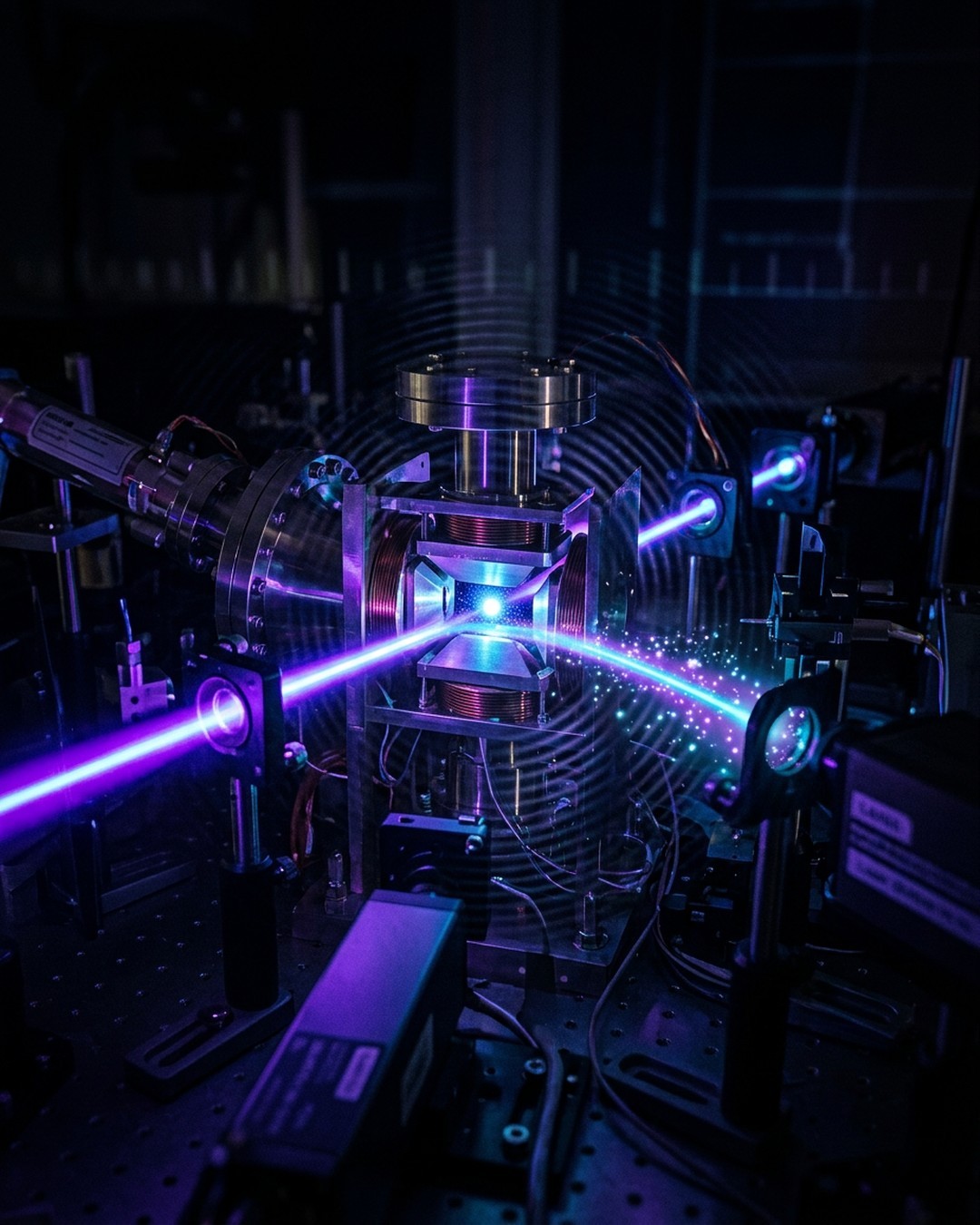
AI Generated Cover Image

Researchers have directly observed the optical Magnus effect for the first time on September 15, 2026, revealing a tiny sideways shift in laser interactions that could impact precise qubit control in quantum computers. The study, led by scientists at the Paul Scherrer Institute PSI and published in Physical Review Letters, measured this displacement using a single trapped calcium ion as a nanoscale sensor. The author highlights how macroscopic physical phenomena, such as the curved trajectory of a spinning ping-pong ball, manifest at the quantum level. This displacement occurs because tightly focusing laser light changes the spatial structure of its electromagnetic field, causing the point of strongest interaction to shift to one side. The findings indicate that the size of this shift depends exclusively on the wavelength of the laser light rather than the tightness of the focus. Understanding this optical counterpart of the Magnus effect helps explain why lasers might miss their expected targets in quantum systems, potentially causing errors if overlooked. Practically, this phenomenon offers new opportunities for quantum computing development. The forces generated by the optical Magnus effect could be harnessed to couple qubits to one another, enabling more complex computations and improving future quantum architecture precision.

Key Points

01

🔹 Direct Observation of the Optical Magnus Effect

【📌 Key Finding】Researchers directly observed the optical Magnus effect for the first time on September 15, 2026. 【🔸 Impact Factors】The phenomenon reveals a tiny sideways shift in laser interactions at the quantum level. 【⭐ Data Support】The findings were published in Physical Review Letters by an international team led by the Paul Scherrer Institute PSI.

02

🔸 Measurement Using Trapped Calcium Ions

【📌 Key Finding】The research team used a single calcium ion held almost motionless by electromagnetic fields in an ion trap. 【🔸 Impact Factors】The ion acted as a tiny sensor capable of feeling out the structure of the laser light. 【⭐ Data Support】This setup enabled scientists to measure a precise displacement shift of just a few hundred nanometers.

03

⭐ Characteristics of the Electromagnetic Shift

【📌 Key Finding】Tightly focusing laser light alters the spatial structure of its electromagnetic field. 【🔸 Impact Factors】The strongest interaction point shifts slightly to one side rather than occurring at the center of the beam. 【⭐ Data Support】The size of this shift depends exclusively on the laser wavelength and not on how tightly the beam is focused.

04

📊 Implications for Quantum Computing and Qubit Control

【📌 Key Finding】Unaccounted optical Magnus shifts can disrupt precise qubit control and introduce errors in quantum computers. 【🔸 Impact Factors】Researchers can prevent unexpected laser target misses by factoring in this displacement. 【⭐ Data Support】The generated forces could alternatively be used to couple qubits together to support more complex computations.

05

💡 Background and Theoretical Confirmation

【📌 Key Finding】Scientists at the University of Amsterdam had predicted the optical Magnus effect theoretically several years earlier. 【🔸 Impact Factors】The recent PSI experiment successfully confirms this prediction. 【⭐ Data Support】The work provides a detailed characterization of how the optical Magnus effect behaves in laboratory settings.

Want to create your own mindmap?

Login to Neumap AI and start creating your own mindmaps!

Get Started