Maternal Age Biological Marks Across Generations

scitechdaily biology epigenetics genetics aging reproduction

Summary

Mind Map Cover Image
AI Generated Cover Image

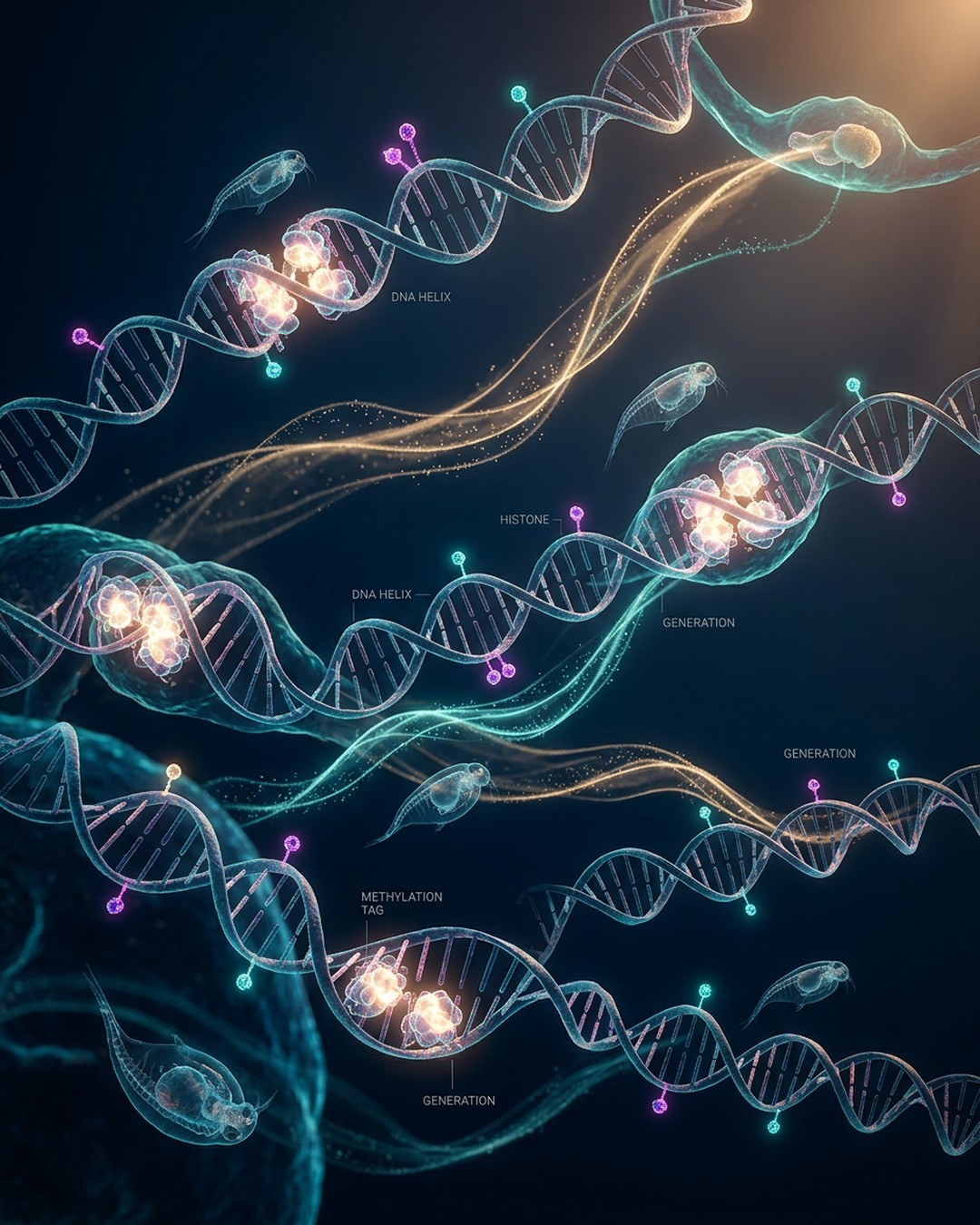
A recent study published on September 6, 2026, by researchers at the Marine Biological Laboratory reveals that a mother's age leaves biological imprints affecting physical and behavioral traits across generations in many species, including humans. Led by Kristin Gribble and Alyssa Liguori, the research investigated rotifers ('Brachionus manjavacas') and found that maternal age effects likely stem from reversible epigenetic changes rather than permanent DNA mutations. The researchers discovered that these age-related transgenerational effects do not accumulate progressively and can disappear within a single generation, pointing to mechanisms such as histone modifications or mitochondrial DNA inheritance. Furthermore, the severity of these effects varies depending on specific genotypes, with some genetic strains even exhibiting protective or beneficial longevity traits in offspring from older mothers. The persistence of these traits despite negative evolutionary impacts on lifespan and reproduction is explained by the decline of natural selection's force later in life. Since organisms like rotifers complete most of their reproduction early, late-life maternal effects face minimal evolutionary pressure for elimination. Understanding how maternal age information transmits across generations advances precision medicine and human health studies by proving that individual health depends not only on one's own genome but also on the physiological environments of mothers and grandmothers.

Key Points

01

🔹 Maternal Age Imprints Across Generations

Published on September 6, 2026, research from the Marine Biological Laboratory led by Kristin Gribble and Alyssa Liguori demonstrates that a mother's advanced age leaves biological markers affecting offspring physical and behavioral traits across multiple species, from invertebrates to mammals and humans.

02

🔸 Epigenetic Mechanism vs DNA Mutation

Studies on the aquatic rotifer species 'Brachionus manjavacas' show that maternal age effects are driven by reversible epigenetic changes rather than accumulated DNA mutations, evidenced by the fact that these effects can completely disappear within a single generation.

03

⭐ Potential Molecular Drivers: Histones and Mitochondria

Researchers are actively testing histone modifications—which control gene expression without altering DNA sequences—and maternally inherited mitochondrial DNA as the primary biological vehicles transmitting maternal age information to offspring.

04

📊 Genotype-Specific Protective Genetic Variants

Genetic variation heavily dictates the severity of maternal age effects, with specific rotifer genotypes displaying protective gene variants that paradoxically grant offspring from older mothers longer lifespans and enhanced fitness.

05

💡 Evolutionary Persistence and Precision Medicine Implications

Maternal age effects persist because natural selection pressures decline sharply in later life stages when older females have already reproduced. Understanding these transgenerational signals enhances precision medicine by linking individual health directly to maternal and grandmotherly environmental history.

Want to create your own mindmap?

Login to Neumap AI and start creating your own mindmaps!

Get Started