Primary Aldosteronism and Continuous Blood Pressure Monitoring

SciTechDaily Health BloodPressure Hormones Hypertension MedicalResearch

Summary

Mind Map Cover Image
AI Generated Cover Image

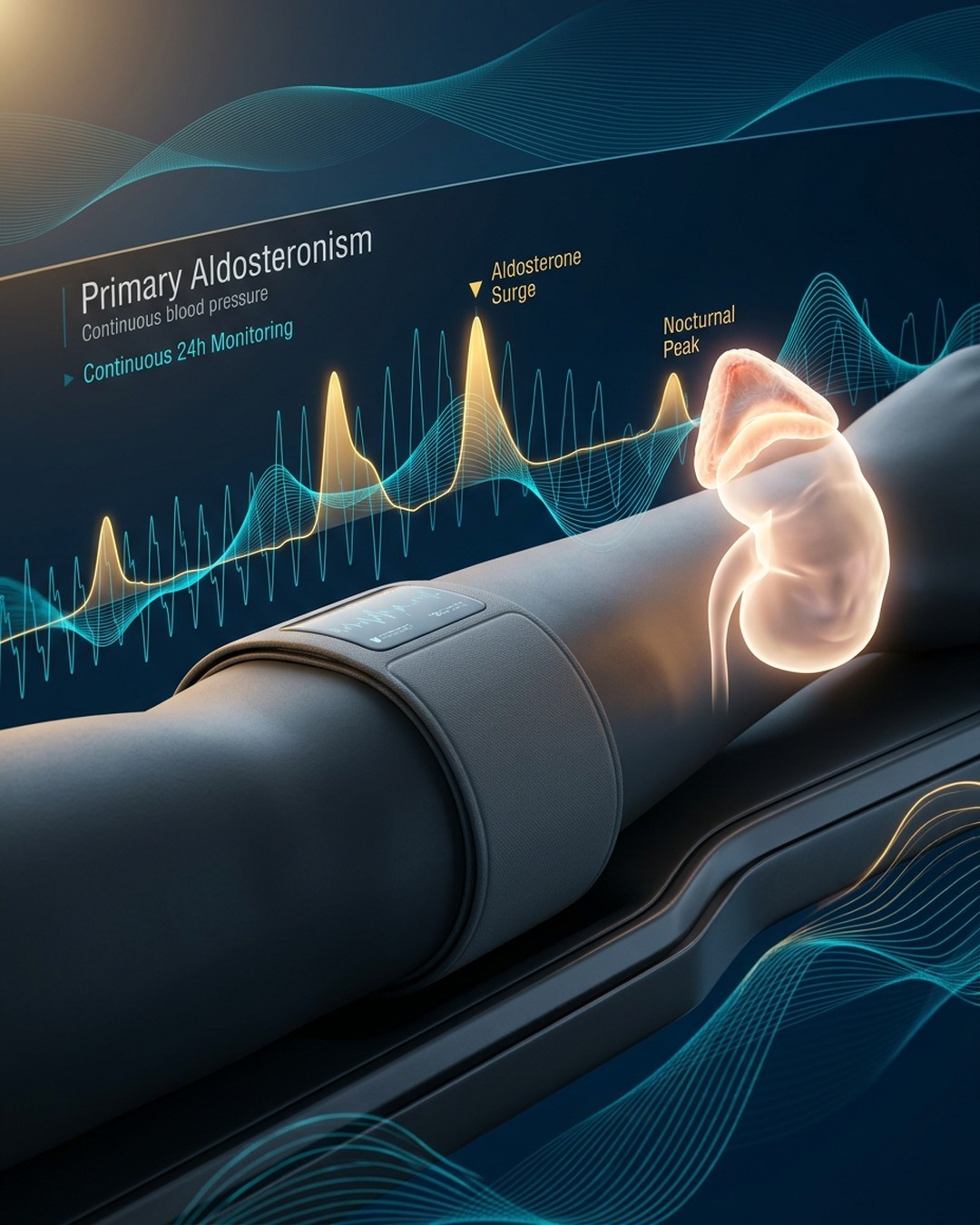
A recent study published in Science Translational Medicine on September 6, 2026, reveals that primary aldosteronism, a potentially curable hormone disorder, may drive millions of high blood pressure cases. Researchers from the University of Bristol and international partners utilized a wearable skin monitor called U-Rhythm to track hormone patterns continuously over 24 hours among 60 patients. The author highlights that standard single-time-point blood tests frequently miss the condition due to natural hormone fluctuations and hidden nocturnal surges. The investigation demonstrates that aldosterone levels repeatedly climb and fall, with distinct hormone bursts occurring during sleep that routine clinical appointments completely overlook. The essence of the research points toward a paradigm shift in diagnosing secondary hypertension by moving away from isolated blood draws toward continuous 24-hour monitoring of hormone rhythms. This breakthrough approach captures subtle disease patterns, particularly in patients where hormone overproduction originates in a single adrenal gland. Practical application involves redesigning clinical pathways for hypertension screening to incorporate dynamic measurement tools. Early detection of primary aldosteronism opens opportunities for targeted surgical interventions or effective medical treatments, ultimately reducing preventable cardiovascular events like heart disease and strokes.

Key Points

01

🔹 Prevalence and Impact of Primary Aldosteronism

【📌 Key Finding】Primary aldosteronism is a potentially curable disorder affecting up to one in five people with high blood pressure, potentially driving millions of secondary hypertension cases in the UK and globally. 【🔸 Impact Factors】The condition develops when adrenal glands produce excessive aldosterone, disrupting salt, water, and blood pressure regulation while elevating risks for heart disease, stroke, and diabetes. 【⭐ Data Support】A proof-of-concept investigation published in Science Translational Medicine on September 6, 2026, monitored 60 patients across international medical centers in Bristol, Bergen, Stockholm, and Athens using continuous wearable technology.

02

🔸 Limitations of Single Blood Tests

【📌 Diagnostic Flaw】Standard clinical practice relies on a single-time-point blood sample, which frequently provides incomplete or misleading results because aldosterone naturally fluctuates throughout the day. 【🔸 Hidden Surges】Patients experience brief surges in hormone production where levels temporarily drop below minimum diagnostic thresholds, causing severe disease cases to appear normal during routine clinic visits. 【⭐ Missed Windows】Because traditional blood tests are rarely conducted while patients sleep, clinicians miss crucial nocturnal hormone activity that holds key diagnostic signals for hypertension.

03

⭐ Wearable U-Rhythm Technology and Methodology

【📌 Device Specifications】The lightweight U-Rhythm monitor, developed by the University of Bristol and commercialized by Dynamic Therapeutics, attaches at the waist and measures skin hormones non-invasively. 【🔸 Continuous Tracking】Hormone levels were measured every 20 minutes across a continuous 24-hour period, allowing researchers to record realistic hormone rhythms during normal daily activities and sleep at home. 【⭐ Computational Analysis】Advanced mathematical analysis allowed the research team to reconstruct daily behavioral profiles of aldosterone alongside related hormones 18-hydroxycortisol and 18-oxocortisol.

04

📊 Nocturnal Bursts and Adrenal Gland Findings

【📌 Nighttime Patterns】Continuous monitoring revealed a previously hidden pattern of nocturnal hormone bursts during sleep, proving that the disorder produces repeated spikes within normal circadian rhythms. 【🔸 Single vs Dual Gland】Abnormal hormone spikes were particularly pronounced in patients whose condition originated in a single adrenal gland rather than both glands. 【⭐ Surgical Resolution】Following the surgical removal of the affected single adrenal gland, the unusual hormone bursts completely disappeared, confirming a direct causal link to primary aldosteronism.

05

💡 Future Clinical Implications for Hypertension

【📌 Clinical Guidelines】Endocrine Society clinical practice guidelines now recommend screening for primary aldosteronism in all people with high blood pressure. 【🔸 Paradigm Shift】Future medical diagnostics may move away from isolated blood draws toward tracking dynamic hormone rhythms over time using wearable monitors. 【⭐ Preventive Outcomes】Implementing continuous hormone measurement pathways ensures early detection, opening new opportunities to cure secondary hypertension and prevent cardiovascular complications.

Want to create your own mindmap?

Login to Neumap AI and start creating your own mindmaps!

Get Started