Origins of Shimao Civilization

Archaeology Genetics Neolithic Shimao ChineseAcademyofSciences AncientDNA

Summary

Mind Map Cover Image
AI Generated Cover Image

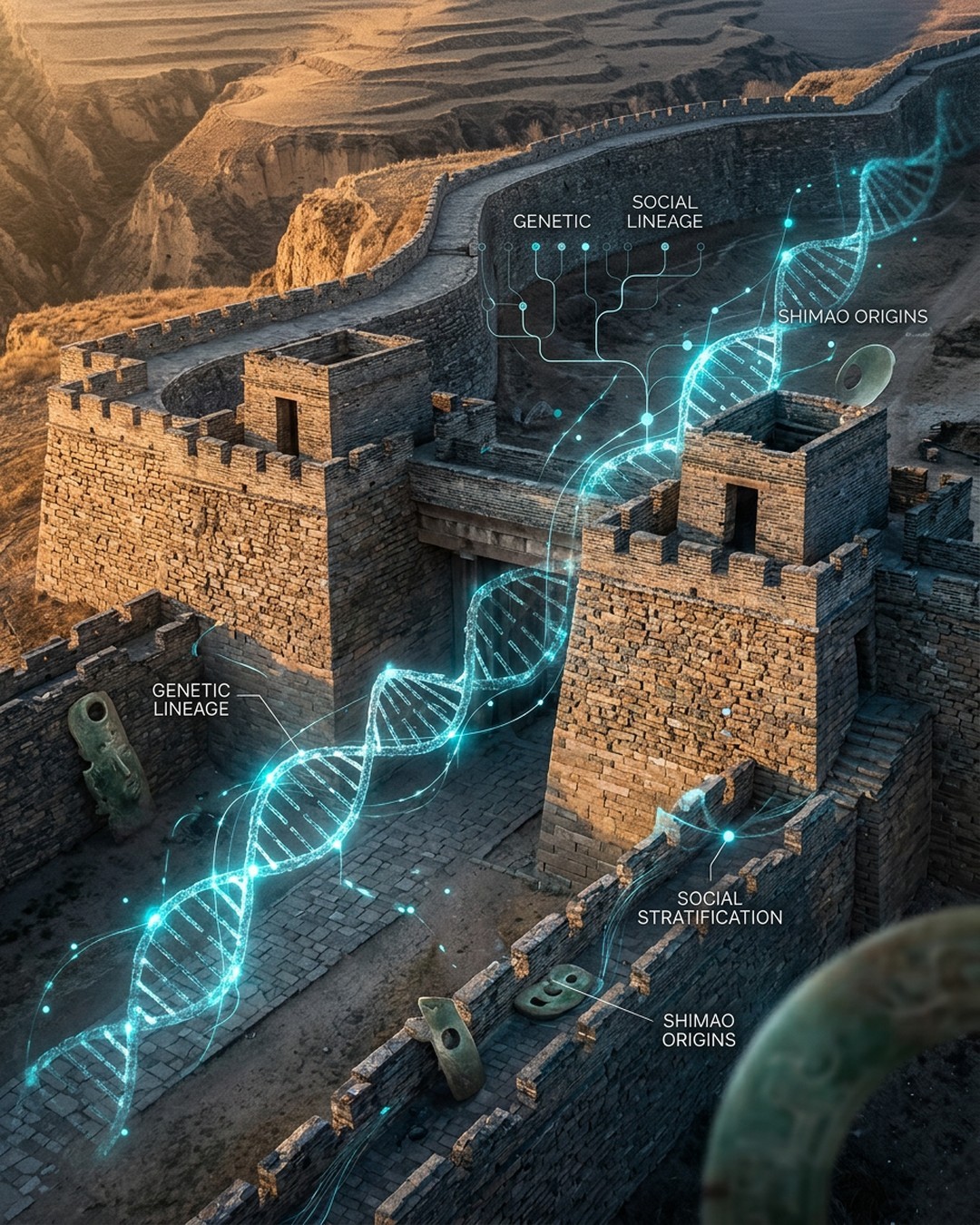
A comprehensive genetic study published in Nature on November 26, 2025, provides new insights into the Shimao civilization, a major late Neolithic settlement in northern China dating from 4200 to 3700 years ago. By analyzing 169 ancient human samples, researchers led by Prof. Qiaomei Fu of the Chinese Academy of Sciences identified that the Shimao population was primarily descended from local Yangshao-related groups, while maintaining broad genetic connections with southern rice farmers and steppe populations. The research highlights a highly organized, patrilineal social structure and reveals gender-specific patterns in ritual human sacrifice. Contrary to previous hypotheses, genetic data confirms that 90 percent of the individuals sacrificed at the East Gate were male, whereas female sacrificial remains were concentrated in elite cemeteries, indicating that ritual practices were deeply integrated into the social and political hierarchy of the time. This study serves as a critical milestone in understanding the emergence of early East Asian states, offering direct genetic evidence of kinship practices, social stratification, and the complex interaction networks that shaped power dynamics in prehistoric China. The findings demonstrate how ancient DNA can resolve long-standing archaeological debates regarding social organization and ritual behavior. For researchers and history enthusiasts, this data provides a framework for interpreting how ruling families were composed and how social ranks were maintained through generations. The study underscores the importance of interdisciplinary approaches, combining high-resolution nuclear genome analysis with archaeological findings to reconstruct the lives and belief systems of ancient civilizations.

Key Points

01

🔹 Genetic Origins and Continuity

【📌 Key Finding】The Shimao population (4200–3700 BP) shows strong genetic continuity with local Yangshao-related groups from the Loess Plateau. 【⭐ Data Support】Analysis of 169 samples confirms that the inhabitants were primarily descendants of local groups residing in the region for at least 1,000 years, while also exhibiting genetic links to southern rice farming communities and steppe Yumin-related populations.

02

🔸 Gender-Specific Ritual Sacrifice

【📌 Key Finding】Sacrificial patterns were highly gendered and location-specific. 【🔸 Impact Factors】Genetic analysis of the East Gate site revealed that 90% of the 80 human skulls found were male. 【⭐ Data Support】In contrast, female sacrificial remains were exclusively linked to elite cemeteries like Huangchengtai and Hanjiagedan, suggesting a highly organized ritual system tied to social status.

03

⭐ Social Structure and Kinship

【📌 Key Finding】Shimao society was organized around patrilineal descent and patrilocal residence. 【⭐ Data Support】Researchers successfully reconstructed family pedigrees spanning up to four generations using nuclear genome data, providing the first direct genetic evidence for how ruling families were composed and how power was inherited in early East Asian states.

04

📊 Research Methodology and Scope

【📌 Key Finding】The study represents a 13-year collaborative effort involving the Institute of Vertebrate Paleontology and Paleoanthropology (IVPP) and the Shaanxi Provincial Academy of Archaeology. 【⭐ Data Support】The team performed high-resolution nuclear genome analysis on 169 ancient human samples, including 144 unrelated individuals, to ensure statistical significance and accuracy in tracing ancestral lineages.

05

💡 Historical and Cultural Implications

【📌 Key Finding】Shimao functioned as a complex, socially stratified hub that facilitated wide interaction between farming and pastoral populations. 【🔸 Impact Factors】The site's size (4 square kilometers) and distinct functional zones, combined with the genetic evidence of diverse ancestral links, highlight Shimao as a central node in the development of early Chinese civilization.

Want to create your own mindmap?

Login to Neumap AI and start creating your own mindmaps!

Get Started