Plastic Ferroelectric Motor Innovation

Engineering MaterialsScience Robotics FluidDynamics Innovation

Summary

Mind Map Cover Image
AI Generated Cover Image

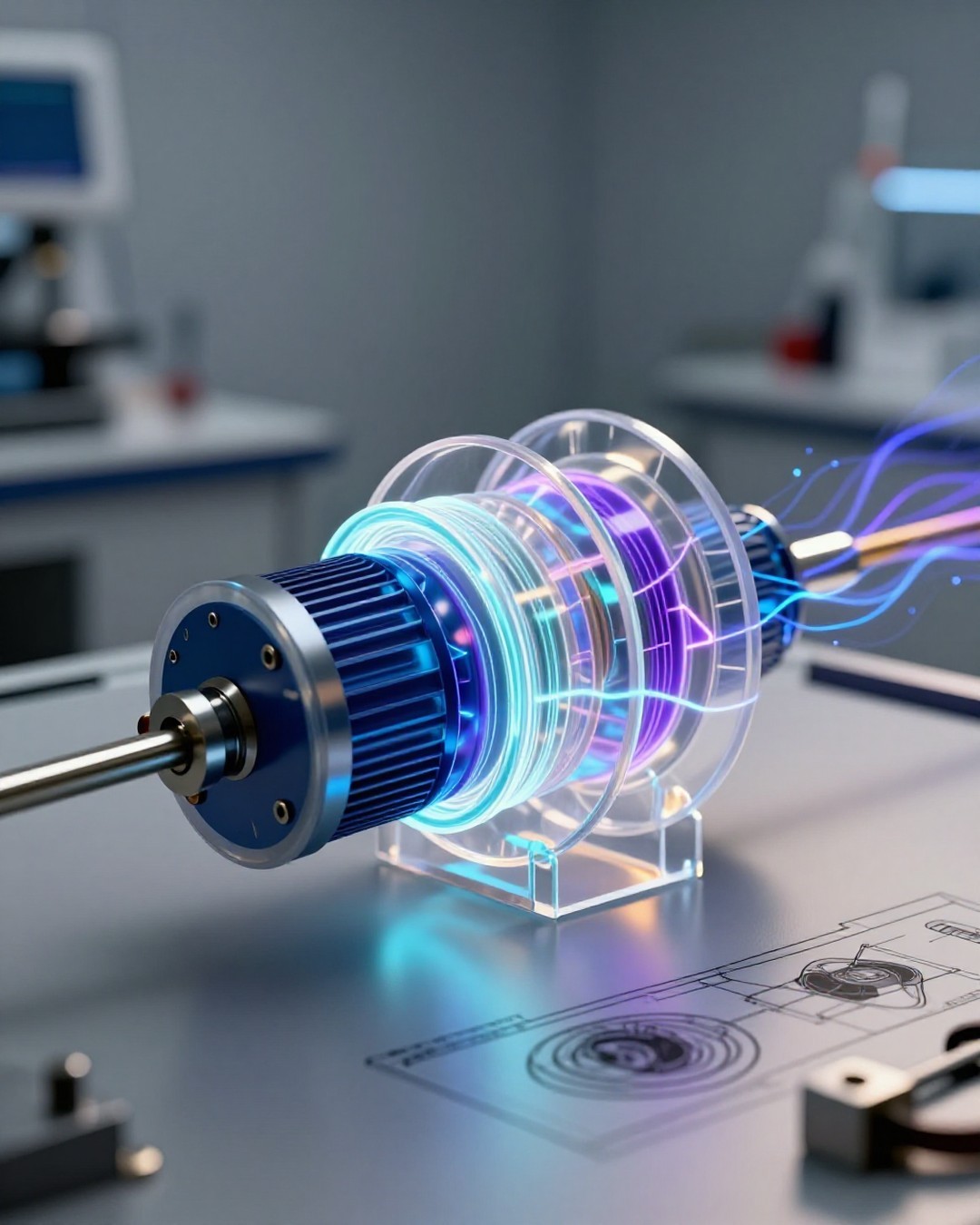
Researchers at the Institute of Science Tokyo have successfully demonstrated a motor driven by ferroelectric fluids, challenging a century-old engineering assumption that electrostatic forces are too weak for practical machinery. By utilizing a specific sideways electrostatic force, the team created a prototype motor that operates without magnets or metal rotors, relying instead on resin components and low-voltage electric fields. The core breakthrough lies in the discovery that ferroelectric fluids exhibit a powerful transverse Maxwell stress when subjected to electric fields. This force, which causes molecules to align and generate a sideways push, allows for motion that is proportional to the applied voltage, effectively defying the limitations previously associated with conventional electrostatic materials. This innovation offers a significant shift in motor design, potentially eliminating the need for rare earth materials and heavy metal components. The resulting motors are lighter, simpler, and capable of operating in environments where magnetic noise is problematic, such as medical imaging or high-precision data storage systems. For practical application, this technology paves the way for more efficient, compact, and safer robotic and precision systems. By leveraging plastic-based rotors and low-voltage actuation, engineers can develop hardware that is not only more sustainable but also highly responsive, marking a transformative step in materials science and mechanical engineering.

Key Points

01

🔹 Breakthrough in Electrostatic Motor Design

Researchers at the Institute of Science Tokyo, led by Professor Suzushi Nishimura, have developed a motor using ferroelectric fluids that operates without magnets or metal rotors. This discovery challenges the century-old engineering consensus that electrostatic forces are too weak for practical motor applications, proving that a specific sideways force can effectively drive mechanical rotation.

02

🔸 Mechanism of Ferroelectric Fluid Actuation

The motor functions through a phenomenon known as transverse Maxwell stress. When an electric field is applied to the ferroelectric fluid, molecules within the liquid align in an ordered arrangement. This alignment creates a powerful sideways push perpendicular to the voltage, which is strong enough to move the liquid against gravity and drive a resin-based rotor.

03

⭐ Advantages Over Conventional Electromagnetic Motors

Unlike traditional motors that rely on copper coils and magnets, this new design uses resin components, making it significantly lighter and simpler. It avoids the use of rare earth metals, addressing supply chain limitations. Furthermore, it operates at lower voltages and is immune to magnetic noise, making it ideal for sensitive environments like medical equipment.

04

📊 Experimental Data and Observations

In experiments, the fluid moved nearly 10 centimeters against gravity when placed between electrodes spaced a few millimeters apart. Unlike ordinary materials where force plateaus, the ferroelectric fluid showed a proportional increase in force relative to voltage increases, confirming the unique and powerful nature of the interaction.

05

💡 Future Applications and Impact

The technology is poised to impact robotics, compact machinery, and precision systems. By enabling the use of plastic rotors, the design allows for faster response times and reduced weight. The research was published in Communications Engineering on November 19, 2025, under the title 'Huge transverse Maxwell stress in ferroelectric fluids and prototyping of new ferroelectric motors'.

Want to create your own mindmap?

Login to Neumap AI and start creating your own mindmaps!

Get Started