AI-Powered Discovery of Brain Glymphatic Fluid Speed

scitechdaily neuroscience artificial-intelligence brain-health university-of-rochester

Summary

Mind Map Cover Image
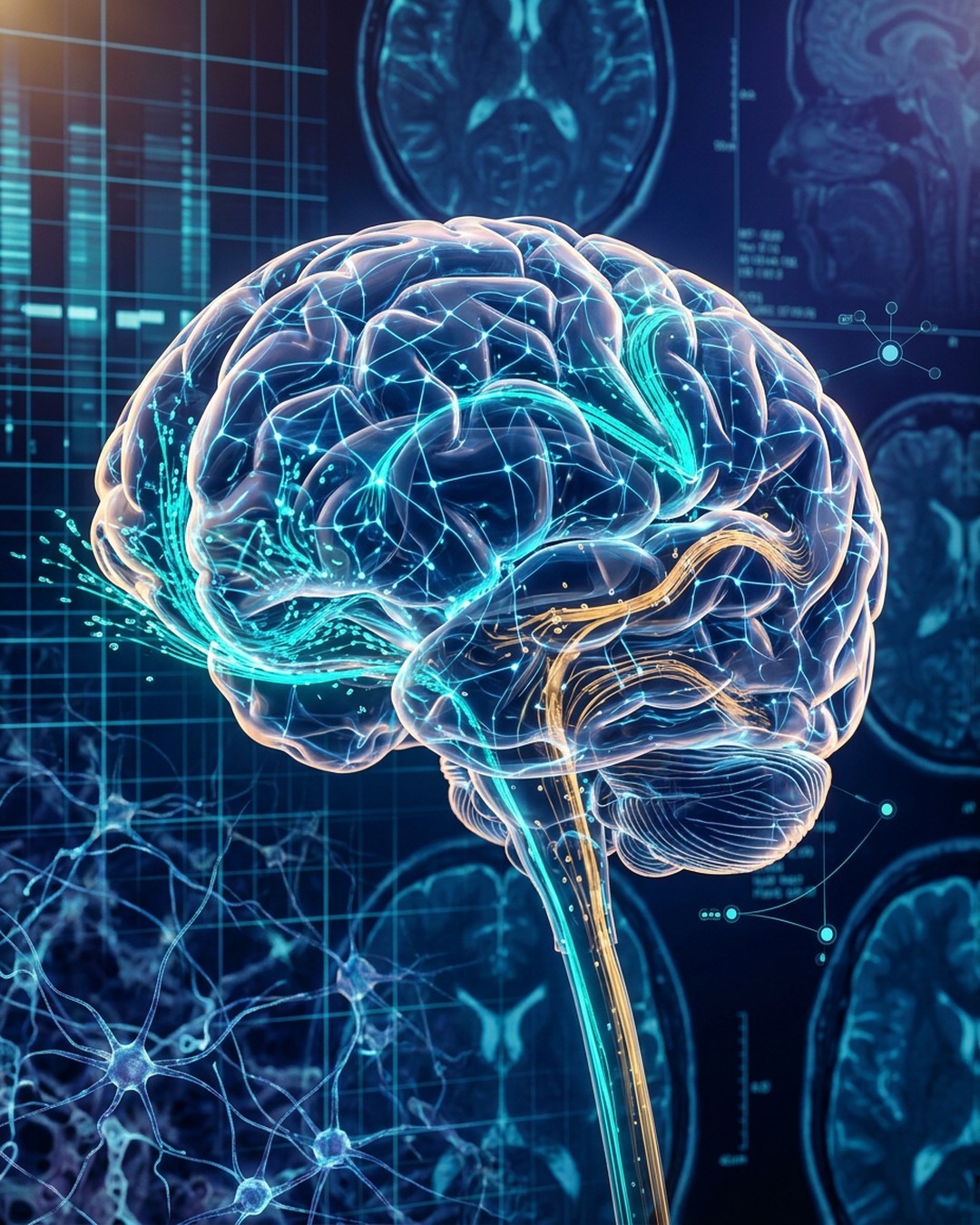
AI Generated Cover Image

Scientists have utilized artificial intelligence to measure the brain's waste-clearing glymphatic system, uncovering a striking two-speed cleanup process that becomes especially active during deep sleep. Published in Science Advances on May 27, 2026, the study by researchers from the University of Rochester, Brown University, and the University of Copenhagen demonstrates that waterlike fluid moves at a few microns per second in open areas around the brain, but flows approximately 50 times more slowly deep inside the dense tissue. The authors emphasize that measuring this slow circulation has historically been hindered by the limitations of traditional microscopes and magnetic resonance imaging scanners. By applying physics-informed artificial intelligence to MRI data, the research team successfully estimated both fluid speed and tissue permeability, overcoming a major technological barrier in neuroscience and computational biology. The essence of this research lies in its novel computational methodology, termed MR-AIV, which bridges the gap between detailed microscale observations and whole-brain macroscopic imaging. This breakthrough allows scientists to map fluid flow velocities across the entire brain without causing permanent damage, providing a quantitative framework for analyzing waste transport mechanisms associated with neurodegenerative disorders. Practical applications of this discovery extend toward future clinical screening and diagnostics for conditions such as Alzheimer's disease and traumatic brain injury. Researchers intend to scale these measurements from animal models to human brains, aiming to identify poor circulation early in life, monitor concussion recovery, and potentially develop preventative treatments for cognitive decline.

Key Points

01

🔹 Discovery of Two-Speed Brain Cleanup System

【📌 Key Finding】Scientists discovered that the brain's glymphatic waste-clearing system operates at two dramatically different speeds during deep sleep. 【🔸 Impact Factors】Waterlike fluid travels at a rate of a few microns per second in open areas around the brain's surface, while flowing about 50 times slower deep within the brain tissue. 【⭐ Data Support】This mechanism helps remove harmful metabolic waste, including amyloid beta proteins associated with Alzheimer's disease.

02

🔸 Application of Physics-Informed AI in MRI

【📌 Key Finding】Researchers overcame traditional imaging limitations by developing a novel technique using physics-informed artificial intelligence. 【🔸 Impact Factors】Standard magnetic resonance imaging cannot capture extremely slow fluid velocities, but training neural networks on dye-spreading videos allows accurate estimation of fluid speed and tissue permeability. 【⭐ Data Support】The study was published in Science Advances on May 27, 2026, by a collaborative team from the University of Rochester, Brown University, and the University of Copenhagen.

03

⭐ Transition from Animal Models to Human Clinical Goals

【📌 Key Finding】Current baseline measurements are being established using animal models like mice to refine computational AI tools. 【🔸 Impact Factors】The long-term objective is to extend this technique to human clinical applications to evaluate brain health. 【⭐ Data Support】Researchers hope to screen for poor circulation early in life to stave off Alzheimer's disease and check for disrupted fluid circulation following concussions.

04

📊 Methodological Integration and Research Framework

【📌 Key Finding】The research combines mechanical engineering, computational modeling, and neuroscience to analyze brain fluid dynamics. 【🔸 Impact Factors】Microscopic observation provides high detail for tiny patches, whereas MRI offers three-dimensional views, and physics-informed AI bridges the velocity measurement gap. 【⭐ Data Support】The study titled MR-AIV reveals in vivo brain-wide fluid flow with physics-informed AI was supported by the NIH National Center for Complementary and Integrative Health and the NIH BRAIN Initiative.

05

💡 Implications for Neurodegenerative Disease Research

【📌 Key Finding】Natural waste-clearing circulation changes significantly with aging, disease, and trauma. 【🔸 Impact Factors】Investigating these slow fluid movements provides a new diagnostic pathway to understand Alzheimer's disease progression and traumatic brain injury impacts. 【⭐ Data Support】Key collaborators include Professor Douglas Kelley, Juan Diego Toscano, Yisen Guo, and other leading researchers across multiple academic institutions.

Want to create your own mindmap?

Login to Neumap AI and start creating your own mindmaps!

Get Started