Battery-Free Artificial Photosynthesis System

ArtificialPhotosynthesis CleanEnergy SolarFuel OsakaMetropolitanUniversity EESSolar RenewableEnergy

Summary

Mind Map Cover Image
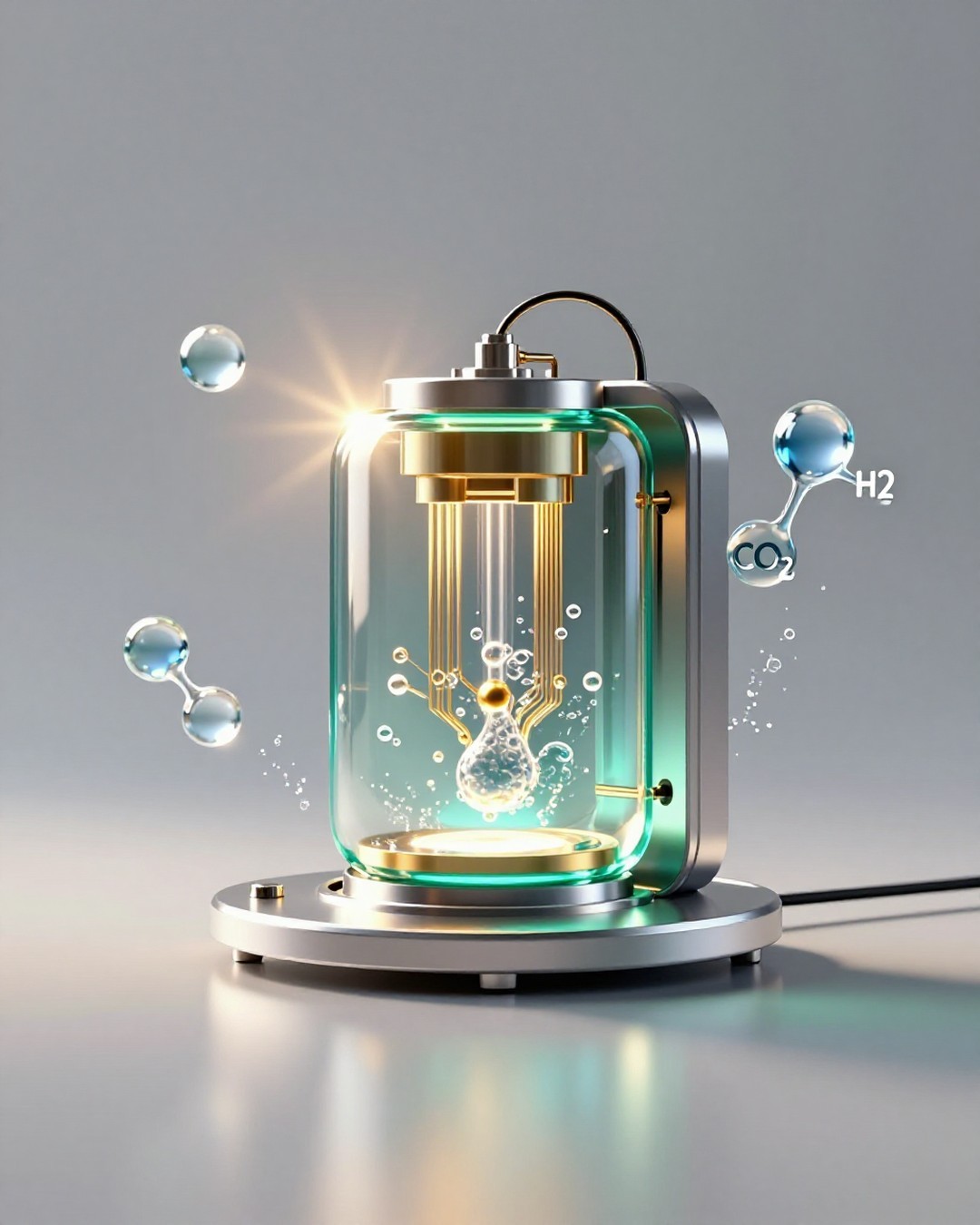
AI Generated Cover Image

Researchers at Osaka Metropolitan University have developed a battery-free artificial photosynthesis system that converts sunlight, water, and carbon dioxide into formic acid. By integrating a self-regulating solid electrolyte directly into the electrolyzer, the team eliminated the need for traditional, costly Maximum Power Point Tracking (MPPT) hardware and external battery storage. The authors emphasize that this innovation simplifies the architecture of solar-to-fuel conversion systems. By utilizing the thermal and impedance properties of the electrolyzer to automatically adjust electrical resistance in response to sunlight intensity, the system maintains stable fuel production without complex electronic controllers. This breakthrough, published in EES Solar on March 20, 2026, demonstrates a significant step toward cost-effective, decentralized clean energy storage. The technology was successfully validated through a prototype that powered a miniature diorama, proving its potential for future residential and industrial applications. This development offers a scalable path for sustainable fuel production. Users and researchers can leverage this self-regulating design to reduce system complexity and capital expenditure in renewable energy projects, moving closer to practical, on-site solar fuel generation.

Key Points

01

🔹 Core Innovation: Battery-Free Electrolyzer

The research team, led by Associate Professor Yasuo Matsubara and Professor Yutaka Amao, redesigned the electrolyzer to perform Maximum Power Point Tracking (MPPT) internally. By using a specialized solid electrolyte, the system eliminates the need for external batteries, converters, and complex control hardware, significantly reducing system cost and complexity.

02

🔸 Mechanism: Self-Regulating Thermal Response

The system operates on a self-regulating principle where the electrolyzer's electrical resistance decreases as it warms up under increased sunlight. This thermal-to-impedance feedback loop allows the device to automatically optimize electrical flow, ensuring stable production of formic acid even when solar intensity fluctuates throughout the day.

03

⭐ Research Validation and Publication

The findings were published in the journal EES Solar on March 20, 2026 (DOI: 10.1039/D5EL00177C). The technology was previously demonstrated at the Osaka Kansai Expo 2025, where it successfully generated enough formic acid to power a miniature diorama, confirming its viability for real-world applications.

04

📊 Energy Conversion Process

The process mimics natural photosynthesis by using solar energy to drive an electrochemical reaction. Sunlight → Solar Cells → Electrolyzer (with solid electrolyte) → Conversion of Water and CO2 → Formic Acid (Solar Fuel). This cycle provides a stable method for storing solar energy in chemical form.

05

💡 Practical Implications for Clean Energy

By removing the reliance on battery-based control systems, this technology lowers the barrier for decentralized energy storage. It offers a promising solution for residential and industrial sectors to generate and store clean fuel on-site, potentially transforming how we manage intermittent renewable energy sources.

Want to create your own mindmap?

Login to Neumap AI and start creating your own mindmaps!

Get Started