Vagus Nerve Stimulation and Brain Learning Potential

scitechdaily neuroscience vagus-nerve-stimulation neuroplasticity memory-consolidation

Summary

Mind Map Cover Image
AI Generated Cover Image

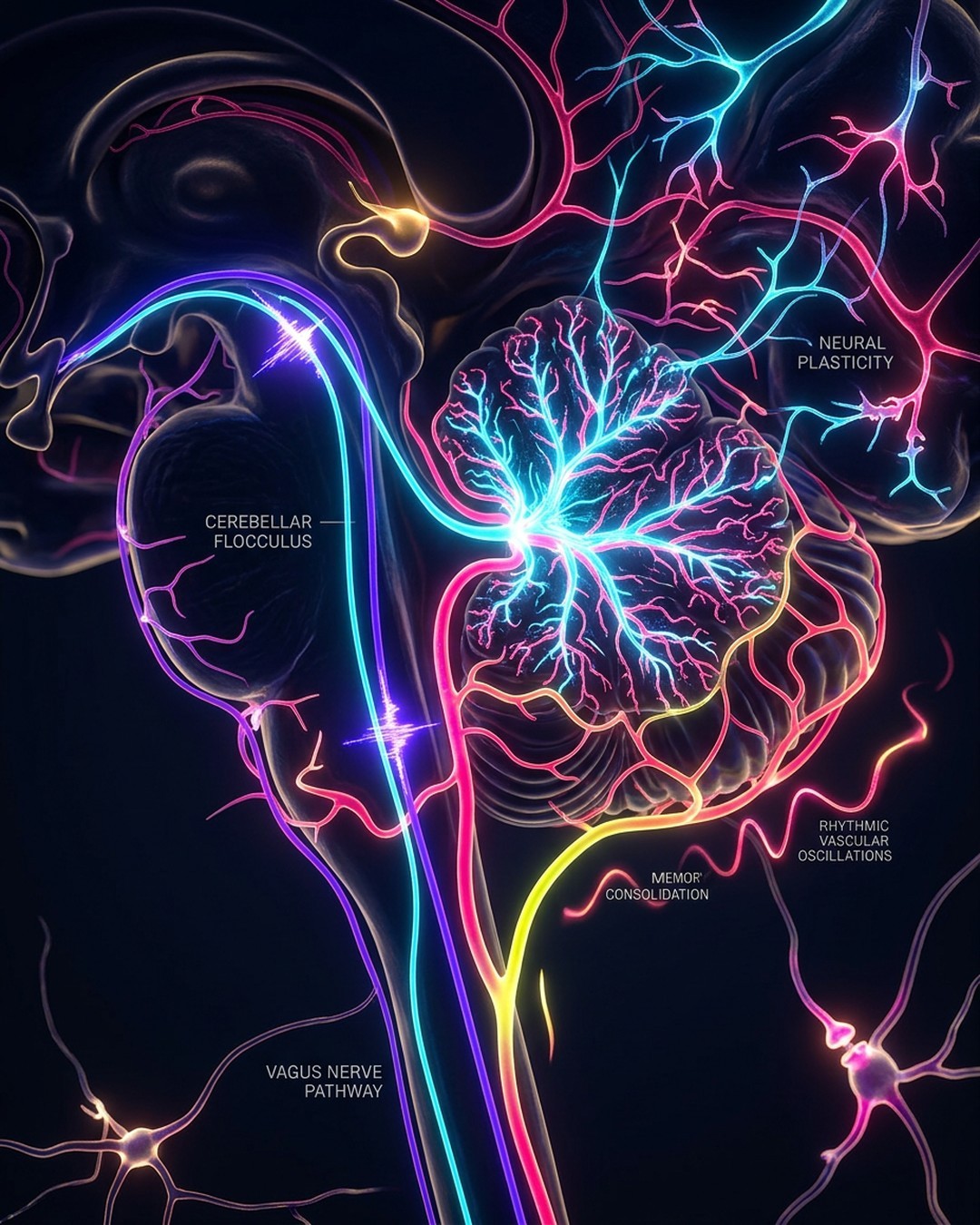
Recent research conducted by scientists at Tohoku University published on August 25, 2026 in the journal iScience reveals that post-training vagus nerve stimulation can significantly enhance long-term motor learning and memory consolidation in mice. Researchers discovered that delivering electrical stimulation to the vagus nerve immediately after training sessions does not provide an immediate performance boost, but instead creates a delayed window of opportunity that preserves newly acquired motor skills over subsequent days. The investigative team led by Professor Ko Matsui and lead author Junyu U. Chen utilized a custom cuff electrode secured around the left cervical vagus nerve of mice undergoing horizontal optokinetic response learning. Their findings emphasize that communication between internal organs and the brain plays a critical role in shaping neural plasticity and long-term memory stability during the post-training consolidation phase. The core mechanism behind this enhanced learning involves biphasic vascular responses and rhythmic blood volume oscillations near the cerebellar flocculus, a brain region essential for movement timing and precision. Mice exhibiting larger local vascular oscillations demonstrated superior performance by Day 5, indicating that vagus nerve stimulation effectively optimizes the metabolic environment of active brain tissues. These insights shift scientific focus toward the critical biological work occurring after active practice ceases, suggesting potential future pathways to improve skill retention and rehabilitation therapies in humans by tuning post-training metabolic environments and neural plasticity windows.

Key Points

01

🔹 Core Finding of Post-Training Vagus Nerve Stimulation

【📌 Key Finding】Delivering vagus nerve stimulation immediately after training sessions significantly enhances long-term motor learning and retention in mice. 【🔸 Impact Factors】Stimulation does not improve performance during practice but acts exclusively on memory consolidation processes after training ends. 【⭐ Data Support】Published on August 25, 2026, in the journal iScience by researchers at Tohoku University including Junyu U. Chen, Yoko Ikoma, and Ko Matsui.

02

🔸 Experimental Methodology and Behavioral Task

【📌 Methodology Setup】Researchers secured a small cuff electrode around the left cervical vagus nerve of mice to test stimulation effects. 【🔸 Behavioral Task】Mice performed horizontal optokinetic response learning, tracking moving visual stripes with eye movements. 【⭐ Cerebellar Involvement】The task specifically targets the cerebellar flocculus, the brain region central to movement timing, precision, and adaptation.

03

⭐ Vascular Mechanism and Metabolic Environment

【📌 Two-Stage Response】A single train of vagus nerve stimulation causes local blood volume near the cerebellar flocculus to briefly decrease before increasing. 【🔸 Rhythmic Oscillations】Repeated stimulation generates rhythmic oscillations in local blood volume supplying active brain tissue. 【⭐ Performance Correlation】Mice with larger vascular oscillations demonstrated stronger learning performance on Day 5 of the experiment.

04

📊 Significance of Post-Training Windows

【📌 Biological Work】The biological work of preserving and consolidating experiences continues long after active practice stops. 【🔸 Latent Capacity】Tuning the brain metabolic environment through vagus nerve stimulation unlocks learning capacities that would otherwise remain latent. 【⭐ Future Implications】Findings highlight that the human body strongly influences brain function, opening potential new windows for motor learning enhancement.

05

💡 Research Authors and Future Directions

【📌 Research Team】Led by Professor Ko Matsui and lead author Junyu U. Chen from Tohoku University specializing in super-network brain physiology. 【🔸 Future Studies】Future research will refine the precise timing and pattern of stimulation during post-training intervals. 【⭐ Clinical Potential】Understanding two-way brain-body communication could eventually explain why certain experiences become durable skills while others fade.

Want to create your own mindmap?

Login to Neumap AI and start creating your own mindmaps!

Get Started