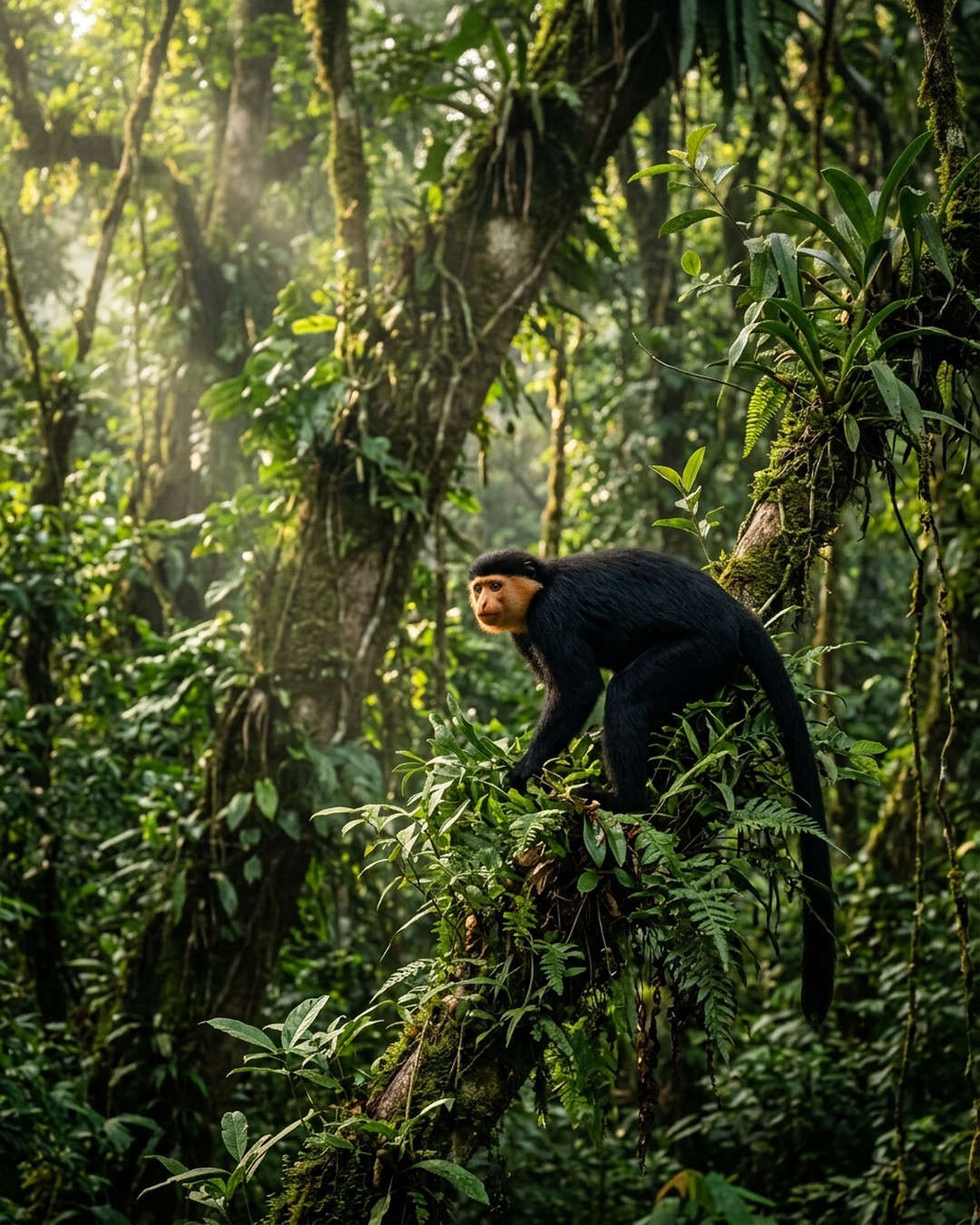
Scientists have officially identified a new primate species named Colobus congoensis, locally called 'Likweli', marking only the fifth new monkey species discovered in Africa over the past 75 years. First photographed in an obscured image in the Democratic Republic of Congo in 2008 and seen again in 2018, comprehensive genetic, anatomical, and acoustic analyses confirmed its distinct status and ancient evolutionary lineage.
The research team, involving institutions like Florida Atlantic University and the Lukuru Wildlife Research Foundation, published their findings in PLOS One on July 15, 2026. The DNA evidence reveals that Colobus congoensis diverged from its closest known relative, Colobus satanas, approximately 4 to 5 million years ago, representing one of the oldest evolutionary splits within the Colobus lineage despite a geographic separation of over 1,200 kilometers.
Physically characterized by a glossy black coat, a distinctive orange cream patch surrounding its mouth and nose, and weighing about 15 pounds, the monkey inhabits a restricted 1,700 square kilometer area between the Lomami and Congo rivers. Local traditional knowledge from eight surrounding villages helped guide field observations, confirming its elusive nature and frequent local description as 'the branch shaker'.
Due to its exceptionally limited distribution range, small population size, and intensifying regional pressures from hunting and forest loss, researchers recommend listing Colobus congoensis as Endangered on the IUCN Red List. Most confirmed sightings fall within Lomami National Park, emphasizing the critical need for continued protected area management to safeguard this newly discovered evolutionary treasure.