Ballista Spider Hunting Strategy

biology spiders biomechanics animal-behavior entomology

Summary

Mind Map Cover Image
AI Generated Cover Image

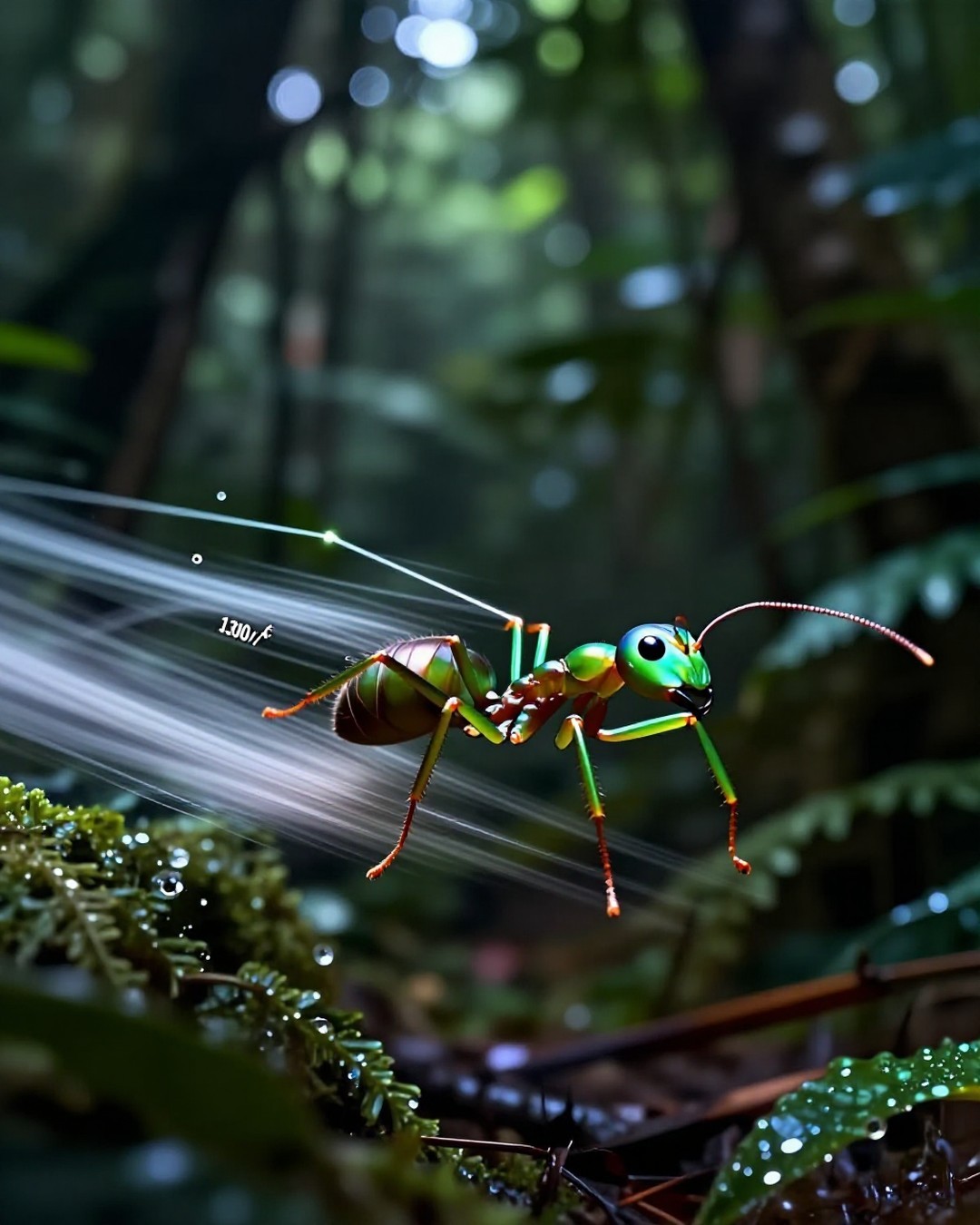
Researchers have identified a unique nocturnal spider, nicknamed the ballista spider (genus Propostira), in northern Queensland, Australia, which employs a highly specialized, spring-powered silk snare to hunt green tree ants (Oecophylla smaragdina). This discovery, published on June 22, 2026, reveals an evolutionary adaptation where the spider constructs a tension-based trap that the prey itself triggers, launching the ant over 30cm into the air at accelerations exceeding 1300 meters per second squared. The scientific team, led by Professor Ajay Narendra, emphasizes that this hunting strategy is an extreme example of biological specialization. By utilizing pheromones to lure ants and mechanical tension to overcome the ants' natural adhesive foot pads, the spider effectively mitigates the risks associated with hunting dangerous, chemically defended, and swarm-oriented prey. The mechanism relies on stored elastic energy within a vertical bundle of 15 to 60 silk tension lines. This bioengineered system allows the spider to capture prey individually and transport them away from hazardous ant trails, demonstrating a sophisticated level of predatory precision rarely seen in arachnids. This research provides significant insights into biomechanics and evolutionary biology, highlighting how specialized silk structures can function as high-powered catapults. The findings offer a new understanding of predator-prey dynamics and the complex evolutionary pressures that drive the development of such unique, high-force hunting tools in the natural world.

Key Points

01

🔹 Discovery of the Ballista Spider

【📌 Identification】Researchers discovered a new, yet-to-be-formally-named spider in the genus Propostira near Cooktown, Queensland. 【🔸 Observation】The spider is nocturnal and exhibits a highly specialized hunting behavior targeting only the green tree ant (Oecophylla smaragdina). 【⭐ Significance】This is considered an ultimate specialization in spider hunting, as it targets a single, dangerous prey species using a self-triggering mechanism.

02

🔸 The Mechanics of the Silk Snare

【📌 Construction】The spider builds a vertical cone of 15 to 60 silk tension lines near the forest floor. 【🔸 Triggering】The trap is activated when an ant bites the silk cone, releasing stored elastic energy. 【⭐ Performance】The mechanism launches the ant over 30cm upward into the main web at an acceleration exceeding 1300 meters per second squared.

03

⭐ Overcoming Prey Defenses

【📌 The Challenge】Green tree ants are dangerous due to their chemical defenses, ability to sting, and capacity to recruit thousands of nestmates for defense. 【🔸 The Solution】The spider uses a catapult mechanism to isolate individual ants, preventing them from signaling for help. 【⭐ Biomechanics】The silk trap generates enough force to overcome the ants' natural adhesive foot pads, which are designed to cling to surfaces.

04

📊 Research Methodology and Findings

【📌 Fieldwork】Lead researcher Professor Ajay Narendra and student Pranav Joshi conducted 10 days of observation using high-speed and infrared cameras. 【🔸 Laboratory Analysis】Dr. Jonas Wolff performed scanning electron microscopy on silk samples at the University of Greifswald to understand the elastic energy storage. 【⭐ Conclusion】The snare is bioengineered to provide higher power density than any other known silk-based biological catapult.

05

💡 Evolutionary Implications

【📌 Pheromone Use】Researchers suspect the spider adds pheromones to the silk cone to specifically lure worker ants and induce an aggressive response. 【🔸 Strategic Advantage】This method allows the spider to hunt safely, avoiding the risks of direct confrontation with ant trails or nests. 【⭐ Evolutionary Context】The study, published in Current Biology on June 22, 2026, highlights how specialized web design can evolve to solve specific ecological challenges.

Want to create your own mindmap?

Login to Neumap AI and start creating your own mindmaps!

Get Started