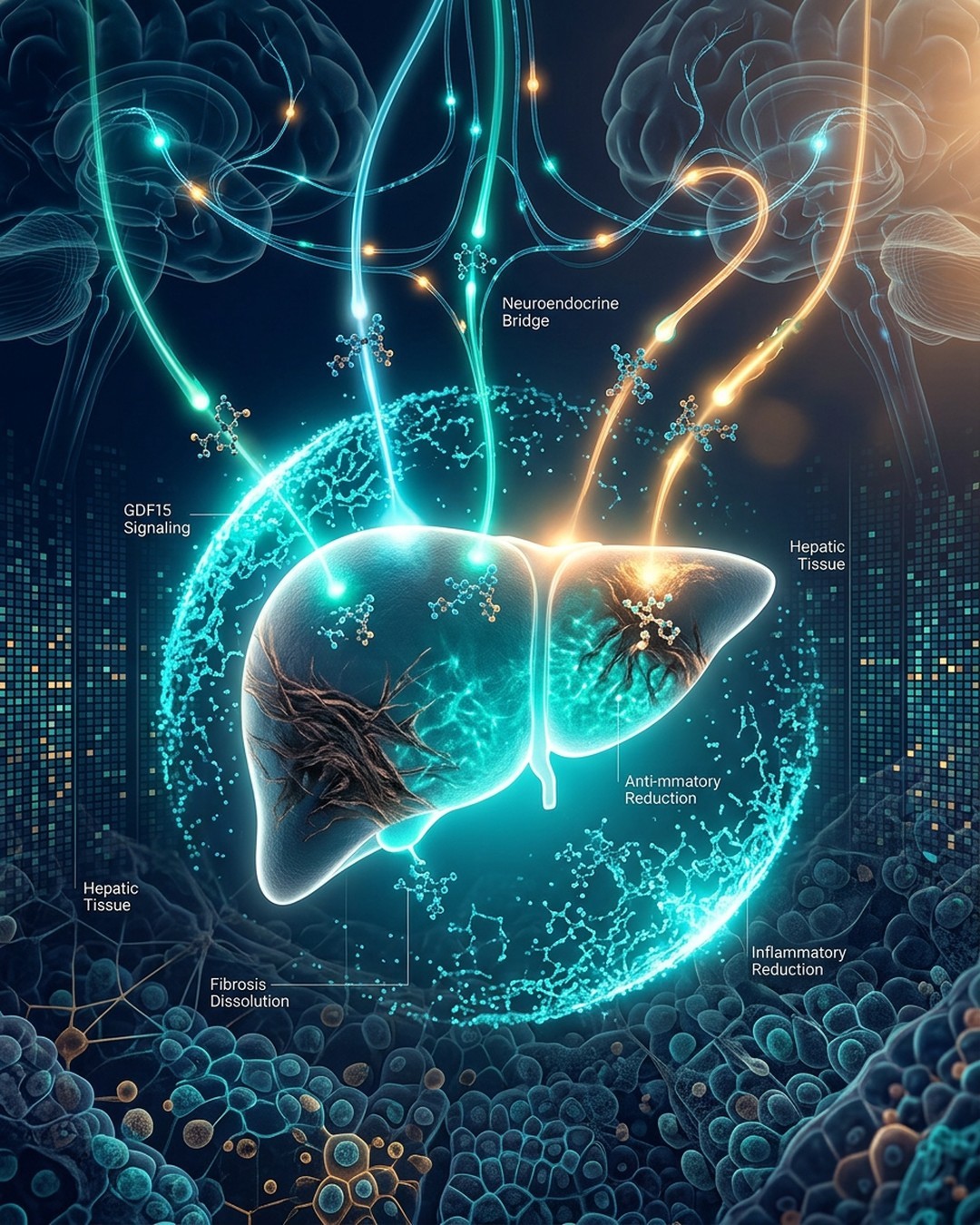
GDF15 Hormone Pathway Protects Liver From Damage

scitechdaily mcmaster-university cell-metabolism medical-research liver-disease hormone-pathway

Summary

Mind Map Cover Image
AI Generated Cover Image

Researchers at McMaster University published a study in Cell Metabolism on August 18, 2026, revealing that the hormone GDF15 protects the liver from inflammation and scarring through a previously unknown neuroendocrine pathway operating independently of weight loss. Led by Gregory Steinberg and Dongdong Wang, the team utilized mouse models combined with genetic, pharmacological, genomic, and spatial transcriptomics methods to demonstrate that GDF15 triggers brain-to-liver signaling via the nervous system, prompting the release of glucocorticoids that suppress immune activity and slow fibrosis. The author highlights that this discovery challenges the conventional medical assumption that GDF15 benefits are solely tied to appetite suppression and body weight reduction. By showing that the hormone directly reprograms liver immune cells into a protective state, the research provides a critical conceptual shift in understanding how the body defends against chronic liver injury and metabolic dysfunction-associated steatohepatitis (MASH). The strategic significance of this breakthrough lies in addressing a major clinical limitation of current weight loss therapies, where liver inflammation often persists despite substantial fat and weight reduction. The identification of this natural anti-inflammatory signaling mechanism opens vital therapeutic avenues for combining traditional weight loss interventions with novel treatments targeted specifically at arresting MASH progression toward cirrhosis and liver failure. For clinical translation and future medical applications, healthcare providers and researchers are encouraged to explore combination therapies that leverage both weight reduction and direct anti-inflammatory pathways. This dual-action strategy could significantly improve treatment outcomes for millions of patients worldwide suffering from advanced metabolic liver disease and chronic hepatic injury.

Key Points

01

🔹 Discovery of GDF15 Liver Protection Pathway

【📌 Key Finding】Researchers at McMaster University discovered that the hormone GDF15 activates a natural brain-to-liver signaling pathway that suppresses liver inflammation and reduces scarring. 【🔸 Mechanism】The study published on August 18, 2026, in Cell Metabolism demonstrates that GDF15 operates independently of food intake, body weight reduction, or liver fat loss. 【⭐ Research Scope】Led by Gregory Steinberg and Dongdong Wang, the team used advanced mouse models combined with genetic, pharmacological, genomic, and spatial transcriptomics methods.

02

🔸 Neuroendocrine Glucocorticoid Signaling Mechanism

【📌 Pathway Details】GDF15 triggers signaling from the brain through the nervous system, leading directly to the release of glucocorticoids. 【🔸 Physiological Impact】These steroid hormones regulate metabolism, immune function, and stress response to calm the liver's immune system. 【⭐ Cellular Shift】Spatial technology revealed that GDF15 reprograms liver cells by shifting immune cells into a more protective, less active state, halting fibrosis accumulation.

03

⭐ Clinical Implications for MASH Treatment

【📌 Disease Context】Metabolic dysfunction-associated steatohepatitis (MASH) affects millions globally and can advance to cirrhosis, liver cancer, and liver failure. 【🔸 Treatment Gap】Current weight loss medications improve many outcomes, but liver inflammation can persist despite substantial weight reduction. 【⭐ Combination Approach】The McMaster findings suggest future treatments should combine weight-loss therapies with therapies that directly target chronic liver inflammation.

04

📊 Research Background and Context

【📌 Previous Breakthrough】This research builds upon a 2023 study by Steinberg and Wang showing that GDF15 helps maintain calorie burning during weight loss. 【🔸 Dual Function】The latest findings establish a separate, distinct protective role for GDF15 focused purely on anti-inflammatory and anti-fibrotic activity. 【⭐ Institutional Affiliation】The research was conducted at McMaster University's Department of Medicine and the Center for Metabolism, Obesity and Diabetes Research (MODR).

05

💡 Future Therapeutic Developments

【📌 Drug Development】Gregory Steinberg, executive member of NexusHealth and co-founder of Espervita Therapeutics, has co-authored complementary preclinical research on drug candidates for advanced liver disease. 【🔸 Clinical Value】Understanding the body's natural defense system allows scientists to design more effective pharmaceutical interventions for MASH patients. 【⭐ Publication Details】The study appeared in Cell Metabolism on August 10, 2026, under DOI 10.1016/j.cmet.2026.07.008.

Want to create your own mindmap?

Login to Neumap AI and start creating your own mindmaps!

Get Started