AT2024wpp: The Most Powerful Stellar Explosion

Astronomy Astrophysics BlackHole SpaceExploration StellarExplosion

Summary

Mind Map Cover Image
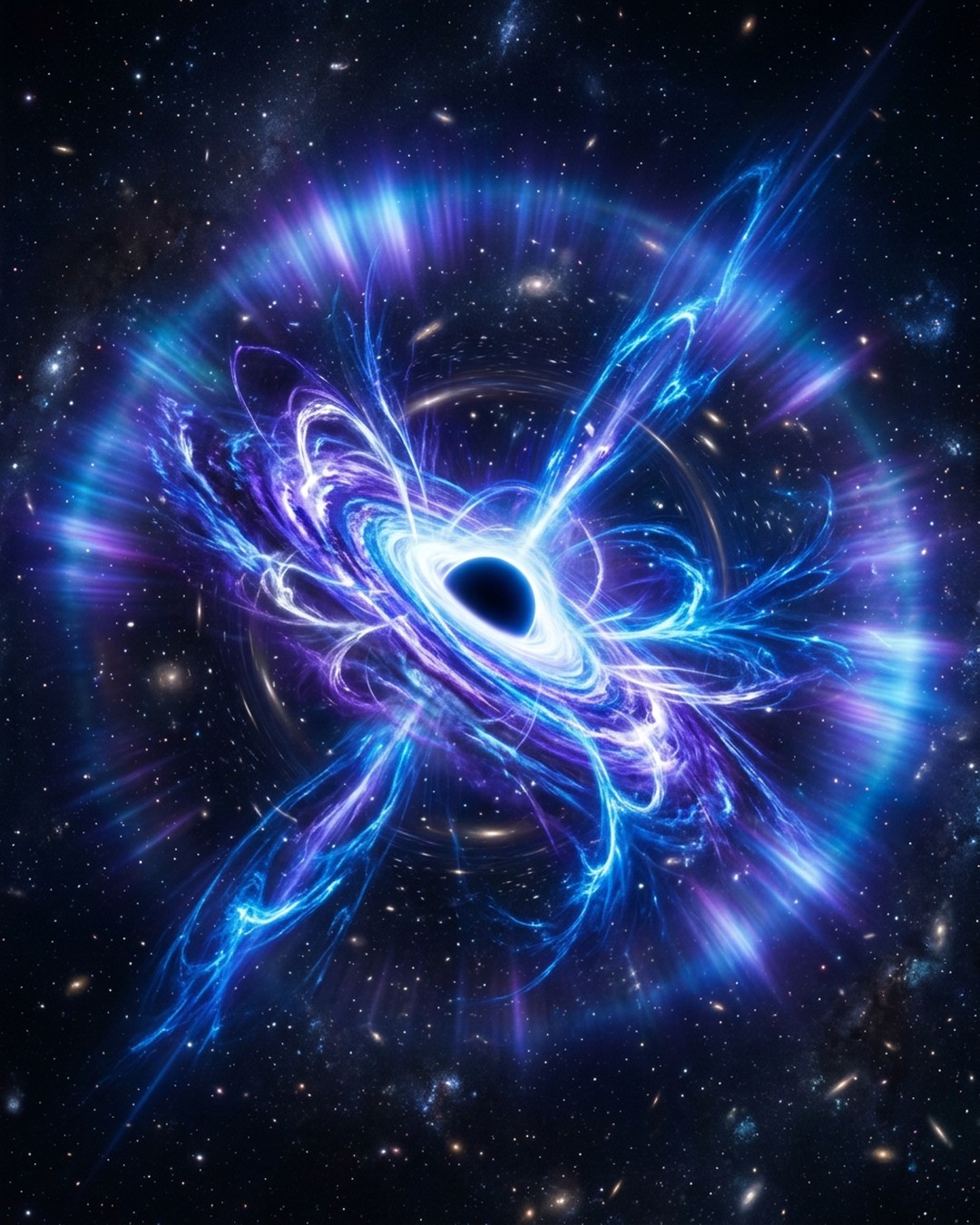
AI Generated Cover Image

Astronomers have identified an exceptionally powerful cosmic event, designated AT2024wpp and nicknamed the Whippet, occurring when a black hole shredded a massive companion star. This event released energy equivalent to 400 billion Suns, surpassing the intensity of any previously recorded stellar-collapse explosion. The discovery provides critical insights into the dynamics of black hole growth and the physics of extreme stellar destruction. The research team, led by Daniel Perley of Liverpool John Moores University, emphasizes that this event belongs to the rare Luminous Fast Blue Optical Transient (LFBOT) class. The explosion was characterized by its extreme brightness, rapid evolution, and intense blue and ultraviolet light emissions, which faded significantly faster than typical supernovae. The process involved the black hole's gravity stretching the star into a superheated disk, which subsequently emitted X-rays and drove powerful winds into surrounding gas. This interaction created shock waves traveling at one-fifth the speed of light, illuminating the star's final moments and revealing previously hidden gas structures surrounding the doomed celestial body. This finding offers a new methodology for locating and studying black holes throughout the universe. By analyzing the chemical fingerprints and light curves of such transients, scientists can better understand how black holes form, grow, and interact with their environments, ultimately refining our knowledge of high-energy astrophysical phenomena.

Key Points

01

🔹 Record-Breaking Cosmic Event: AT2024wpp

【📌 Core Finding】The event, nicknamed the Whippet, is the most powerful stellar explosion ever recorded. 【⭐ Data Support】It briefly released energy equivalent to 400 billion Suns, far exceeding the output of a standard supernova. 【🔸 Classification】It is categorized as a Luminous Fast Blue Optical Transient (LFBOT), known for intense blue and ultraviolet light emissions and rapid fading.

02

🔸 Mechanism of Destruction

【📌 Process】A massive star ventured too close to a black hole, leading to a Tidal Disruption Event. 【🔗 Causal Relationship】The black hole's immense gravity shredded the star, forming a superheated accretion disk. This disk emitted X-rays and generated powerful winds that collided with gas previously shed by the star, resulting in the observed brilliant optical and ultraviolet glow.

03

⭐ Shock Wave Dynamics

【📌 Observation】A shock wave was detected traveling at approximately one-fifth the speed of light. 【🔗 Consequence】This wave plowed into dense, pre-existing material around the star before dissipating. The fading of the shock wave suggests it reached the outer boundary of a gas bubble created by the star prior to its final destruction.

04

📊 Chemical and Structural Analysis

【📌 Mystery】Initial observations showed almost no chemical fingerprints, but later analysis revealed weak signs of hydrogen and helium. 【⭐ Data】Helium was observed moving toward Earth at 6,000 kilometers per second (3,700 miles per second), indicating that dense structures survived the initial blast, possibly representing a stream of material from the star's core.

05

💡 Scientific Significance

【📌 Research Impact】This event provides a new observational tool for identifying black holes and understanding their growth physics. 【🎯 Future Application】By studying these rare transients, researchers can map where black holes occur and gain deeper insights into the complex interactions between black holes and their companion stars in high-energy environments.

Want to create your own mindmap?

Login to Neumap AI and start creating your own mindmaps!

Get Started