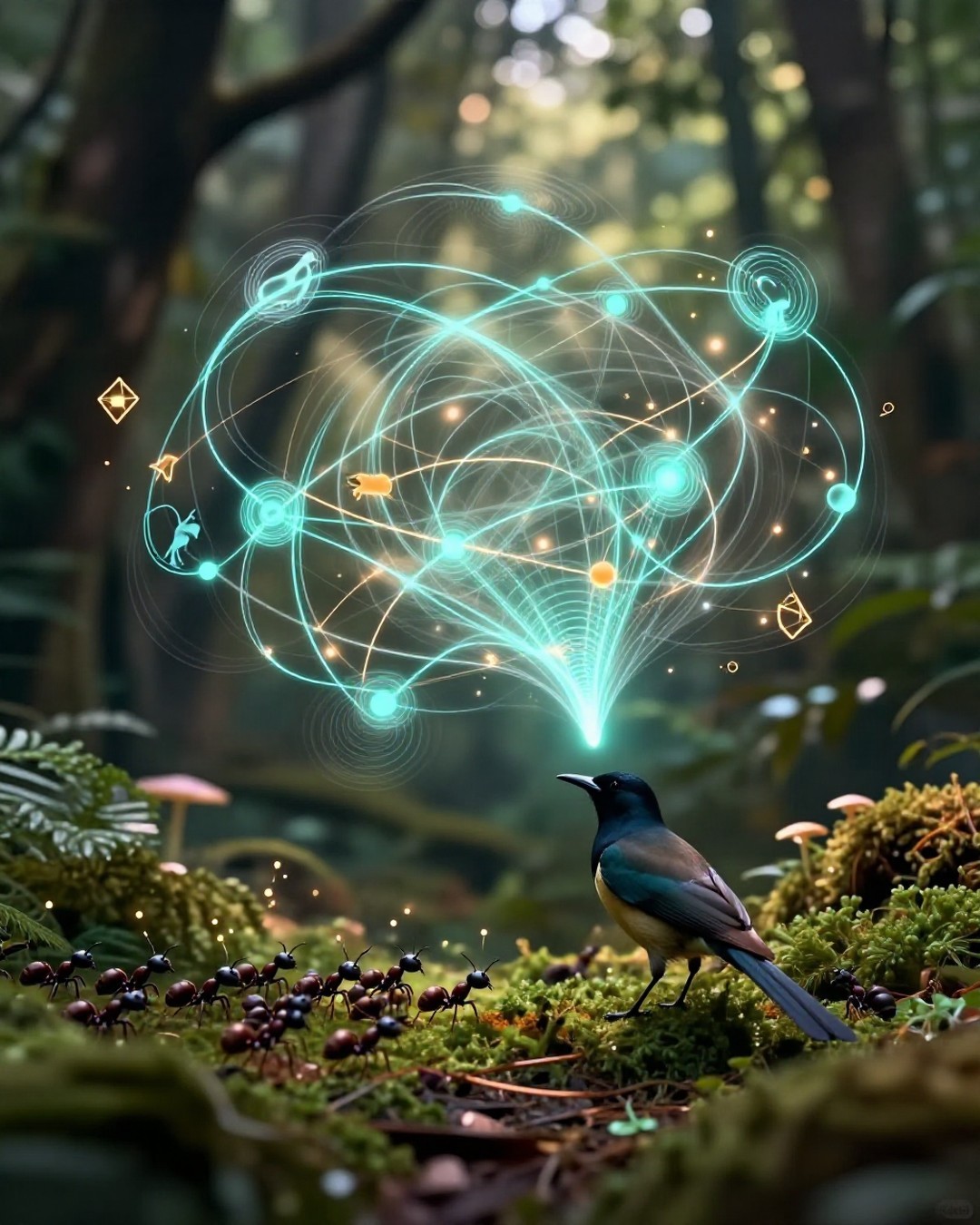
A comprehensive review published in Animal Behaviour on June 24, 2026, reveals that interspecies cooperation is facilitated by sophisticated communication systems. Animals utilize diverse signals, including visual displays, specialized calls, and chemical cues, to coordinate actions, manage risks, and exchange resources across species boundaries. This research highlights the evolutionary flexibility of these signals, which can be either innate or learned depending on the ecological context.
The authors, led by Dr. Katie Dunkley and Dr. J.E.M. van der Wal, emphasize that interspecies partnerships are essential for ecological stability. By analyzing interactions between birds, fish, insects, and mammals, the study demonstrates that communication allows animals to overcome sensory differences to achieve mutual benefits, such as access to food or protection from predators. The research underscores the importance of looking beyond obvious visual displays to understand the full spectrum of information exchange.
The study originated from a 2023 interdisciplinary workshop involving 58 experts from fields such as anthropology, biology, and linguistics. It identifies that communication systems often evolve from simple cues into specialized signals over generations. This collaborative effort provides a new framework for understanding how cooperative behaviors originate, persist, and coevolve in nature, while calling for broader experimental research into these complex biological interactions.
For researchers and enthusiasts, this study offers a roadmap for future investigations into animal behavior. It suggests that understanding these secret languages is key to preserving biodiversity and managing human-animal interactions. Readers can apply these insights by observing subtle behavioral cues in wildlife, recognizing that many cooperative relationships are built on highly specific, context-dependent signals that have been refined through evolutionary time.