Identification of the 1633 Dutch Shipwreck Dom van Keulen

Archaeology MaritimeHistory DutchGoldenAge ShipwreckDiscovery BritishMuseum

Summary

Mind Map Cover Image
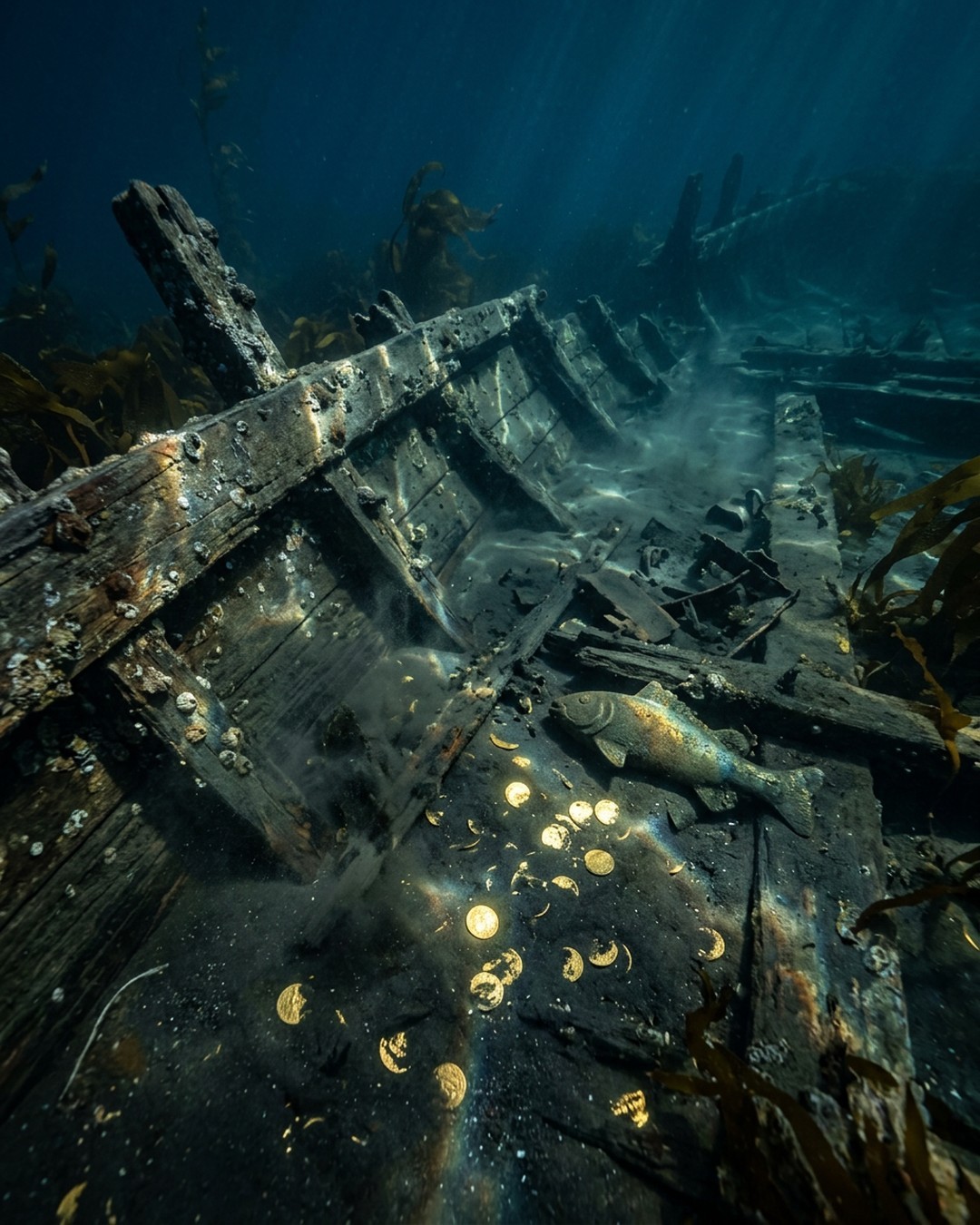
AI Generated Cover Image

Researchers have officially identified the Dom van Keulen, a Dutch merchant ship that sank off the coast of Devon, England, in 1633. The identification concludes nearly 30 years of collaborative research by the British Museum, Bournemouth University, and the South West Maritime Archaeology Group, utilizing historical records and physical artifacts recovered from the seabed. The vessel was part of a vital 17th-century trade network connecting Morocco, West Africa, and the Dutch commercial empire. While the ship was lost during a storm, the discovery of over 400 gold Moroccan coins and other personal items provides significant insight into the economic history and maritime trade practices of the Dutch Golden Age. The wreck site, measuring approximately 30 meters in length and located 18 meters underwater, contains cannons, anchors, and various cargo remnants. This discovery serves as a crucial piece of evidence for understanding the flow of African gold into European markets and the subsequent minting of international trade currencies. The site is currently protected under the Protection of Wrecks Act 1973 to prevent illegal interference. The findings are documented in the book 'From Morocco to the Coast of England: The Story of the Dom van Keulen and its Remarkable Cargo', published in 2026, which details the ship's final voyage and its broader historical significance.

Key Points

01

🔹 Identification of the Dom van Keulen

The shipwreck discovered off the coast of Devon, England, has been confirmed as the Dom van Keulen, a Dutch merchant vessel that sank in 1633. The identification was finalized in 2026 after three decades of research by the British Museum and Bournemouth University, supported by archival records found by historian Ian Friel.

02

🔸 Historical Context and Trade Routes

The ship was engaged in the lucrative 17th-century trade between Morocco and the Netherlands. It carried goods such as gum arabic, saltpeter, goat skins, and 9,000 Barbary ducats. This trade network was essential for the Dutch commercial empire, which often melted down foreign gold to create its own widely accepted currency.

03

⭐ Archaeological Findings

The wreck site, located 18 meters deep and spanning 30 meters, yielded over 400 gold coins, a pewter bowl, a spoon, a stamp seal, and a fish-shaped sounding weight. These artifacts are now housed at the British Museum, providing tangible evidence of the Sa‘dian Sharif dynasty's influence and global trade reach.

04

📊 Site Management and Protection

The wreck is protected under the Protection of Wrecks Act 1973. Access is strictly regulated by the Secretary of State at DCMS, with monitoring provided by the National Coastwatch Institution and the Devon & Cornwall Police under Operation Birdie to prevent looting and illegal interference.

05

💡 Research Publication

The comprehensive findings are detailed in the 2026 book 'From Morocco to the Coast of England: The Story of the Dom van Keulen and its Remarkable Cargo', edited by Professor Dave Parham and Venetia Porter. The work synthesizes historical documentation with physical evidence to reconstruct the ship's final voyage.

Want to create your own mindmap?

Login to Neumap AI and start creating your own mindmaps!

Get Started