Ultrafast Formation of Photoinduced Hidden State in Metal-Organic Frameworks

scitechdaily physics materials-science quantum-physics spectroscopy

Summary

Mind Map Cover Image
AI Generated Cover Image

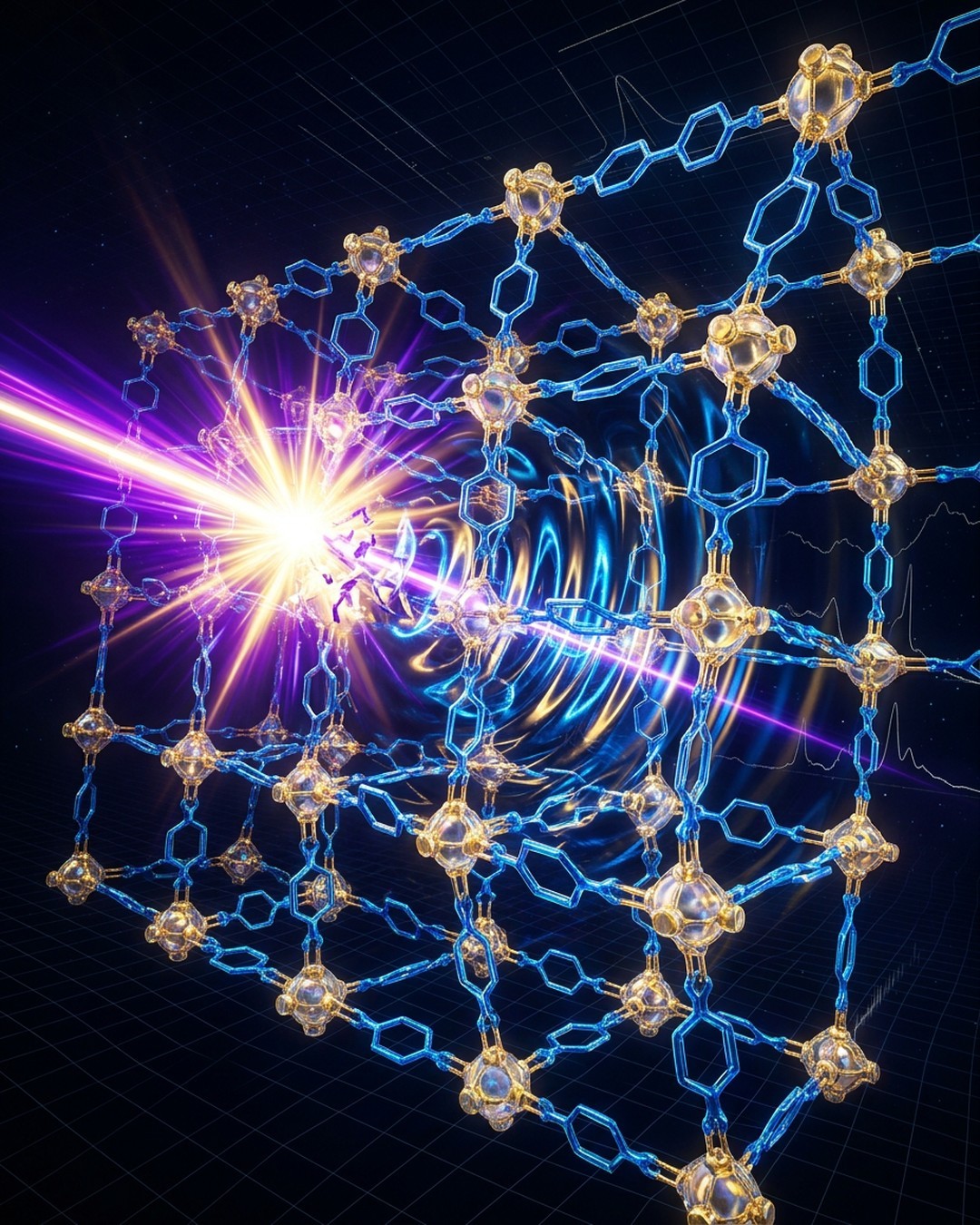
Researchers from the Institute of Science Tokyo, Tohoku University, and Nagoya Institute of Technology published a breakthrough study on July 22, 2026, in Physical Review Letters, detailing how a pulse of light drives a metal-organic framework into a hidden electronic state within 30 femtoseconds. By utilizing ultrafast laser spectroscopy with six femtosecond laser pulses, the team successfully captured a transient intermediate stage that guides the material into its newly formed state. The authors emphasize that revealing the fleeting intermediate stages of photoinduced states provides a novel method to alter electronic and optical properties without relying on traditional heating or cooling methods. This precise optical control mechanism opens up significant pathways for designing advanced photoresponsive materials and high-speed optoelectronic technologies. The investigation uncovered that immediately after light absorption, the material enters a temporary bond-order wave state where molecular bonds alternate between stronger and weaker arrangements. Subsequent minor adjustments in atomic positions complete the transition into the photoinduced hidden state, which theoretical calculations suggest may possess polar characteristics with unevenly distributed electrical charges. This research offers practical value by establishing an integrated experimental and theoretical framework that can be applied to other systems. Understanding these rapid electronic and atomic changes enables engineers and scientists to develop more predictable, light-switched material properties for future high-speed electronics and advanced device applications.

Key Points

01

🔹 Research Discovery & Timeline

Published on July 22, 2026, in Physical Review Letters, researchers from the Institute of Science Tokyo, Tohoku University, and Nagoya Institute of Technology observed a metal-organic framework transitioning into a hidden electronic state in just 30 femtoseconds using ultrafast laser spectroscopy with six femtosecond laser pulses.

02

🔸 Transient Intermediate State

【📌 Key Finding】The transition is guided by a previously unknown intermediate configuration called a bond-order wave state, where molecular bonds between neighboring sites briefly alternate between stronger and weaker arrangements before atomic positions adjust.

03

⭐ Theoretical & Polar Characteristics

【📌 Theoretical Insights】Theoretical calculations indicate that the final photoinduced hidden state is likely polar, featuring an uneven distribution of positive and negative electrical charges across the metal-organic framework without requiring permanent structural alterations.

04

📊 Experimental Methodology

【📌 Measurement Technique】The research team employed time-resolved reflectance spectroscopy utilizing six-femtosecond laser pulses to measure sharp shifts in the reflectance spectrum and the development of new optical absorption bands immediately following light absorption.

05

💡 Technological Implications

【📌 Practical Applications】Understanding the rapid sequence of electronic and atomic changes enables the design of advanced photoresponsive materials, high-speed electronics, and optoelectronic devices that can be precisely controlled and tuned using ultrashort laser pulses.

Want to create your own mindmap?

Login to Neumap AI and start creating your own mindmaps!

Get Started