Dexamethasone Eye Drops for Premature Infant Blindness Prevention

scitechdaily health ophthalmology university-of-gothenburg pediatrics

摘要

心智图封面图片
AI 生成的封面图片

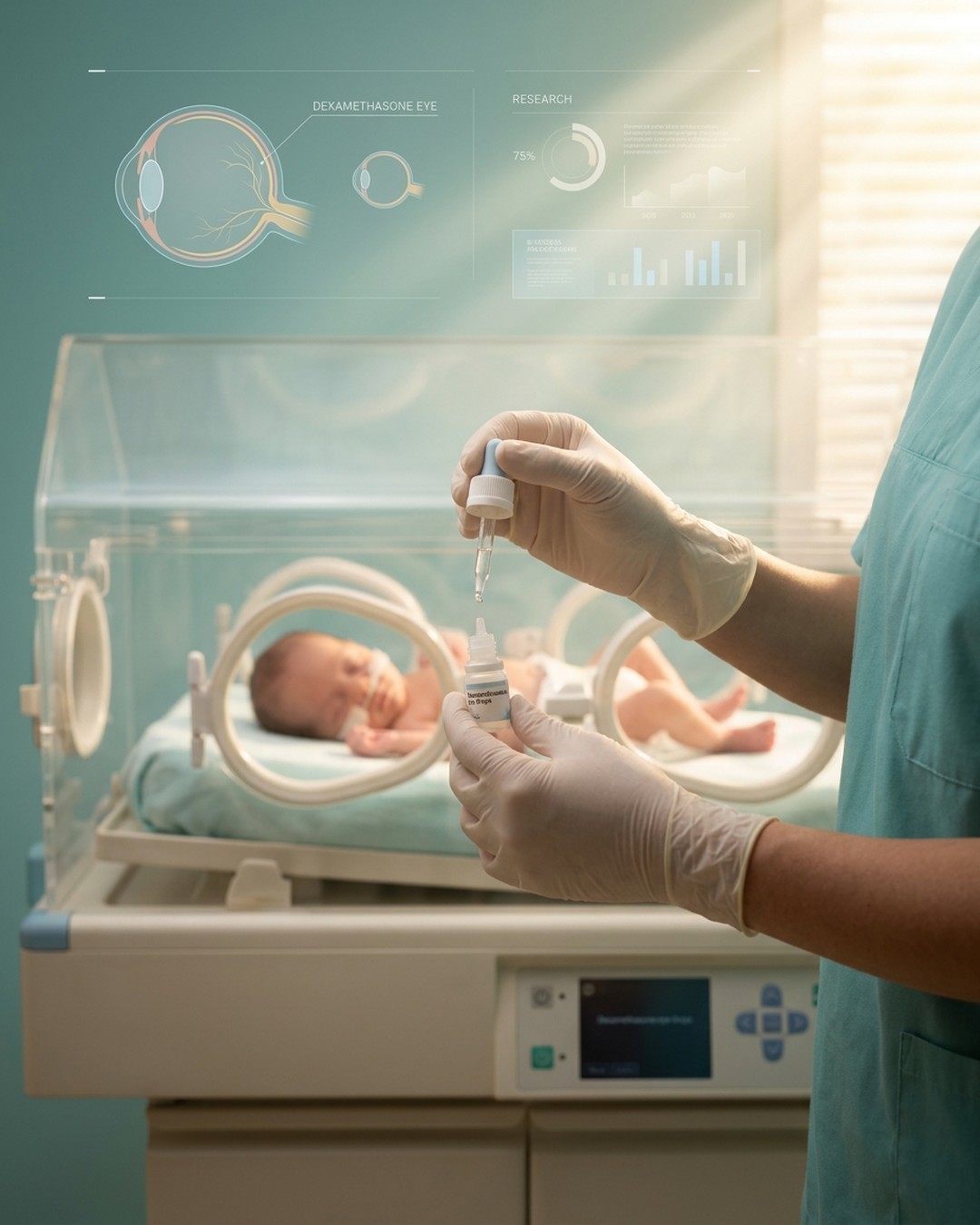
Researchers from the University of Gothenburg and Sahlgrenska University Hospital published a study on August 10, 2026, in JAMA Pediatrics regarding Retinopathy of prematurity (ROP). The clinical trial investigated whether dexamethasone eye drops could reduce disease progression and prevent severe visual impairment in extremely premature infants. The study, known as the DROPROP randomized clinical trial, evaluated 100 infants born before 30 weeks of pregnancy who developed serious ROP not yet requiring immediate invasive intervention. Infants were randomly administered dexamethasone eye drops versus a placebo to track the therapeutic efficacy and relative risk reduction. Results demonstrated that only 20 percent of infants treated with dexamethasone progressed to treatment-requiring ROP compared to 38 percent in the placebo cohort, marking a 47 percent relative risk reduction. Furthermore, no clinically significant complications or severe hormonal and metabolic side effects were observed during the trial period. This simple, inexpensive, and non-invasive therapy offers a promising alternative to laser therapy or direct ocular injections, potentially preventing blindness in roughly 35,000 children affected globally each year, particularly in regions with limited access to advanced specialist care.

关键点

01

🔹 【📌 Clinical Trial Overview】Study Details and Patient Demographics

The DROPROP randomized clinical trial evaluated 100 infants born before 30 weeks of pregnancy across six university hospitals and eight county hospitals in Sweden between 2022 and 2025. The study investigated the efficacy of dexamethasone eye drops in preventing advanced Retinopathy of prematurity (ROP), a blinding eye disorder affecting approximately 35,000 children globally each year.

02

🔸 【📌 Treatment Efficacy】Significant Reduction in Disease Progression

Among infants treated with dexamethasone eye drops, 20 percent developed severe ROP requiring intensive intervention, compared to 38 percent in the placebo group. This represents a substantial 47 percent reduction in relative risk, demonstrating a major clinical benefit in preventing aggressive disease progression.

03

⭐ 【📌 Safety Profile】Absence of Major Adverse Side Effects

Researchers closely monitored participants for potential complications throughout the trial. Results indicated no clinically significant differences in adverse outcomes between the dexamethasone and placebo cohorts, with no clear evidence of serious hormonal or metabolic side effects associated with the topical steroid treatment.

04

📊 【📌 Global Healthcare Impact】A Non-Invasive Alternative to Surgery

Severe ROP is traditionally treated with invasive laser therapy or direct ocular injections, which carry high risks of lasting visual impairment and are difficult to access in resource-limited regions. Dexamethasone eye drops provide a simple, inexpensive, and non-invasive therapeutic alternative that can protect fragile premature infants.

05

💡 【📌 Future Research】Long-Term Vision Development Tracking

Following the publication of the trial findings in JAMA Pediatrics on August 3, 2026, led by Professor Ann Hellström, research teams are planning extended long-term follow-up studies. These future evaluations aim to track visual development and detect any potential delayed effects stemming from the early dexamethasone treatment.

想要创建自己的思维导图?

登录Neumap AI,开始创建专属于你的思维导图!

立即开始