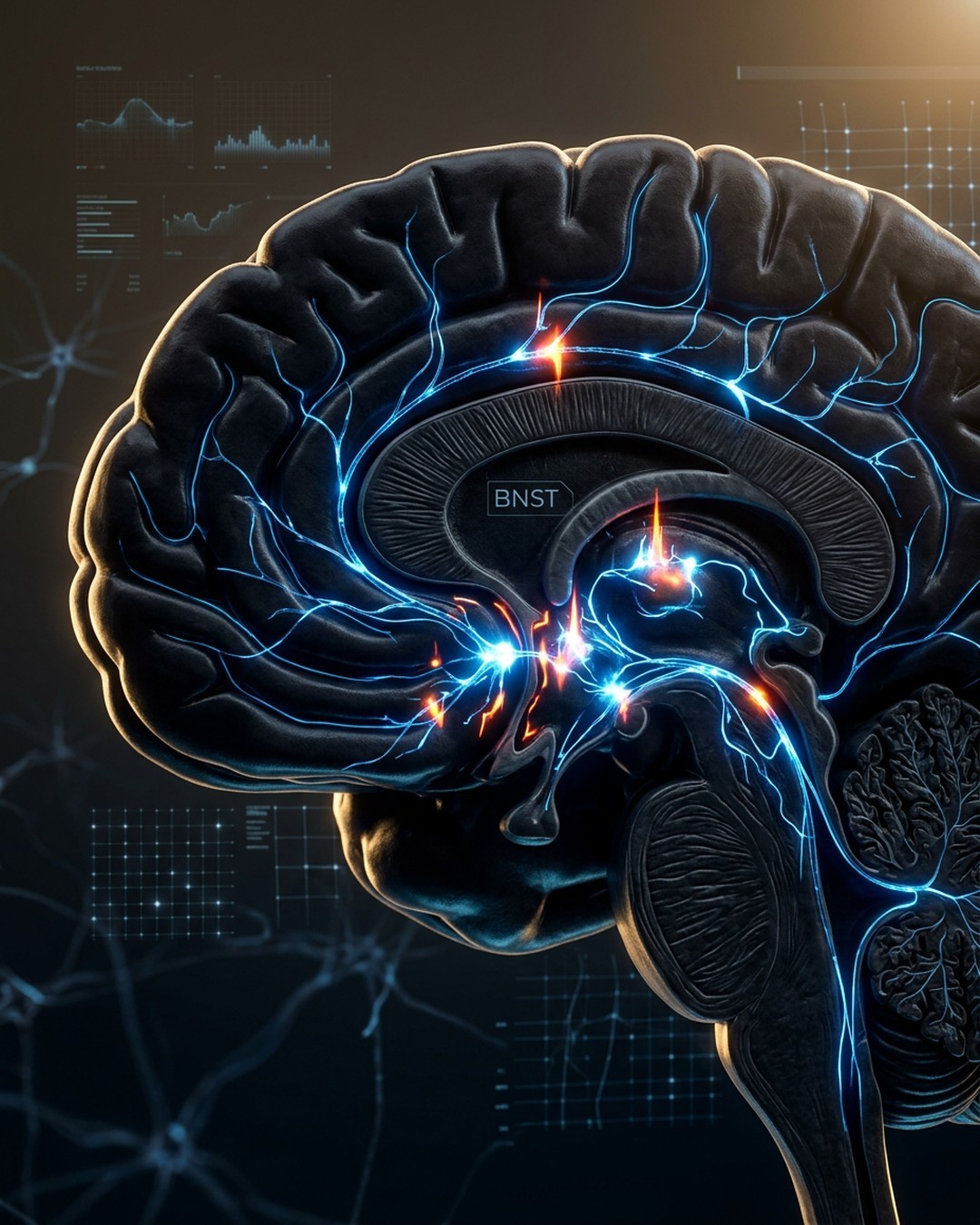
Alcohol Abstinence and BNST Brain Activity Study

scitechdaily neuroscience alcohol-use-disorder addiction mental-health

摘要

心智图封面图片
AI 生成的封面图片

A study published on August 18, 2026, in Molecular Psychiatry reveals that forced abstinence from long-term alcohol consumption in mice triggers over double the neural activity in the bed nucleus of the stria terminalis (BNST) compared to control groups. This heightened brain activity preceded aversion-resistant drinking behavior, where mice consumed larger quantities of bitter, quinine-laced alcohol. The researchers, led by Danny G. Winder and Marie Doyle from UMass Chan Medical School, suggest that these neurobiological changes during abstinence may serve as a potential neural marker of relapse vulnerability. The findings emphasize how abstinence itself can induce physiological changes that paradoxically increase the risk of compulsive relapse in alcohol use disorder. Alcohol misuse remains a major public health challenge, with U.S. deaths associated with alcohol use in 2024 being 4.5 times higher than those from opioids, and diagnoses having effectively doubled since 1999. Approximately 10 percent of the over 80 percent of Americans aged 12 and older who consume alcohol develop alcohol use disorder, representing nearly 30 million people needing treatment. Future clinical implications involve investigating whether human patients in early abstinence exhibit similar BNST activity patterns, which could eventually lead to utilizing BNST screening as a diagnostic tool in clinical trials to better predict relapse risk and improve targeted therapeutic strategies.

关键点

01

🔹 August 18 2026 Study Publication Details

【📌 Research Source】Published on August 18, 2026, in Molecular Psychiatry by lead researchers Danny G. Winder and Marie Doyle from UMass Chan Medical School. 【⭐ Key Data】The study investigates neurobiological changes during abstinence using a mouse model of voluntary alcohol access followed by forced abstinence.

02

🔸 BNST Neural Activity Surge in Abstinent Mice

【📌 Core Finding】Mice undergoing forced abstinence developed aversion-resistant alcohol intake, drinking larger quantities of alcohol laced with bitter quinine. 【⭐ Quantitative Evidence】These mice exhibited more than double the neural activity in the bed nucleus of the stria terminalis (BNST) compared to control mice without forced abstinence.

03

⭐ BNST Activation as a Predictor of Relapse Vulnerability

【📌 Predictive Value】Elevated BNST activity was observed even before abstinent mice were given access to bitter alcohol, triggered merely by reentering the environment where alcohol was previously available. 【🎯 Implication】This suggests BNST activity could serve as a biological marker for identifying individuals at high risk for relapse.

04

📊 Public Health Scale of Alcohol Use Disorder

【📌 Statistics】Over 80 percent of Americans age 12 and older consume alcohol, and approximately 10 percent (nearly 30 million people) experience alcohol use disorder (AUD). 【⭐ Mortality Data】In 2024, alcohol-associated deaths in the U.S. were 4.5 times higher than opioid-related deaths, with AUD diagnoses having doubled since 1999.

05

💡 Clinical Translation and Future Research Directions

【📌 Current Limitation】Clinicians currently lack reliable tools to predict who will relapse despite FDA-approved treatments for alcohol use disorder. 【🔄 Next Steps】Collaborating researcher Jennifer Blackford is investigating BNST activity in humans during early abstinence to test if BNST screening can be implemented in clinical trials.

想要创建自己的思维导图?

登录Neumap AI,开始创建专属于你的思维导图!

立即开始