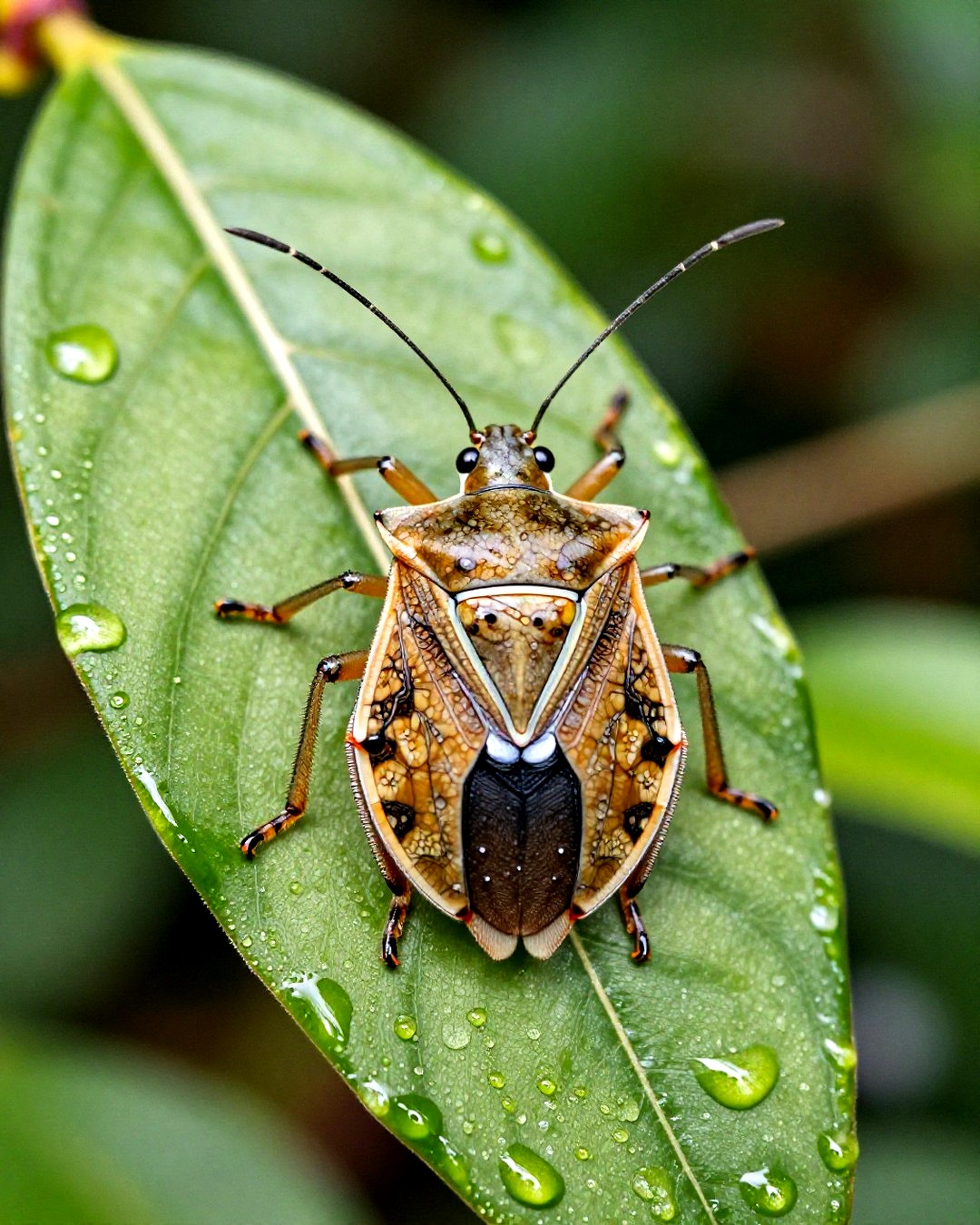
New Lace Bug Species Discovered on Ogasawara Islands

scitechdaily entomology evolutionary-biology genomics new-species

摘要

心智图封面图片
AI 生成的封面图片

Researchers Jun Souma and Naoyuki Nakahama discovered a new lace bug species, Omoplax sandoru, on Japan's remote Ogasawara Islands, published on October 8, 2026, in ZooKeys. The discovery resolves previous misclassifications by combining genome-wide MIG-seq DNA data from 52 specimens with morphological observations of male genitalia and host plant specificity. The authors emphasize that traditional reliance on morphological similarities and shared host plants can be misleading in evolutionary biology. The genomic analysis proves that populations previously grouped under Omoplax desecta actually represent distinct species driven by both geographic isolation and ecological shifts. The research highlights how human introduction of the tree Calophyllum inophyllum triggered a diet shift in Chichijima lace bug populations, serving as a potential driver for future budding speciation. This provides vital insights into adaptive radiation and complex evolutionary pathways on oceanic island archipelagos. Scientists and conservationists can use these genomic frameworks to re-evaluate endemic insect biodiversity in protected UNESCO World Heritage sites, ensuring accurate species preservation and tracking the ecological impacts of introduced flora.

关键点

01

🔹 Discovery of Omoplax sandoru

Researchers Jun Souma and Naoyuki Nakahama identified a new lace bug species named Omoplax sandoru on the Hahajima island group within Japan's Ogasawara Islands. The discovery was published on October 8, 2026, in the open-access journal ZooKeys (DOI: 10.3897/zookeys.1294.205145).

02

🔸 Genomic Analysis via MIG-seq

To investigate relationships among the insects, researchers analyzed 52 specimens using MIG-seq, a method providing genome-wide DNA data. Populations previously classified as Omoplax desecta across Chichijima and Hahajima were proven to be genetically distinct.

03

⭐ Host Plant Specificity and Diet Shifts

Omoplax desecta feeds on both the native plant Rhaphiolepis indica var. tashiroi and the introduced tree Calophyllum inophyllum in Chichijima. This unusual dual-host behavior provides a concrete mechanism for how human introductions can drive budding speciation.

04

📊 Morphological Verification and Genitalia

Initial suspicions raised by genetic divergence and pronotum color variations were confirmed by observing subtle physical differences, specifically in male genitalia, establishing the Hahajima population as a completely separate species.

05

💡 Implications for Adaptive Radiation

The study reveals that species feeding on the same plant and appearing similar are not necessarily sister groups. Adaptive radiation on oceanic islands is driven by a complex interplay of geographic isolation and host plant shifts.

想要创建自己的思维导图?

登录Neumap AI,开始创建专属于你的思维导图!

立即开始