🏛️ Prehistoric Keepsakes and Memory Evolution

SciTechDaily Prehistory Archaeology Anthropology Evolution Memory Israel

摘要

心智图封面图片
AI 生成的封面图片

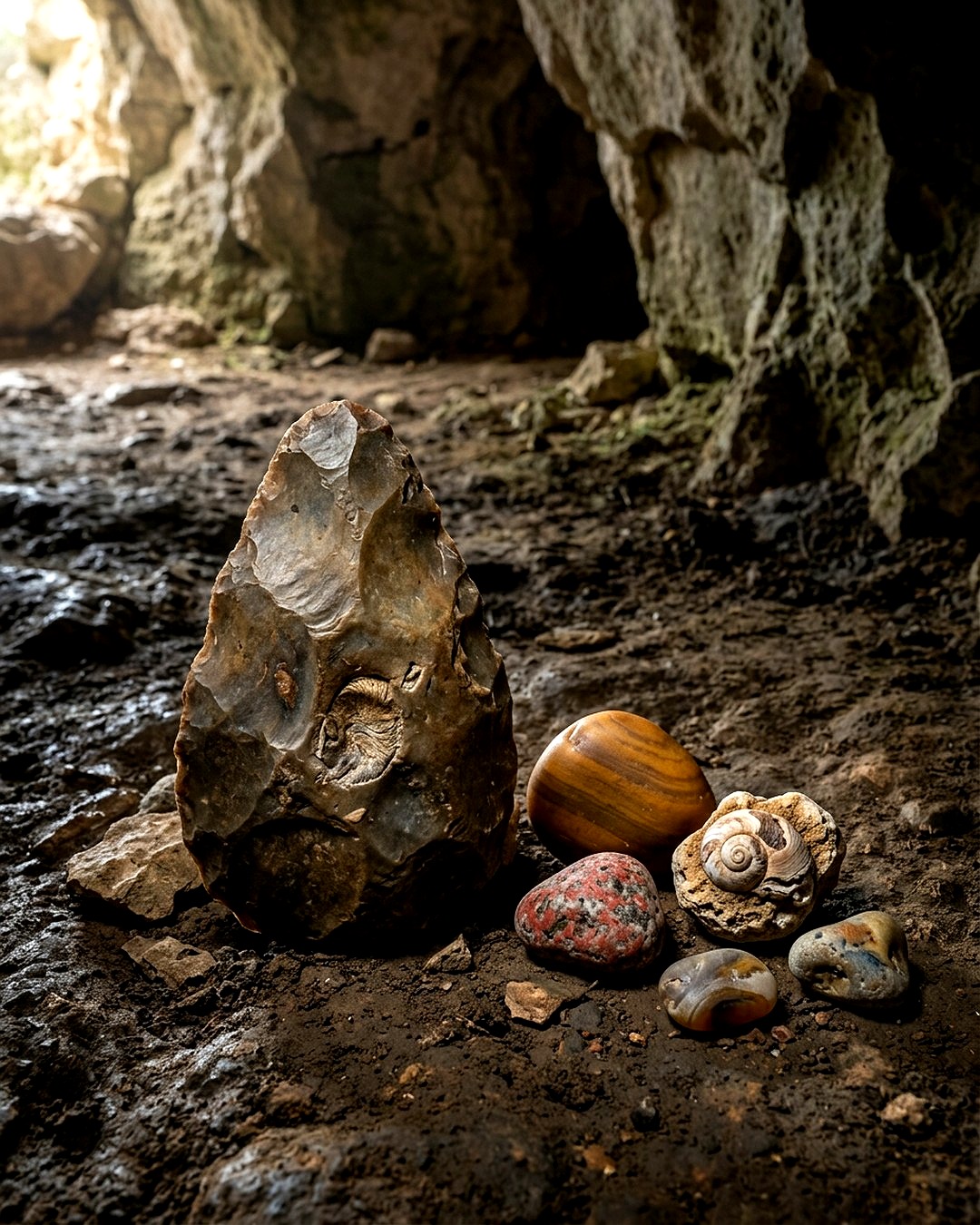
Prehistoric discoveries in Israel suggest that keeping meaningful objects may date back nearly half a million years and helped early humans distinguish personal memories from stories. Researchers from Tel Aviv University propose that collecting strange stones, fossils, and old tools served as external memory devices that supported the evolution of autobiographical memory and identity. The researchers argue that physical keepsakes allowed early humans to anchor personal experiences and maintain connections to specific landscapes as environmental pressures shifted. By holding or seeing these objects, individuals could better separate personal recollections from shared narratives, thereby strengthening social relationships and cooperative bonds across generations. Archaeological sites such as Qesem Cave, Revadim, and Sakhnin Valley yielded colorful pebbles, handaxes shaped around fossils, and ancient flint items collected long after their creation. Although resharpened, these objects preserved their original patinas and unique geological features, indicating they were valued for their histories rather than just practical utility. The authors emphasize that this interpretation remains a hypothesis because ancient artifacts cannot reveal thoughts directly. Nonetheless, the findings offer a novel perspective on how material culture and human memory may have evolved together starting around 500,000 years ago.

关键点

01

📌 Prehistoric Keepsakes and External Memory

Archaeological sites in Israel reveal that early humans collected colorful pebbles, fossil-bearing handaxes, and aged flint tools that offered no obvious practical benefit. Researchers propose that these objects functioned as external memory devices, helping individuals preserve personal recollections of significant events and encounters.

02

🏛️ Archaeological Evidence from Israeli Sites

Discoveries at Qesem Cave, Revadim, and Jaljulia include old flint tools that were collected long after their surfaces aged. While some artifacts were resharpened, their original outlines and patinas were carefully preserved, suggesting they were valued for their age and associated histories.

03

🧠 Evolution of Autobiographical Memory

The habit of keeping meaningful objects may have placed evolutionary pressure on brain mechanisms responsible for personal memory. Interacting with familiar stones helped early humans distinguish direct personal experiences from heard stories or imagination, contributing to the development of autobiographical memory and identity.

04

🌍 Environmental Shifts and Hunting Grounds

This collecting behavior likely became especially useful as prehistoric humans faced major environmental changes, such as the disappearance of large elephants requiring new hunting strategies for prey like fallow deer and wild cattle. Objects brought back from these hunting grounds helped maintain a personal connection to vital livelihood locations.

05

🤝 Social Cooperation and Trust

Retaining objects tied to specific places helped maintain relationships, alliances, and mutual obligations. Bringing keepsakes to new locations and showing them to others could make personal accounts more convincing and help establish trust within groups.

06

🔬 Scientific Caution and Hypothesis Status

The researchers emphasize that their interpretation is a hypothesis published in Evolutionary Anthropology in October 2026. Because archaeological evidence cannot directly reveal prehistoric thoughts, unusual stones do not definitively prove that owners associated them with personal memories.

想要创建自己的思维导图?

登录Neumap AI,开始创建专属于你的思维导图!

立即开始